

At-home colon cleansing: a guide to performing an enema
A home colon cleanse is performed using specific equipment, a rigorous method, and clear precautions: the following covers these three points.
How to perform a colon cleanse at home
A home colon cleanse consists of introducing a liquid solution anally to promote bowel evacuation and cleansing. This intestinal cleanse can be performed at home with suitable equipment, provided a simple method and clear precautions are followed. The goal remains the same: a measured, clean procedure without forcing.

Rectal enema or colon cleanse: what are the differences?
Before performing an enema, it is helpful to distinguish between a rectal enema and a colon cleanse. The former most often uses a 100 to 300 ml enema bulb: it acts primarily on the rectum, lasts a short time, and is suitable for mild constipation or quick cleansing. The latter relies on an enema bucket or a 1 to 2-liter bag, with a larger quantity of water to reach further into the intestine.
Three criteria help in choosing: the type of equipment, the area of action, and the retention time. A rectal enema remains localized, whereas a colon cleanse aims for a more extensive cleaning of the large intestine. Colon hydrotherapy, on the other hand, takes place in a clinic with professional supervision and much larger volumes.
Step-by-step procedure
Whether you use an enema bucket, a pail, or a flexible bag, the preparation follows the same logic. Fill the reservoir with the intended amount of water, preferably filtered or spring water, then check its temperature: around 37 °C (98.6 °F). Water that is too cold causes cramps, while water that is too hot irritates the mucous membrane.
Next, connect the tube, attach the nozzle, close the valve, and let a little water run out to purge the air. This step limits discomfort when introducing the solution. Hang the device about 1.50 meters from the floor so that the enema is performed gently, by gravity.
Lie on your side, knees bent, and then lubricate the nozzle with a water-based gel. Insertion should remain gradual. Then open the flow slowly, breathe calmly, and stop the passage of liquid as soon as clear discomfort appears. Once the urge to evacuate occurs, go to the toilet without delay.
Choosing your enema bucket or pail
The enema bucket, made of plastic or stainless steel, is well-suited for a gravity-fed home enema. Some models allow you to see the remaining level, others include a temperature guide, often between 36 and 39 °C. For regular use, this format provides better flow control.
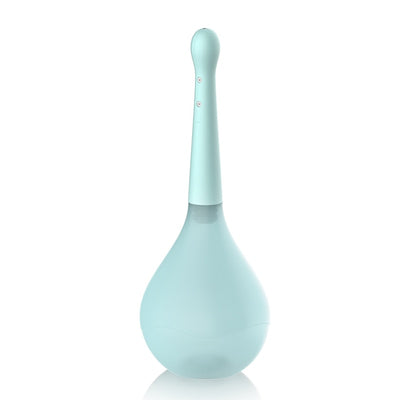
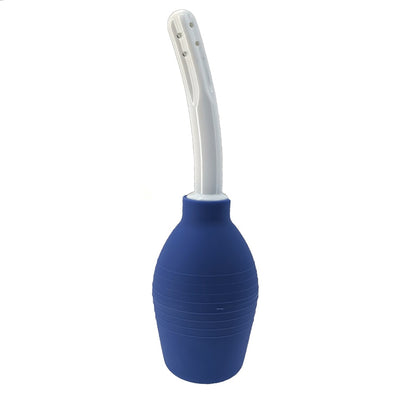
Our range of enema bulbs and buckets covers various formats. The enema bulb remains more compact: it is more suitable for a rectal enema, occasional use, or a simpler approach. Equipped with an anti-reflux system, it limits the return of soiled liquid into the device.
For more comprehensive use, some kits offer a check valve, an extension, and better flow control, which facilitates cleaning and comfort.
Mastering the enema bulb technique
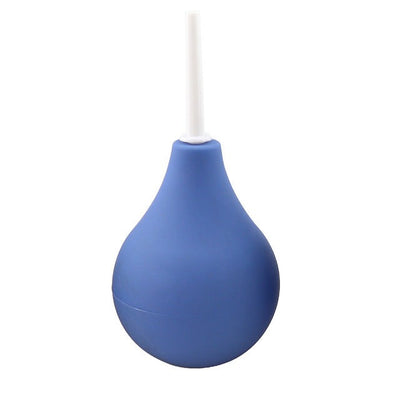
The enema bulb is often chosen first. It is easy to handle, and it allows for a rectal enema to be performed in a few minutes, without complex setup.
The step-by-step technique
The enema bulb technique requires little equipment but careful handling. Fill the bulb with lukewarm water around 37 °C, then squeeze it slightly over a sink to purge the air: this purge limits discomfort related to bubbles. Then, lubricate the nozzle with a water-based gel before inserting it gradually.
- Filling: spring or filtered water at 37 °C, with a starting volume of 100 to 200 ml for the first uses.
- Lubrication: apply lubricant to the nozzle to facilitate insertion and reduce irritation.
- Retention and evacuation: release the pressure slowly, hold the water for a few moments, then evacuate as soon as the urge becomes marked.
In practice, a sitting position leaning forward or lying on the side facilitates insertion and water diffusion. Once the technique is mastered, performing an enema takes less than five minutes.
Enema bulb and intimate hygiene
The enema bulb can be used for rectal cleaning, but also for external rinsing of the intimate area. Some models feature a thin, multi-directional jet nozzle adapted for this use.
Note: internal vaginal douches are not recommended as a routine, as the vagina is self-cleaning and repeated rinsing can disrupt the flora. A gentle rinse of the vulva with clear water is sufficient in the vast majority of cases. Reserve any internal use for indications provided by a healthcare professional.
With proper cleaning after use, the equipment remains economical over time and avoids the need for disposable products.
When to perform an enema, and with what solution?
Performing an enema requires a clear framework. The indication guides the device, water quantity, solution, and duration, in order to provide relief without exceeding the actual need.
When to use an intestinal enema?
A home intestinal enema is primarily considered to relieve constipation located in the lower part of the intestine, or a marked blockage that resists laxatives. In this context, it can facilitate stool evacuation and jumpstart transit in a targeted manner.
Other uses, however, fall under a medical framework: preparation for a colonoscopy, cleansing before digestive surgery, or local administration of a treatment in the colon. These situations are performed only upon prescription and under medical supervision.
| Use | Recommended device | Volume | Duration |
| Mild constipation | Enema bulb | 100 to 300 ml | Less than 5 min |
| Broader cleansing | Bucket or flexible bag | 1 to 2 L | 5 to 30 min |
| External intimate rinsing | Fine nozzle bulb | 100 to 300 ml | Less than 5 min |
| Medical preparation | By prescription only | Per protocol | Per protocol |
Which solution to choose?
At home, the safest solution remains spring, mineral, or filtered water at body temperature: it is suitable for the majority of uses. Saline solutions fall under medical indications and professional advice.
Conversely, coffee enemas are discouraged: they can irritate and disrupt the intestinal bacterial balance. Lemon juice, pepper, essential oils, or clay also carry risks of burns or infections.
As soon as use becomes frequent, or if doubt persists regarding the technique, medical advice remains preferable.
Frequency, contraindications, and safety
The goal is to relieve temporary constipation without disrupting the intestine or hindering its natural ability to evacuate.

What frequency?
In case of constipation, one to two sessions per week may suffice to relieve an occasional episode. Beyond that, the procedure becomes more irritating than useful, especially if transit ends up depending on the enema to function.
For maintenance use, the frequency should be much more spaced out: once a month is generally presented as a measured pace. Some people also choose an enema at the change of seasons, as a matter of intestinal comfort.
Gradual volumes and a slow flow limit discomfort. Conversely, sessions that are too frequent can irritate the rectal lining and disrupt the natural evacuation reflex.
As soon as the enema becomes essential for a bowel movement, medical advice is required: this repeated need can signal a deeper underlying cause.
Contraindications to be aware of
Home enemas are not recommended without medical advice in the following situations: pregnancy, active hemorrhoids or anal fissure, recent abdominal surgery, inflammatory bowel diseases (Crohn's disease, ulcerative colitis), as well as any known digestive pathology or one currently under investigation.
During the session, certain signals require immediate interruption: pain during insertion, rectal bleeding, or intense cramps. Lighter cramps may appear if the solution is too cold or introduced too quickly.
After an enema, drink plenty of water: this is a simple precaution that is sufficient in the vast majority of cases. In case of fever, intense pain, or feeling faint after a session, consult a doctor immediately.
Choosing and maintaining your equipment
For a safe and comfortable enema, you need a device adapted to your use, followed by rigorous maintenance after each session.
Comparison of devices
- Enema bulb (100 to 300 ml): compact and manual, it is suitable for mild constipation and occasional use. Available in silicone or rubber, with or without an anti-reflux system.
- Rigid enema bucket (1 to 2 L): works by gravity and allows for a more consistent flow. Some models include a temperature indicator. Check the seal between the bucket, the tube, and the nozzle.
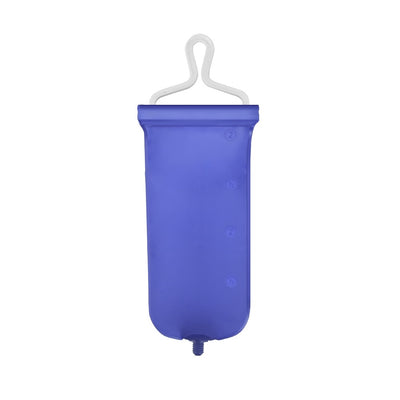
- Portable flexible bag (750 ml to 2 L): lighter and easy to transport. Once hung, it allows you to see the water level.
Medical silicone and stainless steel last better over time and are easier to clean.
Maintenance after each enema
- Nozzle: wash with hot soapy water, or disinfect with alcohol depending on the material. Rinse and dry carefully before storage.
- Bulb: rinse thoroughly with hot soapy water, including the inside, by squeezing several times to circulate the water.
- Bucket, bag, and extension: wash with water and soap, rinse completely, then air dry.
Before any new use, a simple check remains useful: no sediment in the nozzle, flushed tube, clean fittings. Detachable models make this maintenance easier.
Frequently asked questions
How to perform a colon cleanse at home step by step?
Start by filling a bucket or bulb with filtered or spring water at approximately 37 °C. Then purge the air from the tube, and gently lubricate the nozzle with a water-based gel.
Get into position on your side, in a fetal position, then let the liquid flow in gradually. Breathe calmly and massage your lower abdomen if needed. As soon as the urge becomes clear, stop and go to the toilet. Carefully clean the equipment with soapy water after use.
What is the ideal frequency for a home colon cleanse?
For occasional constipation, an enema can provide relief over a short period, one to two times a week if it remains an isolated event.
Beyond this targeted use, an enema that is too regular is not without consequences: it can irritate the rectal lining and disrupt the intestinal balance. If the need returns often, it is better to seek medical advice than to repeat the procedure.
What substances can be used in an enema?
For a home enema, filtered or spring water at body temperature remains the simplest and safest option. Any saline solution follows a medical recommendation.
Conversely, certain preparations should clearly be avoided: coffee enemas, lemon, essential oils, clay, or pepper. These substances can irritate the rectal area and unbalance the intestinal flora instead of providing relief.
This article is provided for informational purposes and does not replace medical advice. If you have any doubts or digestive pathologies, consult a healthcare professional before any practice.