

Postpartum sitz bath: relieving the perineum after childbirth
The postpartum sitz bath is a simple local treatment, commonly recommended by midwives to support recovery after birth. It helps soothe the perineum after childbirth with a gentle, easy-to-implement ritual at home or in the maternity ward.
The postpartum sitz bath: definition and equipment
The postpartum sitz bath is one of the simplest solutions for taking care of the perineal area without straining the rest of the body.

What is a sitz bath after childbirth?
The postpartum sitz bath involves immersing only the hips, buttocks, and perineum in a few inches of water. The rest of the body remains out of the water. This localized approach allows for intimate care to begin sooner than a full bath, which is often discouraged immediately after childbirth.
On a daily basis, this treatment is sought after to soothe the sensitivity of the perineal area following a vaginal delivery: it calms the feeling of heat and makes cleansing more comfortable during postpartum recovery.
Which basin should you choose?
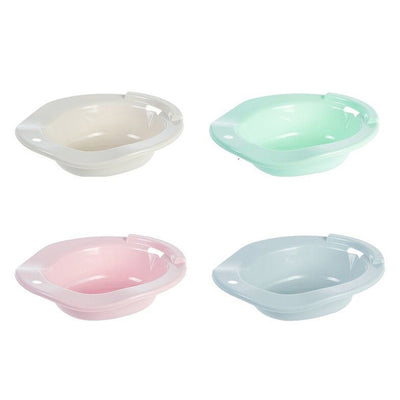
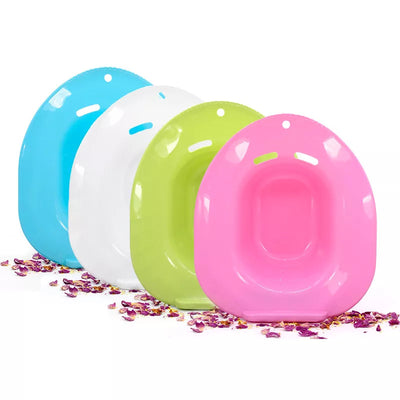
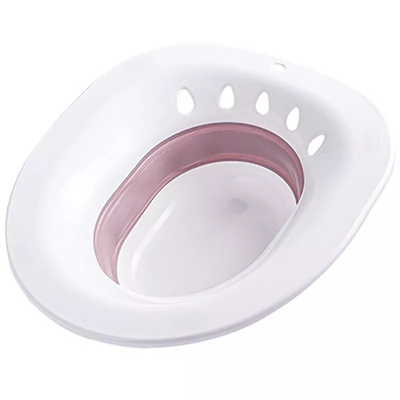
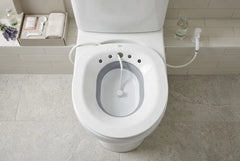
For a sitz bath during pregnancy as well as after birth, a dedicated basin remains the most practical option. For example, we offer this sitz bath basin made of pharmaceutical-grade medical plastic (PP): a non-porous material that is easy to clean and disinfect between uses.
Its standard dimensions fit 99% of standard toilet bowls. The choice depends on your needs: a rigid model is well-suited for regular home use, while a foldable version is easier to transport and store.
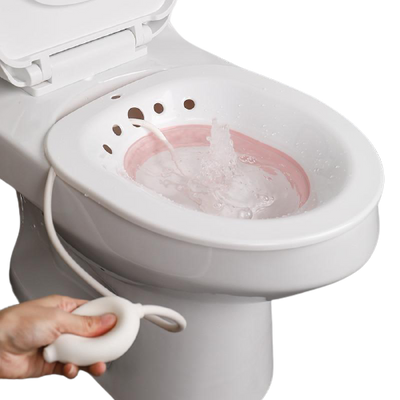
Some sets also include a water jet, pump, and hose for targeted rinsing. Others feature a transparent bowl, which is useful for checking the water level before sitting down. Installation is very simple: the basin sits directly on the toilet bowl and includes an overflow drainage system.
The sitz bath during pregnancy
The model designed for pregnant women can also be used during pregnancy. Its wide rim and depth provide easier access to the perineal area, even when the belly takes up more space. Reusable and easy to maintain, it can then be used to relieve perineal pain after birth.
Warm or cold sitz bath after childbirth
After childbirth, the water temperature significantly changes the desired effect. A sitz bath with warm water primarily supports relaxation and comfort, while a cold water bath is more targeted toward swelling and postpartum pain.
The warm sitz bath: the most common
The warm sitz bath, at around 37 to 38 °C (98.6–100 °F), remains the most common option after childbirth. This temperature promotes muscle relaxation and is traditionally associated with improved local circulation, which supports tissue healing. It is generally well-tolerated when discomfort is diffuse or the area remains sensitive.
The frequency most often recommended is two to four sessions per day, for 10 to 15 minutes, preferably not right after a meal.
The cold sitz bath: when swelling is predominant
The cold sitz bath after childbirth, at around 10 to 15 °C (50–59 °F), is based on the principles of perineal cryotherapy. The cold induces local vasoconstriction, which is the traditional reflex when swelling is pronounced or the sensation of heat is dominant.
Cold water thus offers a concrete alternative to cold packs, with a more extensive effect on the entire perineum. Water that is too hot, above 38 °C (100 °F), is not recommended: it can increase the sensation of congestion, especially in the case of hemorrhoids.
| Criteria | Warm sitz bath (37-38 °C) | Cold sitz bath (10-15 °C) |
| Desired effect | Muscle relaxation, comfort, circulation | Soothing, reduction of swelling sensation |
| When to use | Diffuse discomfort, sensitive area, ongoing healing | Pronounced swelling, sensation of heat, hemorrhoids |
| Hot water (> 38 °C) | Not recommended | Not recommended: risk of increasing congestion |
| Frequency | 2 to 4 sessions / day, 10-15 min | 2 to 4 sessions / day, 10-15 min |
| Recommended timing | Not immediately after a meal | Not immediately after a meal |
Sitz bath, episiotomy, and perineal pain
Following a vaginal delivery, an episiotomy, tears, or small fissures can make every movement more sensitive. In this context, the postpartum sitz bath is a simple, targeted aid: it acts locally on the perineum without causing abrasive trauma to the tissues.

Sitz bath and episiotomy
The sitz bath after an episiotomy is commonly suggested to soothe perineal pain linked to an episiotomy or tears. It is one of the most recommended practices during postpartum care, and many new mothers make it a pillar of their routine in the first few days.
In practice, the water cleanses the perineal area without friction, which avoids pulling on stitches. This delicate rinsing also helps keep the area clean, which is useful for healing. The sitz bath is also appreciated in cases of hemorrhoids or anal fissures, which are common after childbirth.
After each session, pat dry with a clean towel. Sitz baths after using the toilet can be useful in the first few days, as long as the perineum remains very sensitive.
Instructions for use
Pour about 5 to 10 cm of water into the basin placed on the toilet bowl. Sit stably, with your feet on the floor, so that the entire perineal area is immersed, then stay for 10 to 15 minutes.
A simple position works well: back relaxed, knees slightly bent, pelvis supported. After urination, a gentle rinse with clear water limits direct contact with the wound.
The postpartum sitz bath can be repeated two to four times a day depending on discomfort, without replacing medical follow-up if discomfort increases.
Precautions and warning signs
Before starting a sitz bath after childbirth, seek the advice of your midwife or doctor, especially in the case of a significant episiotomy, extensive tears, or marked pain. The same applies if you are considering adding essential oils: it is better to stick to plain water while the area is fragile.
Consult a professional promptly if you develop a fever, spreading redness, swelling, worsening pain, or unusual discharge. These signs may suggest an infection and require an evaluation without delay.
In the first weeks after childbirth, a full bath in a tub is still discouraged. The postpartum sitz bath offers a concrete alternative: it targets the necessary area while respecting healing tissues.
Recipes and natural additives
Water alone can be sufficient for an effective sitz bath. However, certain well-chosen additions provide real comfort after childbirth, especially when the perineal region remains sensitive. The idea is not to overdo it, but to better soothe the perineal area.
Plants and infusions
The herbal sitz bath is well-suited after childbirth when the goal is to soothe without irritation. Prepare it using a simple infusion: steep a large handful of your chosen mixture in simmering water for 10 to 15 minutes, strain, then pour into the basin before topping up with warm water.
Chamomile, lavender, and calendula are traditionally used to calm heat and soften tissues. Sage, rosemary, and yarrow are more associated with a tonic and astringent effect. Witch hazel and ribwort plantain are typically used for local circulatory comfort.
Salts, baking soda, and other soothing additives
Among natural sitz bath additives, Epsom salt remains one of the most widely used. Diluted in warm water, it is traditionally associated with muscle relaxation and comfort in the area, a point often appreciated after a vaginal birth.
Baking soda offers a simple alternative: 75 to 125 ml in the basin is sufficient. It helps maintain a more balanced pH and can soothe itching when the perineal area remains reactive.
Himalayan salt can also be used for its soothing effect. A 300g bag often lasts for about twenty uses.
Precautions for using additives
Avoid soapy water in the sitz bath: soap can irritate mucous membranes and disrupt the intimate balance, which is already more fragile after childbirth. Likewise, before using essential oils or less conventional mixtures, the advice of a midwife is essential.
The rest is a matter of simple steps: clean and disinfect the basin after each use, check for skin sensitivity, and stop if you experience unusual stinging.
Frequently Asked Questions
How do you take a sitz bath after childbirth?
Place a suitable basin on the toilet and pour 5 to 10 cm of warm water at 37-38 °C (98.6–100 °F), or cold water depending on the desired effect. Sit stably, with your feet on the floor and knees slightly raised, so that the perineum is well immersed. Stay for 10 to 15 minutes, then pat dry with a clean towel.
This postpartum sitz bath can be repeated two to four times a day, or even after each trip to the toilet if perineal pain, an episiotomy, or tears justify it.
What are the benefits of a sitz bath after childbirth?
The benefits of a sitz bath primarily concern local comfort. After birth, it is commonly advised by midwives to soothe perineal pain linked to an episiotomy, tears, or hemorrhoids, and to support the healing of the area.
The choice of temperature modulates the effect: cold water is the traditional reflex when swelling is dominant, while warm water promotes relaxation. This treatment also contributes to gentler intimate hygiene, which is often better tolerated than repeated wiping with toilet paper.
When can you take a full bath after childbirth?
The postpartum sitz bath serves as a concrete alternative to a full bathtub bath: it targets only the affected area, which makes it usable sooner, subject to the advice of your midwife or doctor.
This precaution is especially useful if the perineum remains sensitive, particularly in the case of an episiotomy, tears, or ongoing healing. Your healthcare professional will specify the appropriate timeframe for your situation.
A sitz bath is a comfort treatment. It does not replace medical advice or treatment. After childbirth, follow the instructions of your midwife or doctor.