

Sitz bath after childbirth: complete guide
After childbirth, the perineum deserves special attention to heal properly and regain comfort. A sitz bath after childbirth is one of the simplest ways to relieve yourself and soothe postpartum pain. It is commonly recommended by midwives to support perineal recovery.
What is a sitz bath after childbirth
Taking a postpartum sitz bath involves sitting in lukewarm or cool water. This technique gently cleanses and soothes the area. It specifically targets the perineal area while keeping the rest of the body dry.
Definition and principle
This treatment immerses only the perineal region. The legs remain out of the water with feet placed flat: this posture improves stability and supports local blood circulation.
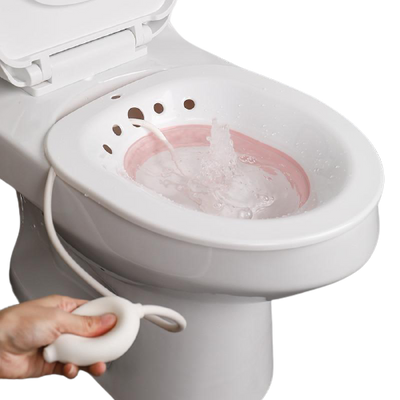
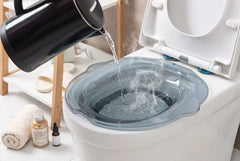
You can take a bath in a bathtub by pouring about ten centimeters of water into it. It is also possible to use a suitable basin placed directly on the toilet. This second option, which is very discreet, requires only a few liters of water.
Choose lukewarm water around 37-38°C (98-100°F), never exceeding 40°C (104°F). Cooler water is the traditional go-to when swelling predominates, especially in the case of hemorrhoids.
When to start, and for how long
You can begin this practice from the very first days after childbirth, once initial bleeding has decreased. This simple gesture can be adopted well before resuming full baths.
In the postpartum period, each session generally lasts 10 to 15 minutes. Practice this ritual two to three times a day. Performing it after every trip to the bathroom ensures optimal cleanliness and genuine relief.
Basin, bathtub, or bidet: what equipment to choose?
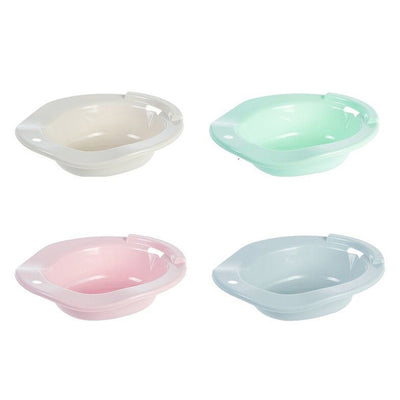
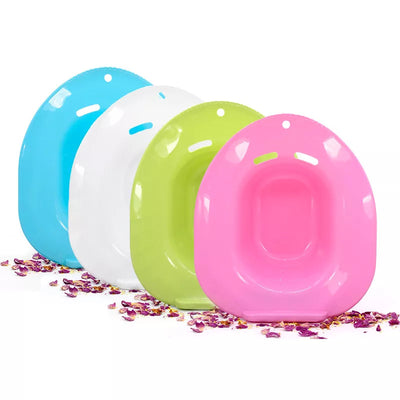
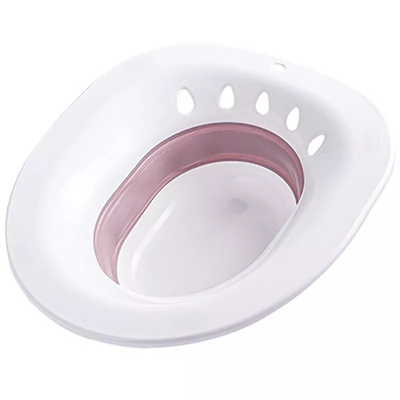
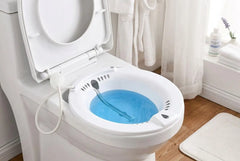
The specialized basin placed on the toilet remains the most practical option after childbirth. Easy and quick to set up, it ensures good hygiene, and its ergonomic seat adapts to the body's shape.
These basins are equipped with an anti-overflow system and fit almost all toilet bowls. Some models include a pump for targeted rinsing, which is very useful when standing up requires an effort.

The benefits of a postpartum sitz bath
A sitz bath after childbirth is a gentle and natural treatment, highly appreciated for its soothing properties. Easy to perform, it aids recovery and significantly improves comfort during the first few weeks. A university study on postpartum perineal care covers these practices.
Relieving pain and perineal edema
The sitz bath after childbirth is the most used method to soothe the area. Immersing the perineum in lukewarm water provides a soothing effect that calms burning sensations.
- Gradual vasodilation: the gentle warmth supports local blood circulation.
- Muscle relaxation: the pelvic floor muscles, often contracted, can finally release.
- Swelling sensation: the sitz bath is traditionally associated with drainage and a reduction in edema.
To relieve sensitive hemorrhoids, cool water is the most common reflex: it soothes quickly and limits the feeling of swelling.
After an episiotomy, a 10 to 15-minute sitz bath provides very clear relief to the perineal area.
Supporting healing
The benefits of this method are not limited to soothing: by keeping the area clean without rubbing, the sitz bath supports the healing of stitches.
This practice gently cleanses the perineal area without resorting to wiping, which irritates already fragile skin. This is precisely what makes it so popular during the postpartum period.
Hemorrhoids and digestive comfort
For hemorrhoids, the cooling effect of the water provides immediate relief. This treatment helps to soothe itching and discomfort during bowel movements.
By promoting sphincter relaxation, the sitz bath also helps limit constipation, which is common postpartum and a source of additional tension in the pelvis.
How to take a sitz bath, step by step
This care is surprisingly simple to set up. A few precise steps are enough to get the best out of it and ensure your safety.

Equipment and water preparation
- Suitable equipment: a smooth medical-grade plastic basin, designed to fit on the toilet, with a stable base.
- Filling: a few liters of lukewarm water, or 8 to 10 cm deep.
- Temperature control: check the warmth with your wrist to avoid any risk of burns.
- Additives: Epsom salt or baking soda can be added. However, ask for your midwife's advice before using essential oils on an area that is currently healing.
Do not hesitate to check out our specialized basins to find the model suited to your recovery.
Conducting the session
Sit down gently to completely immerse the perineum, keeping your feet flat. Stay this way for about ten minutes, taking care not to get cold.
Then stand up very slowly to prevent dizziness, which is common after childbirth. Dry the area by patting with a clean, soft towel, without rubbing, then clean the basin for the next session.
What to put in the water?
Lukewarm water alone is most often sufficient. Epsom salt or baking soda cleanse the region gently without causing irritation. Avoid soap and scented products.
Precautions and contraindications
Some situations require caution. Knowing these limits is essential to protect your recovery.
Temperature, duration, and frequency
- Lukewarm temperature: keep the water around 37-38°C (98-100°F), never exceeding 40°C (104°F) — water that is too hot accentuates the sensation of swelling and may increase bleeding.
- Duration: 10 to 15 minutes per session, 20 minutes maximum, so as not to weaken the skin.
- Frequency: two to four baths a day at first, then reduce as healing progresses.
- Interval: space each treatment by at least two hours.
Ensure that the water does not cool down completely during the treatment. If you opt for a cool water bath, do not exceed ten minutes, and stop immediately if you experience dizziness or chills.
When not to use it
- Hemorrhage: to be avoided if your blood loss exceeds the usual volume of lochia.
- Infection or fever: wait for the agreement of a healthcare professional.
- Medical history: heart or circulatory disorders require prior consultation.
- Difficult healing: in the presence of a wound that is healing poorly, opt for a very gentle and quick shower.
In case of complications, always ask your midwife for advice. Also discover how to take a sitz bath.
Warning signs and when to see a doctor
Consult without delay if the area shows intense redness, sharp pain, a high fever, or unusual odors. These signals may indicate an infection requiring care.
Frequently asked questions
Why take sitz baths after childbirth?
After birth, the sitz bath helps relieve perineal pain and postpartum pain. This simple gesture soothes the area, limits the sensation of swelling, and supports healing. It is also a way to clean without rubbing, which is much better tolerated than wiping with paper.
A basin filled with lukewarm water placed on the toilet is sufficient: this is the basis of a sitz bath that is comfortable and quick to set up, even with a newborn.
When can I start a sitz bath after my delivery?
In general, you can start from the third day post-delivery, ensuring that the perineal area handles moisture well. Your midwife will often advise waiting until lochia decreases.
How many times a day should I take a sitz bath after childbirth?
In the first few days, plan for two to four sessions per day, of 10 to 15 minutes each. You will then reduce this gradually as healing progresses.
What is a “sitz bath”?
The term sitz bath refers to exactly the same practice as the French “bain de siège”: immersing your perineum in lukewarm water to soothe the area gently.
Discover our ergonomic sitz bath basin, designed to simplify the postpartum period.

The sitz bath is a comfort treatment. It does not replace medical advice or treatment: after childbirth, follow the instructions of your midwife or doctor.