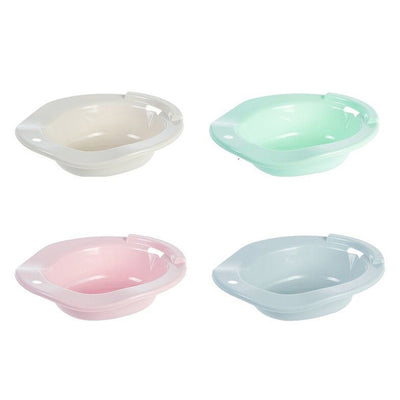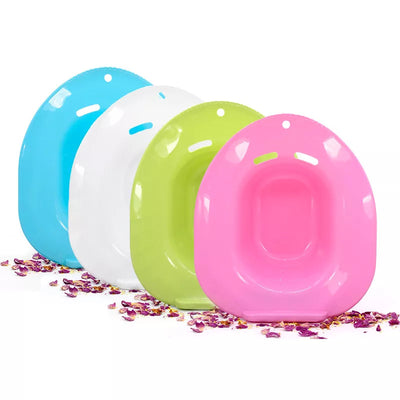


What is a sitz bath?
What is a sitz bath?
A sitz bath is a natural treatment that consists of sitting in cold, lukewarm, or warm water. It allows you to clean your intimate areas, but also to stimulate circulation in the perineal area and relax the muscles. (The perineum is located between the anus and the vulva in women; in men, between the anus and the scrotum.)
The sitz bath is traditionally used after childbirth, after gynecological surgery, or in any situation causing irritation or inflammation of the anal or genital area.
A sitz bath is notably used to:
- Provide a feeling of tone, through regular exposure to cold
- Soothe baby's diaper rash
- Support digestive comfort
- Relieve itching and discomfort related to hemorrhoids
- Soothe an anal fissure
- Relieve the perineum after childbirth
- Clean and soothe the anal area or perineum after surgery
- Provide comfort in case of prostate discomfort
- Help relieve menstrual cramps
- Clean the anal and genital areas if you cannot take a bath or shower, especially in cases of reduced mobility
- Replace toilet paper for cleaning
- Clean yourself after sexual intercourse
The sitz bath is also used as a supplement to daily hygiene. It is practiced with a specially designed container that you place on the toilet, or in a bathtub—though this solution is much less practical.
Lukewarm water helps to relax the muscles and soothe irritation in the genital area.
Cold water is the traditional reflex in case of hemorrhoidal discomfort and provides a feeling of tone.


There are many models, from the simplest and least expensive to the most complete, equipped with water jets or a pump. Choose the model that meets your needs and budget by consulting our collection of sitz baths.
How to take a sitz bath
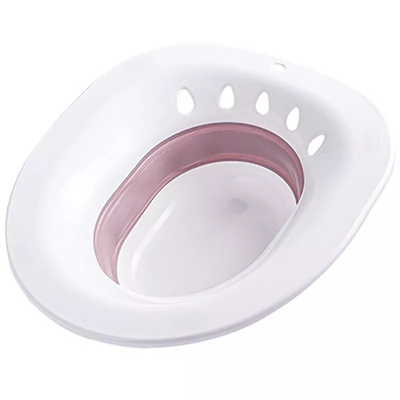
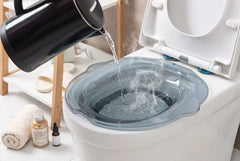
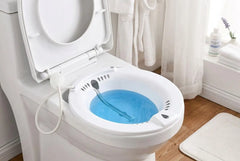
Use a plastic sitz bath basin: it fits perfectly on your toilet. It is a small, shallow, round basin, sometimes accompanied by a pump and a water jet to facilitate immersion.
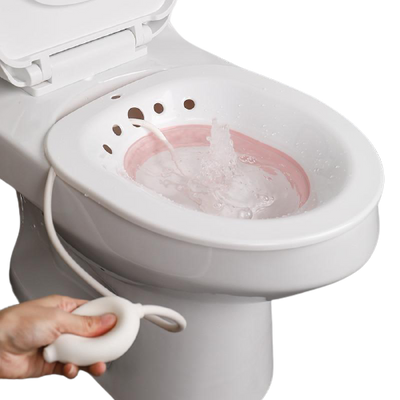
The basin is slightly larger than a standard toilet bowl, so that the edges rest on it. You can safely place it on your toilet and sit comfortably for the duration of the bath.

- Place the sitz bath on your toilet. Test it by moving it slightly from side to side to ensure it stays in place.
- Pour in cold or lukewarm water before sitting down. The amount should be sufficient to cover the perineum, i.e., 5 to 10 cm.
- Sit down and soak for 10 to 15 minutes, without exceeding 20 minutes. Most basins are equipped with an overflow vent that prevents the water from spilling over: the excess water flows directly into the toilet.
- Once finished, dry the area with a clean cotton towel previously placed next to the toilet. Avoid rubbing: pat gently. Also avoid toilet paper, which is irritating to the skin and disintegrates upon contact with water.
- Clean the basin with soap for the next use.
When to use a sitz bath
A sitz bath does not require a prescription. Some people use it regularly to clean the perineum. In addition to cleaning, warm water is traditionally associated with better circulation in the area.
The sitz bath is also appreciated in case of:
- itching
- irritation
- discomfort related to hemorrhoids

The sitz bath is sometimes recommended by doctors after surgery in the anal area. In this context, a healthcare professional may prescribe specific additives. For common use, adding Epsom salt, vinegar, or baking soda is enough to create a soothing solution—and many people simply use plain water.
The sitz bath for women
The sitz bath is commonly recommended by midwives after childbirth to soothe perineal pain and support the recovery of the area. Pain and swelling are common after birth, both vaginally and by cesarean section. The sitz bath helps to relieve discomfort in the perineum and vulva, while keeping the area clean.
Hemorrhoids, a swelling of the veins of the anus and lower rectum, are also common postpartum. The sitz bath is the traditional reflex in these moments of discomfort.
Precautions and proper use
The sitz bath presents very few risks, as it is a non-invasive treatment. However, it is not recommended during pregnancy. Wait until the end of your pregnancy and seek medical advice if you have just given birth.
The incident most often mentioned is a perineal infection, but it remains rare: it usually occurs if one is treating a surgical wound without carefully cleaning the basin. Never share your sitz bath with anyone else.
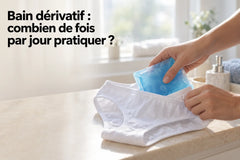
Stop and contact your doctor if the pain or itching worsens, or if the perineum becomes red and swollen. If the sitz bath provides relief, a frequency of 2 to 4 sessions per day is common until the discomfort disappears.

When to call a doctor?
If you experience pain or bleeding in the anal region, call your doctor without delay: these may be signs of hemorrhoids or another condition. Any perineal discomfort or unusual discharge that does not disappear after a few sitz baths also warrants medical advice.
If you are pregnant or have recently given birth, ask your doctor or midwife when you can start. The sitz bath is generally not recommended during pregnancy.
What can you put in a sitz bath?
A sitz bath is practiced with water. Most people do not use any additives, but you can also add clay, Epsom salt, vinegar, or baking soda. Find all the information in our article Sitz bath: what natural ingredients to use?

What temperature for the sitz bath water?
You can opt for cold or lukewarm water. In case of hemorrhoidal discomfort, cold water, between 10 and 20°C, for 10 to 15 minutes is recommended. Outside of a flare-up, lukewarm water around 37-38°C has a soothing and relaxing effect. To learn more, consult our article How to take a sitz bath.
In summary, the sitz bath allows you to clean your intimate areas in a hygienic way. It is used as a supplement to daily hygiene and is appreciated by anyone prone to irritation or inflammation of the genital area. Regular exposure of this area to cold is also traditionally associated with a boost in circulation and tone.
Do you want to get a basin? Consult our collection of sitz baths for toilets.
The sitz bath is a comfort treatment. It does not replace medical advice or treatment.