

Difference between bidet and handheld bidet sprayer: a comparative guide
Do you want to understand the practical differences between a traditional bidet and a handheld bidet sprayer? This guide compares both solutions in terms of installation, cost, and ecological impact, to help you identify which one is best suited to your bathroom and your needs.
Bidet or sprayer: what is the difference in installation and usage?
A classic bidet is a fixed sanitary fixture, usually placed next to the toilet, which takes up a significant amount of floor space. Conversely, a toilet sprayer is installed on the toilet bowl or the wall, without the need for renovations. Both offer water-based cleaning that is far more effective than toilet paper, but their integration into daily life is entirely different.

What is a bidet and how does it work?
The classic bidet takes the form of a standalone basin, equipped with a faucet and a jet that is adjusted manually. You sit on it after using the toilet to wash your private parts thoroughly. The primary purpose of a bidet is to offer cleanliness that toilet paper cannot achieve. Let's look at its advantages and limitations in detail.
Advantages:
- Water-based hygiene, far superior to paper.
- Temperature adjustment: on models connected to hot water, the temperature is adjusted manually, for comfort suited to every season.
Disadvantages:
- Space-consuming: this fixed device requires renovations and reduces available space.
- Sometimes difficult access: elderly people or those with reduced mobility often struggle to use it.
- Horizontal jet: water is sprayed horizontally, which makes positioning less intuitive.
The handheld bidet, a modern alternative to the bidet
So what replaces a bidet today? There are several effective alternatives.
- The toilet sprayer stands out as the most direct solution, without adding any bulky equipment.

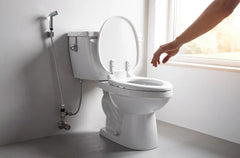
The handheld bidet is both hygienic and ecological. Easy to install on the wall or on the tank, it allows for precise cleaning without leaving the toilet. Its ergonomic handle gives you total control over the jet. You thus regain all the primary utility of a bidet in a few seconds, without major structural changes.
A classic kit includes a spray head, a 1.20 to 1.50 m hose, and all the mounting hardware. Some models offer pressure adjustment for gentle washing of sensitive areas or quick cleaning of the bowl. See our intimate toilet sprayer, easy to install and very discreet.
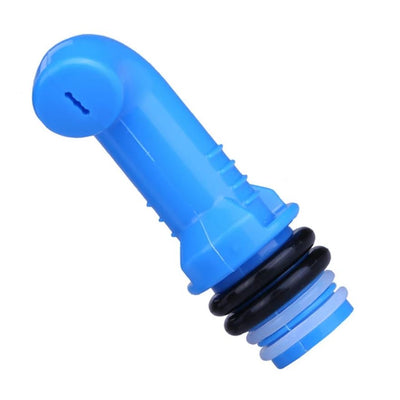
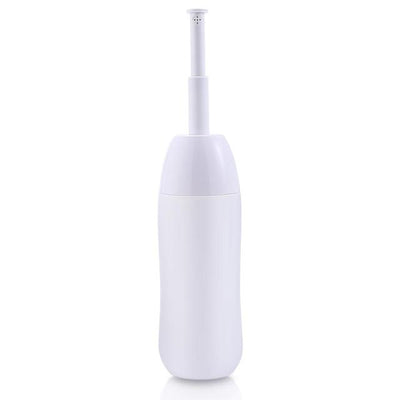
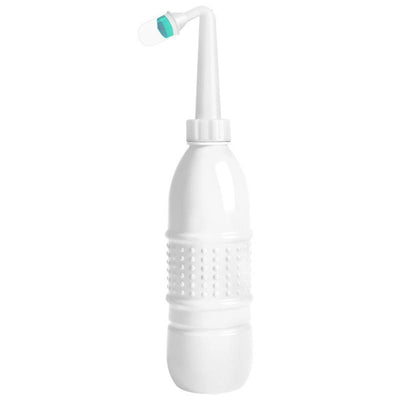
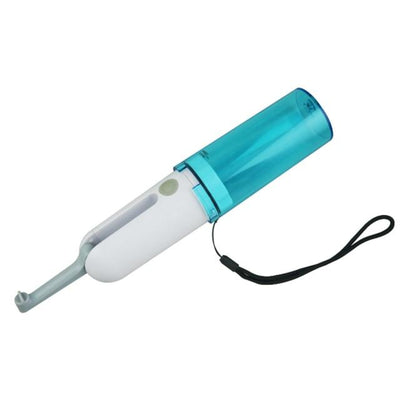
- The portable bidet offers a travel version: a small manual reservoir equipped with a directional nozzle. No fixed installation — perfect for travel and small spaces.

- The Japanese toilet kit also saves space: it attaches directly under the toilet seat. Its manual control triggers a jet that cleans the private parts with a simple gesture. Some models add self-cleaning or drying, which obviously increases the price.

Installation and space required
Installing a traditional bidet often requires rethinking the entire bathroom: it requires a new water inlet and drainage, therefore the intervention of a professional. In a small space, the solution quickly becomes cumbersome and expensive.
- Quick setup: the sprayer connects directly to the toilet's water supply via a T-connector.
- No major work: no deep drilling or structural modifications.
- Space optimization: it frees up all the floor space.
It is a choice particularly suited to tenants: the system can be uninstalled without leaving a trace. Unlike the traditional bidet, it does not modify anything permanently. Installing your intimate sprayer in a few minutes is entirely within your reach, without a plumber.
Where a classic bidet requires a dedicated location, the toilet sprayer adapts to 99% of standard bowls. A versatility that makes it the most practical solution to modernize your intimate hygiene without changing the layout.
Hygiene and comfort: bidet or sprayer?
Beyond installation, the choice relies mainly on personal hygiene and comfort. Water cleans much more effectively than paper, which significantly limits irritation. Let's see how each solution addresses this.
The effectiveness of cleaning with water versus paper
An adjustable water jet eliminates residues much more completely than rubbing with paper. It is, in fact, the action most commonly recommended in case of repeated itching or irritation: paper, for its part, always leaves invisible traces.
The portable bidet, equipped with a reservoir and an adjustable nozzle, fills with lukewarm water in a few seconds. Simply direct the jet toward the area to be cleaned. The process significantly reduces irritation and leaves the skin perfectly clean. Discover how to properly use a portable bidet.

After use, a simple rinse is enough — an alternative that is much more economical and ecological than paper.
- Elimination of residues: water washes them away, whereas wiping only moves them around.
- Less irritation: the absence of repeated rubbing preserves the skin and avoids micro-lesions.
- End of odors: cleaning with water removes what bacteria feed on.
- Better daily hygiene: enhanced cleanliness, particularly appreciated by people prone to urinary infections.
The hygienic shower uses very little water — about half a liter — compared to several liters for the traditional bidet. Quick and targeted cleaning, without any waste.
Bidet and sprayer in case of hemorrhoids or irritation
Washing with water provides immediate relief to people prone to hemorrhoids or chronic irritation. A gentle water jet is most commonly recommended instead of toilet paper, which is often too aggressive on an already sensitive area.
The intimate sprayer is ideal because it allows for precise cleaning without uncomfortable movement:
- Gentleness of the jet: adjustable pressure, perfect for sensitive areas.
- Post-childbirth: its precise jet is often preferred over a bidet to soothe the perineum — it is the action most often recommended by midwives.
- Soothing effect: lukewarm water is the traditional reflex to calm a hemorrhoidal crisis; cold water is known to be more effective during an acute flare-up.
- Post-operative comfort: washing with water avoids any rubbing on an area that is healing.
Caution: a jet that is too powerful can irritate mucous membranes. Opt for a moderate flow, and dry delicately by patting.
Ergonomics and accessibility
The classic bidet requires moving to a separate basin, which can be complicated for the elderly. The sprayer, for its part, is used directly from the toilet. The ease of use is optimal: intuitive handling, without changing position.
For people with reduced mobility, it avoids having to lean over. Japanese toilets go even further, as they handle everything from the seat, via a dial or remote control. A real step forward for autonomy.
Cost, savings, and ecological impact
Choosing equipment for your bathroom is not limited to its effectiveness: there is also the budget and the ecological impact. Installing a toilet sprayer for around thirty euros can transform a family's daily life by radically reducing toilet paper consumption. Acquiring a traditional bidet, conversely, represents a much heavier investment, often accompanied by significant installation costs.
The classic bidet is a fixed and bulky device. The intimate sprayer is an accessory connected to a hose, which you hold in your hand. The difference therefore lies in the type of installation — fixed versus mobile —, the mode of use, and space constraints.
Comparison of purchase and installation costs
The advantages of a bidet traditional lie in its solidity, but its price remains a barrier for many households, and its installation requires complex plumbing work. Conversely, a sprayer kit is very affordable and can be installed yourself in a few minutes.
- Minimum budget for the sprayer: expect €30 to €100 for a complete kit, without any extra costs. A portable bidet starts around €30.
- Heavy investment for the bidet: from €200 to €800 for the device, plus €500 to €1,500 in labor.
- Immediate profitability: the sprayer pays for itself in a few weeks, whereas the return on investment for a classic bidet is counted in years.
| Criterion | Traditional Bidet | Intimate Sprayer |
| Initial cost | €200-800 | €30-100 |
| Installation fees | €500-1,500 | €0 (DIY) |
| Installation duration | one to several days | less than 10 minutes |
| Water consumed per use | 2 to 3 liters | about 0.5 liter |
| Annual savings on paper | €30-150 | €90 per person (€360 for 4) |
Water consumption is an important choice criterion: a traditional bidet uses several liters per use, whereas the sprayer will never exceed a liter. For a family, this represents several thousand liters saved each year.
Reducing your water and paper consumption
Cleaning with water has a major ecological advantage: it reduces toilet paper consumption by 70 to 90%. A very simple action that helps preserve forests and limits waste production.
- Less paper: water replaces it effectively, which saves several rolls each month.
- Protection of forests: toilet paper production requires significant quantities of wood and water — about 140 liters for a single roll.
- Ecological and financial gain: a family of four saves nearly €360 per year, while significantly reducing its footprint.
To learn more, see our article Bidet or toilet paper: which is cleaner?

A bidet with advanced features like drying offers superior comfort but costs much more and consumes electricity. The intimate sprayer remains the most ecological solution: it operates solely on network pressure, without any additional energy.
Maintenance and durability
Maintenance of a classic bidet is that of a sink: regular cleaning is enough for its longevity. But the mechanisms and seals eventually wear out, which sometimes requires the expensive intervention of a plumber.
Made of stainless steel, the intimate sprayer requires very little maintenance: occasional descaling with white vinegar is enough to maintain the flow. Its lifespan is long, and replacing a part costs much less than any repair on a traditional bidet.
In a bathroom where space is precious, the sprayer remains the most practical and hygienic solution. Its minimalist format facilitates cleaning and avoids any renovations: a sustainable option, with the best value for money.
Frequently Asked Questions
How to use an intimate sprayer correctly?
It is very simple: stay seated on the toilet bowl, slide the nozzle between your legs, and activate the control to run the water.
Adjust the strength of the spray to suit your sensitivity, opting for a gentle stream for delicate areas. For women, always direct the flow from front to back, never the other way around: this is the basic rule to avoid any transfer of bacteria.
Finally, do not use excessive pressure, which could end up irritating the mucous membranes. A moderate flow is always preferable.
Is it still necessary to wipe with a bidet or a handheld bidet sprayer?
Yes, a light drying is still recommended after rinsing to eliminate residual moisture. Gently pat the area with a personal towel or a reusable cloth.
This finishing step is much more comfortable than toilet paper, which is often abrasive: the motion is gentle and preserves the skin.
Some high-end devices offer warm air drying, but this can also be drying. Manual wiping remains more than sufficient—and is decidedly more ecological.
Traditional bidet, handheld bidet sprayer, or Japanese toilet: which one to choose?
The choice depends on your preferences and the available space. The classic bidet ensures a thorough clean and excellent longevity—provided you have the space for it.
The bidet sprayer is perfect for smaller budgets, with installation being immediate. It is the ideal option for getting started with water-based hygiene without any renovation: space-saving and practical.
Japanese toilets offer maximum comfort, especially thanks to temperature control. As for portable bidets, they provide a 100% mobile solution. The choice is yours.