

Hemorrhoid flare-up: what to do to relieve pain quickly
A hemorrhoidal crisis requires specific actions: quickly calming the pain, choosing the right approach, and addressing the factors that maintain inflammation to prevent recurrence. Here is what to do, in order.
Recognizing a hemorrhoidal crisis
A crisis occurs when the veins in the anal canal become dilated and inflamed. The discomfort can be clear, sometimes sudden, especially during a bowel movement or after physical exertion.

Symptoms and duration
The most frequent signs are: local pain, itching, a feeling of heaviness, and sometimes bright red bleeding after a bowel movement.
- Anal pain: linked to the swelling of the vessels in the anal canal, it intensifies with exertion.
- Bleeding: a few traces of bright red blood on the paper or after a bowel movement.
- Feeling of heaviness in the anus and rectum area.
- Itching: very frequent, especially if the area remains moist.
The duration of a crisis is generally short: 2 to 4 days for simple cases, with progressive improvement. If symptoms persist or return frequently, it is useful to consult a doctor.
What triggers a crisis
Constipation is by far the number one cause: repeated straining during bowel movements increases pressure on the veins. Conversely, proper hydration, more fiber, and regular bowel movements are often enough to space out flare-ups.
Other common factors: a sedentary lifestyle, pregnancy, childbirth, a very spicy diet, alcohol, or coffee for some people. Helpful habits: avoid sitting for too long, never delay the urge to have a bowel movement, and limit prolonged straining.
Complications and when to consult
Hemorrhoidal thrombosis corresponds to the formation of a clot in a hemorrhoid: the pain becomes very sharp, with sometimes bluish swelling, and the progression can last from 5 to 15 days. A prolapse refers to internal hemorrhoids protruding out of the anus.
Consult promptly in case of a first crisis with bleeding, intense pain, fever, inability to have a bowel movement for more than 48 hours, or if symptoms persist beyond a week. An evaluation helps rule out other causes—anal bleeding should never be automatically attributed to hemorrhoids.
Official guidelines can be viewed here: hemorrhoids, what to do and when to consult.
Quickly relieving a crisis at home
From the first signs, a few simple actions are enough to calm the inflammation, reduce pain, and eliminate friction.

The sitz bath: cold first
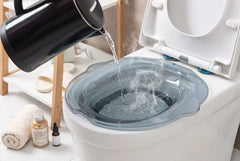
This is the most effective and fastest method. In the middle of a crisis, use cold water—between 10 and 20°C, for 10 to 15 minutes, 2 to 3 times a day: it constricts dilated vessels and reduces the burning sensation. Heat, on the other hand, dilates vessels: it may provide momentary relief but then worsens congestion. Reserve heat for the recovery phase (37-38°C).
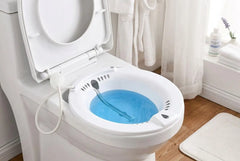
A pinch of baking soda can enhance the soothing effect on itching. The sitz bath basin can be placed directly on the toilet bowl, fits 99% of toilets, and features drain holes to prevent overflow when sitting.
Between baths, a cold compress applied for 10 to 15 minutes prolongs the relief. The complete protocol is detailed in our article on the sitz bath technique.
Reducing pressure: stool and cushion
During a crisis, it is the straining during bowel movements that worsens everything. The first lever is therefore to change position: getting closer to a squatting position opens the rectal angle and eliminates most of the effort.
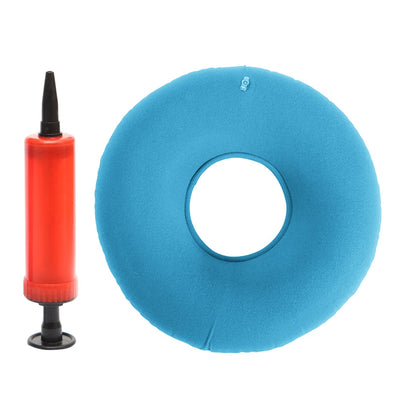
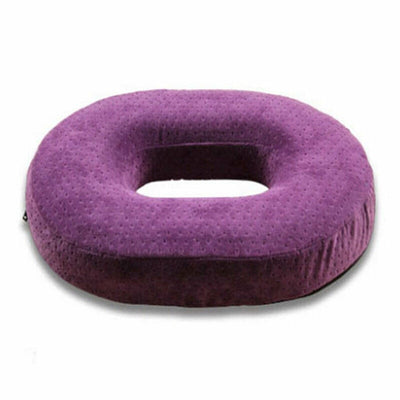
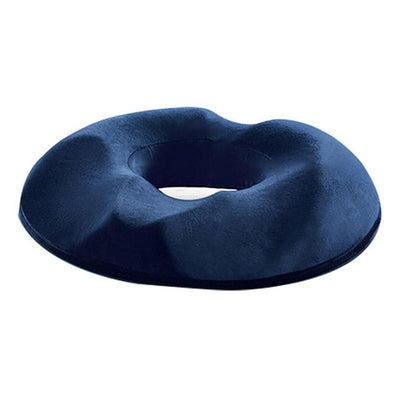
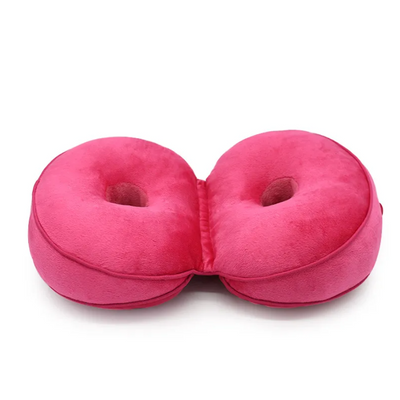
The physiological toilet stool raises the knees above the hips, which facilitates bowel movements and reduces pressure on the anus. In addition, the anti-hemorrhoid memory foam cushion, with a washable cover, eliminates direct pressure on the sensitive area—valuable for sedentary people as well as during pregnancy.
Hygiene, diet, and daily habits
After each bowel movement, cleaning without rubbing changes everything: it is the friction of toilet paper on raw skin that sustains irritation. A portable bidet or a toilet sprayer allows for washing with water without any contact. Then dry by dabbing.
As for diet, gradually increase fiber—whole grains, legumes, green vegetables—to make stools softer, and drink at least 1.5 liters of water per day. This regulates constipation, the number one cause of recurrences.
In phytotherapy, horse chestnut, butcher's broom, and red vine are the plants most traditionally associated with venous comfort. They are available in capsules or herbal teas: ask your pharmacist for the form and duration suited to your situation.
Finally: loose-fitting cotton underwear, regular times for bowel movements—ideally 30 to 60 minutes after a meal—and a little physical activity are enough to significantly space out crises.
Treatments available at the pharmacy
In addition to the steps above, several over-the-counter treatments can help during a flare-up. The choice depends on the area affected—internal or external hemorrhoids—and the dominant symptom.
Cream, suppositories, tablets
Creams generally combine a local anesthetic and a lubricating agent: they soothe pain and external irritation around the anus.
Suppositories act higher up, in contact with the mucous membrane: they primarily target internal hemorrhoids. Those containing corticosteroids require a prescription and short-term use.
Oral veinotonics are commonly suggested during flare-ups. Their benefit is debated, and they are no longer reimbursed: talk to your pharmacist before taking them. Paracetamol remains the first-line analgesic—especially during pregnancy, where many anti-inflammatories are contraindicated.
| Form | Type of hemorrhoids | Prescription | Duration |
| Cream | External | No (without corticosteroids) | A few days |
| Suppositories | Internal | Yes if corticosteroids | A few days |
| Oral veinotonics | Internal and external | No | Upon pharmacist advice |
| Paracetamol | Internal and external | No | According to pain |
For a moderate crisis, an over-the-counter cream without corticosteroids or suitable suppositories are usually enough—combined with a cold sitz bath, which remains the most effective method.
When medical intervention becomes necessary
In case of repeated bleeding, intense pain, failure of local treatments, or prolapse, a consultation is necessary. The doctor will confirm the diagnosis and propose the appropriate follow-up.
If conventional treatments are no longer sufficient, instrumental procedures can be performed by a specialist, usually without general anesthesia: rubber band ligation, infrared photocoagulation, or sclerotherapy, depending on the grade of internal hemorrhoids.
Surgery is reserved for severe cases or when other approaches fail. In all cases, a recurring crisis warrants medical advice rather than prolonged self-medication.
Frequently Asked Questions
How can I quickly calm a hemorrhoidal crisis at home?
A cold-water sitz bath (10 to 20°C), for 10 to 15 minutes, 2 to 3 times a day: this is what relieves pain the fastest. Between baths, a cold compress prolongs the effect.
An over-the-counter cream can be used in addition. And above all: replace toilet paper with rinsing with water after each bowel movement—friction is what sustains irritation the most.
How long does a crisis last, and when should I worry?
Most often 2 to 4 days, with progressive improvement.
Consult a doctor if the discomfort lasts more than 7 days without improvement, if the pain is very intense—hemorrhoidal thrombosis requires medical care—in case of a fever above 38°C, or if it has been impossible to have a bowel movement for more than 48 hours. A first crisis with bleeding always justifies medical advice.
Does the physiological stool really help?
Yes, and it is actually one of the primary reasons our customers purchase it. By raising the knees above the hips, it approximates a squatting position and allows for evacuation without straining.
Since it is straining that dilates the veins, less effort means less pressure on the anus—and significantly fewer crises.
This article provides guidelines for hygiene and comfort. It does not replace a diagnosis or a prescription: at the slightest sign of bleeding, intense pain, or persistent symptoms, consult a doctor.