

Water bottle in the restroom, Islam: a religious and hygienic practice
The use of a water bottle in the toilet in Islam often intrigues the uninitiated, particularly in Europe. However, this practice is firmly rooted in Muslim tradition and meets very specific requirements for cleanliness, respect for the body, and intimate hygiene. In this article, we explain why Muslims rinse themselves after using the toilet, how this aligns with the religious prescriptions of Islam, and how modern solutions like a bidet or a handheld bidet sprayer serve as a natural extension of this.
The importance of cleanliness in Islam
In Islam, being clean is not merely a matter of personal comfort or social convention. Cleanliness is an integral part of faith and is a prerequisite for many acts of worship, starting with prayer. A state of impurity prevents the correct performance of certain religious practices.
Cleanliness and health
Beyond the spiritual aspect, good hygiene is closely linked to health. Washing properly after using the toilet limits irritation, bad odors, and bacterial proliferation. Compared to using only toilet paper, rinsing offers a much more thorough cleaning that is more respectful of sensitive areas.
What is istinja?
Istinja refers to the act of cleaning one's private parts after using the toilet by rinsing with water. This rule is based on the teachings of the Prophet and the general principles of purity mentioned in the Quran.
A clear religious prescription
Istinja is directly linked to minor ablutions. It aims to ensure sufficient ritual cleanliness before praying. This practice is not marginal: it is a part of the daily life of the faithful and structures their approach to intimate hygiene.
Why use water in the toilet?
From an Islamic perspective, rinsing is the most reliable way to wash after using the toilet. Unlike wiping alone, this method actually eliminates impurities instead of just spreading them around.
Toilet paper leaves behind invisible residues. Rinsing, however, allows for precise cleaning of the anus and surrounding areas, providing a lasting sensation of cleanliness. The logic here is one of effectiveness, much more than cultural habit.
The water bottle in the toilet: a practical solution
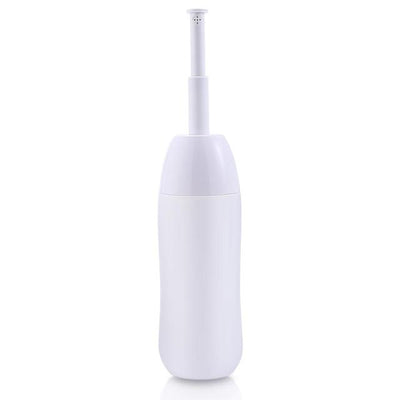
In many countries, especially where there is no fixed bidet, practicing Muslims use a water bottle in the toilet. This simple solution makes it possible to observe religious hygiene rules without any special installation.
How to use a water bottle
Simply pour water from the bottle onto the area to be rinsed after using the toilet. According to tradition, the left hand is used for cleaning, as the right hand is reserved for daily tasks.
In public toilets, the lack of suitable equipment often leads people to carry a personal bottle. It allows them to observe Islamic rules even when on the move, at work, or traveling.
For Muslims, this is not just about being clean in the visible sense, but about maintaining ritual cleanliness consistent with religious obligations before praying.
Toilet paper or water: what is the difference?
Paper alone is considered insufficient in Islam. It can be used as a supplement, but rinsing remains the gold standard for intimate hygiene: it cleans instead of just wiping.
This method reduces irritation and significantly improves daily intimate comfort, provided that the basic rules of body cleaning are followed.
However, the plastic bottle has several limitations: lack of comfort, imprecise application, a less-than-aesthetic appearance—and rinsing that remains difficult to master.
Many have observed that these makeshift solutions, even when carefully maintained, remain conspicuous and not well-suited to a well-kept bathroom.
It is therefore relevant to consider more suitable alternatives: more effective, more hygienic, and truly designed for daily comfort.
The bidet and the handheld sprayer: a modern evolution
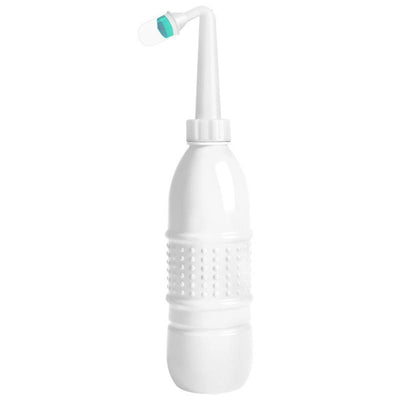
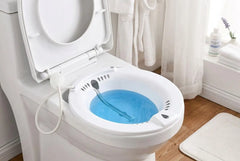
Today, the bidet and the handheld bidet sprayer constitute a modern and ergonomic alternative to the water bottle. They offer a more precise, comfortable, and discreet system. A portable bidet produces a directed jet of water toward the area to be cleaned, which allows one to wash their private parts without awkward handling.
The portable bidet, a suitable solution
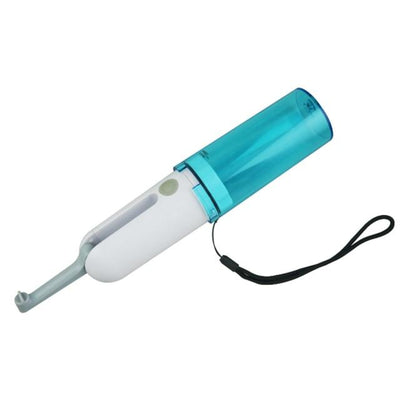
A portable bidet allows for effective rinsing in the toilet, both at home and on the go. It fully respects the principles of istinja while adapting to the constraints of modern life.
Intimate hygiene and daily comfort
Washing properly with water after using the toilet significantly improves comfort, limits odors, and contributes to better overall hygiene—regardless of cultural or religious context.
The water bottle in the toilet illustrates a consistent vision of cleanliness, respect for the body, and health. For the faithful, this approach is not just a matter of visible cleanliness: it is in accordance with the teachings of Islam.
Integrating this practice into a modern setting
In Western restrooms, adding a bidet or a handheld sprayer is simple, discreet, and entirely reversible. This makes it possible to reconcile religious requirements, modern comfort, and housing constraints—even in rental properties.
Why put a water bottle in the toilet in Islam?
The presence of a bottle in the toilet primarily meets a requirement for cleanliness and religious consistency. It allows for istinja, i.e., the cleaning of private parts after using the toilet, in accordance with Islamic teachings. Where there is neither a bidet nor a dedicated system, the bottle remains the simplest solution to observe intimate hygiene rules before praying. This practice, very widespread among Muslims, is not merely cultural: it is directly linked to the prescriptions of Islam.
Is there a better solution?
Yes. The bottle remains functional, but it quickly shows its limits in terms of comfort, precision, and discretion. Modern equipment today allows for the full observance of cleanliness rules in Islam, while significantly improving the daily experience.
The portable bidet is the most direct alternative. Compact, easy to transport, and simple to use, it allows for precise rinsing without installation or renovation. Ideal at home, at work, or while traveling.

The toilet bidet sprayer offers superior comfort. Fixed directly to the plumbing, it allows for targeted, quick, and hygienic rinsing. It is a durable solution, highly appreciated for its effectiveness.

The Japanese toilet kit represents the most advanced option. Integrated into the bowl, it offers precise and comfortable rinsing, without any manual handling.

For Muslims, these modern solutions are a continuation of Islamic prescriptions, while providing a level of practicality and cleanliness significantly superior to that of a simple bottle.
This practice now goes beyond the religious framework and addresses real intimate hygiene concerns. To learn more, discover our article: Cleaning private parts with water: why you should start now?