

Portable bidets: everything that makes you hesitate… and why those fears are unfounded
The idea of giving up toilet paper in favor of water still raises many questions. Between cultural habits, doubts about effectiveness, and concerns about cleanliness or price, many hesitate before adopting a portable bidet. In this article, we answer the main objections that still prevent people from taking the leap. Because for many users, water-based hygiene is a practical, sustainable solution that is perfectly suited to modern usage.
A reluctance that is primarily cultural
In a large part of the world, cleaning yourself with water after using the toilet is the norm. In Europe, toilet paper has become the standard out of habit, without any real sanitary foundation. This norm, largely driven by advertising, explains why its effectiveness is so rarely questioned—even though it remains inferior to cleaning with water, which is much more respectful of intimate hygiene.
"Washing with water is dirty": a persistent misconception
Contrary to this belief, clean water removes residue where paper only spreads it around. The bidet allows for cleaning without direct hand contact, which ensures significantly higher hygiene—especially for intimate cleansing, where paper always leaves invisible traces.
"It's not comfortable"? On the contrary
The fear of getting wet or feeling cold is common when you have never tried a bidet. The apprehension is legitimate, but in practice, the experience is very different: the jet is targeted, brief, and controlled, which avoids any unpleasant sensation or lingering dampness.
Water is not poured in abundance, but applied precisely to the area to be cleaned. The result: you feel clean and fresh, without being soaked. The feeling of comfort is even superior to that of paper, which is often dry, abrasive, or irritating after several wipes.
This intimate comfort is highly sought after, especially by women, whether after pregnancy or for daily use.

As for temperature, ambient water is very well tolerated. It provides a sensation of freshness that quickly fades, without causing discomfort. Some people prefer to fill the tank with lukewarm water, which is more comfortable for sensitive skin.
After use, a simple light drying is enough. The dominant feeling is not moisture, but a clean and lasting freshness. It is often at this point that one realizes the feared discomfort does not exist.
Isn't paper more hygienic than portable bidets?
The effectiveness of paper relies on friction, not on actual removal. It can irritate the skin and promote bacterial growth. Conversely, a bidet ensures gentle, precise, and truly effective cleaning without irritating the skin.
This is, in fact, the advice most often given by professionals in the intimate sphere: water remains the most respectful method for preserving the balance of the area.
More effective than paper, quite simply
In practice, the bidet performs better than toilet paper. Where the latter shows its limits, water ensures complete cleaning, better hygiene, and a feeling of cleanliness that lasts.
"It gets everywhere": the fear of splashing
Modern portable bidets are designed to prevent this. The nozzle directs the jet precisely toward the targeted area. The jet is controlled, the water falls back into the bowl, and then all you have to do is flush. This simplicity very quickly reassures new users.
Complicated to use? Much simpler than it seems
Is a portable bidet practical? Yes, undoubtedly.
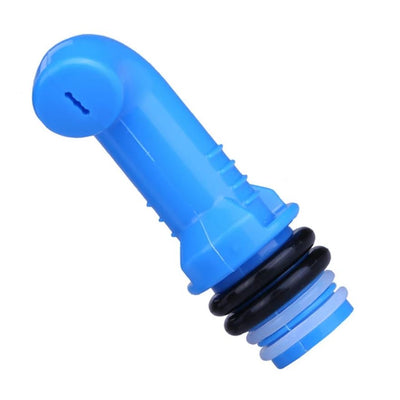
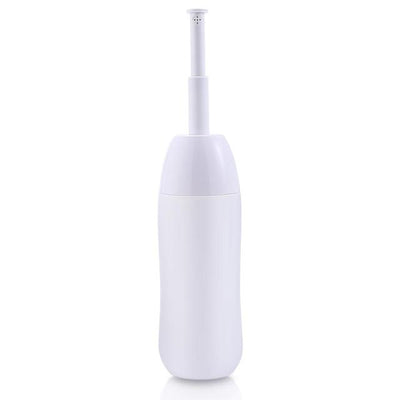
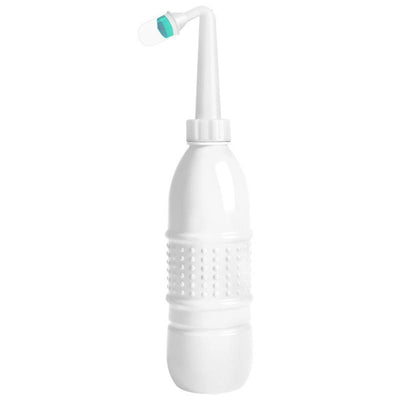
Use is intuitive: fill the tank, aim the nozzle, press. Even without prior experience, you get the hang of it immediately. Some models work with a water bottle, while others have a built-in tank. In any case, it quickly becomes automatic.

"Water isn't eco-friendly": a false opposition
Contrary to popular belief, toilet paper consumption has a much heavier environmental impact than using a bidet. Manufacturing paper requires enormous amounts of water, energy, and transportation—about 140 liters of water for a single roll. The bidet is therefore a truly ecological solution that reduces paper consumption and the associated waste. To learn more, read this dossier on the destruction of forests by the paper industry.

And what about the plastic?
A travel bidet is designed to last. Its plastic is sturdy, recyclable, and can be used for several years—compared to the single-use packaging of paper. It is a sustainable alternative, designed to withstand time and be transported without the risk of breakage.
And the price? An economical alternative
In the long run, the price of a bidet is quickly recouped. Less paper, lower expenses, and less dependence in case of shortages: it is a rational and sustainable solution, far more than just an accessory. The annual savings are estimated at about €90 per person, or nearly €360 for a family of four.
Do doctors recommend bidets?
Cleaning with water is widely presented by health professionals as the most respectful practice for the intimate zone. Even without any specific problems, it is gentler than using only toilet paper: water removes residue without friction or irritation.
The argument often comes back: if we wash our hands with water after they get dirty, why do otherwise for intimate areas? Paper alone cleans incompletely and can irritate the skin over time.
In specific situations—irritations, postpartum, hemorrhoids, post-surgery—the value of the bidet becomes obvious. But even for a healthy person, water remains a simple, consistent, and more hygienic solution for daily life.
No room to install a bidet? A solution designed for small spaces
Lack of space, compact homes, frequent travel: the portable bidet adapts to all situations. Compact, lightweight, and removable, it can be taken anywhere and stored anywhere. It is ideal for compensating for the lack of a fixed bidet at home, while remaining discreet.
Travel bidet: always with you
The portable bidet slips into a bag or suitcase. Very practical when you are on the move, at work, or traveling, it allows you to maintain impeccable hygiene even in poorly equipped restrooms.
Manual or electric: which model to choose?
Hard to decide?
The manual portable bidet is simple, economical, and reliable. It works without electricity.

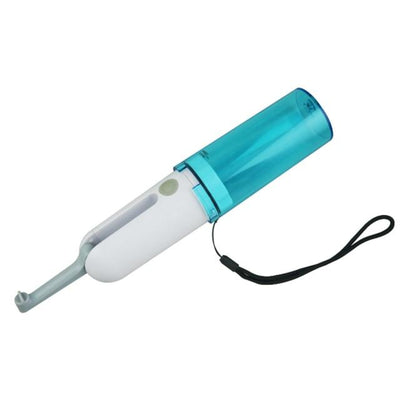
The electric portable bidet offers more settings and increased comfort: adjustable pressure and jet mode selection with the press of a button.

Each model has its advantages. Our comparison guide helps you choose based on portability, jet pressure, reservoir type, and nozzle shape—foldable, retractable, or built-in sprayer.
In summary: overcoming misconceptions
Using a portable bidet means adopting a modern approach to intimate hygiene. It is a practical, effective, economical, and ecological solution. So, don't hesitate any longer.