

Sitz bath for intimate itching: a practical guide
Intimate itching can disrupt daily life. It may be linked to a yeast infection, skin irritation, or vaginal dryness. This guide explains how to take a sitz bath, with simple guidelines on temperature, duration, and frequency to gently soothe discomfort.
A sitz bath to relieve itching
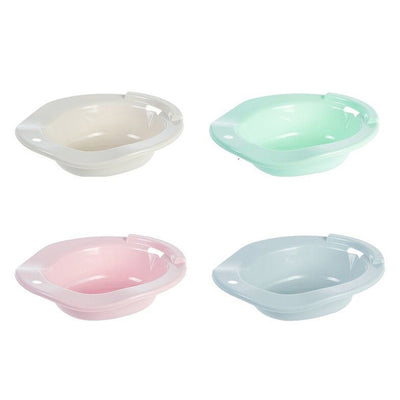
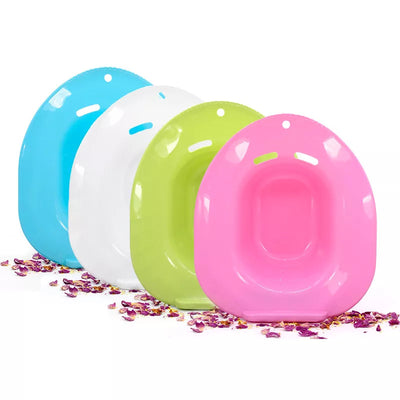
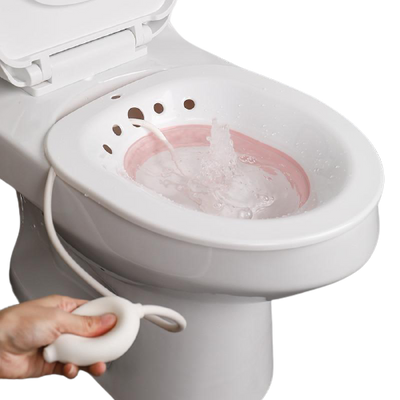
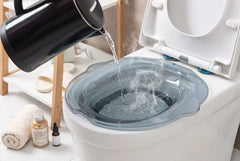
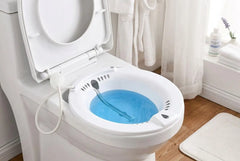
Immersing the genital and perineal area in a small amount of warm water can help calm a sensation of itching or heat. These sitz bath basins sit directly on the toilet seat: no bathtub is required. Water alone, at a pleasant temperature, also limits the repeated friction of toilet paper on sensitized mucous membranes.

When to use it for intimate comfort
A sitz bath can help with various forms of discomfort: irritation after hair removal, a sensation of heat, mild itching with no identified infectious cause, or gentle hygiene as a complement to showering. It provides temporary local comfort without aggravating the fragile tissues of the vulva. It can be done once to three times a day, depending on the intensity of symptoms and how they progress.
To reduce intimate itching of non-infectious origin, clear, lukewarm water is a good first option before adding any ingredients. Using a sitz bath for itching relies on a simple process: water gently cleanses the area and helps remove residue. Unlike scented soap or unsuitable products, it is more respectful of the local flora.
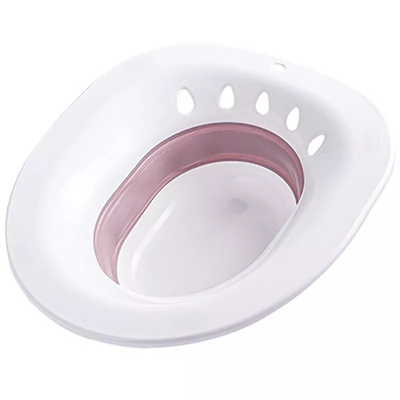
A model designed for the toilet facilitates consistency. The sitz bath basin features an anti-overflow system and fits 99% of standard toilets. Foldable models also offer compact storage, which is practical in homes where space is limited.
Water temperature and duration
To relieve intimate itching naturally, water temperature requires special attention. Water that is too hot can increase sensitivity, while water that is too cold is more suitable for certain occasional situations than for regular use.
- Ideal temperature: between 37 and 38 °C (98.6–100.4 °F) to preserve tissue comfort.
- First try or reactive skin: a 5 to 10-minute session allows you to evaluate your tolerance.
- Standard use: 10 to 15 minutes is the usual duration.
A session should not exceed 20 minutes, as the skin may become more fragile and discomfort may increase. Water above 40 °C (104 °F) is not recommended, as it can aggravate irritation instead of calming it. The duration of a baking soda sitz bath covers these points more precisely.
Baking soda should not be added systematically, especially when the mucous membrane is very sensitive. In case of persistent discomfort, pain, unusual discharge, or symptoms that worsen, a healthcare professional can determine the cause and guide you. This precaution is particularly important when discomfort affects the vaginal or genital area.
Baking soda and yeast infections: useful guidelines
Food-grade baking soda is often cited by people seeking to calm a sensation of discomfort or mild intimate burning. A sitz bath with lukewarm water can also help temporarily calm certain itching of non-infectious origin.
The right dosage in the water
When a mild yeast infection is suspected, some people use a sitz bath with baking soda to seek relief from burning or itching. The common base is one tablespoon of baking soda per liter of lukewarm water, or approximately 14 grams.
- Standard dosage: one tablespoon per liter of lukewarm water, or 3 tablespoons for 3 liters, to be prepared just before the bath.
- Reactive skin: reduce to ½ to 1 teaspoon per liter to limit the risk of irritation on already sensitive tissues.
- Complete dissolution: stir until the water is clear, with no grains at the bottom. Undissolved deposits can be abrasive to the vulva or mucous membranes.
- Product quality: use only food-grade or pharmaceutical-grade baking soda, never technical versions unsuitable for sensitive areas.
A session lasts 10 to 15 minutes, one to three times a day depending on symptom intensity. In the case of a mild yeast infection, improvement may appear after about 4 days of regular use. If there is no improvement after 5 days, a gynecological consultation is necessary. Excessive frequency risks irritating the tissues further instead of soothing them.
Limitations of baking soda on the vulvar area
Baking soda is sometimes presented as an old wives' tale for intimate itching. It remains useful only as part of a gentle routine, without exceeding the uses described above. It is neither an antifungal agent nor a medical treatment: when a yeast infection is marked, recurrent, or confirmed by a healthcare professional, the prescribed treatment remains essential, and a baking soda bath does not replace it.
Other old wives' tales circulate and are better avoided. Garlic, in particular, comes up often: applied directly to the vulva or inserted into the vagina, it does not calm anything and increases irritation of already sensitive mucous membranes. The same logic applies to scented products and household disinfectants, which have no place in this area.
On skin or mucous membranes that are already damaged, the abrasive effect of baking soda can worsen the situation. In this context, clear, lukewarm water is preferable, at least for the first few sessions.
Performing a sitz bath naturally
Preparing a sitz bath takes only a few minutes. However, every step counts to preserve comfort and ensure the process is truly gentle and effective. Cleanliness of the equipment, amount of water, posture, and drying play as important a role as the ingredient potentially chosen.
Preparing clean, lukewarm water
Clear, lukewarm water is the starting point. Among home remedies intended to soothe intimate itching, this method remains simple: a clean basin, a pleasant temperature, and no irritating products added unnecessarily.
- Cleaning the container: carefully wash the basin before each use to remove soap residue and impurities, then rinse with clear water.
- Water volume: plan for 2 to 4 liters, or 5 to 10 cm in the basin, a sufficient amount to cover the genital and perineal area once seated.
- Optional ingredient: if you choose to add one, dilute it completely before immersion and mix until you obtain a homogeneous preparation with no residue.
- Session duration: stay immersed for 10 to 15 minutes in a comfortable seated position, without exceeding this duration in order to respect the skin's balance.
After the session, clean and dry the basin before storing it. This habit helps maintain good hygiene between uses. In practice, this protocol easily fits into an evening routine, after your usual wash.
Drying the vulva without irritating it
Avoid rubbing the vulva or perineal area with a towel, as this can increase itching and weaken skin that is already sensitive. Instead, dab gently with a clean, dry towel, applying light pressure without any back-and-forth motion.
For very reactive skin, leave the area exposed to the air for a few moments after dabbing. Avoiding residual moisture helps limit discomfort in this warm, enclosed area.
Gentle options after the bath
After a sitz bath, a few additional actions can prolong local comfort. A small amount of aloe vera applied to the external skin provides an immediate soothing sensation. It does not treat the cause of the symptoms, but is a pleasant way to soothe the skin after a bath. A compress soaked in cool water, placed on the vulva for a few minutes, can also calm a persistent sensation of heat.
As a complement to a balanced routine, gentle intimate hygiene in the morning and a sitz bath in the evening, if needed, can help prevent imbalances without excessive hygiene. This routine respects local flora and provides targeted support to sensitive intimate areas. The water and aloe vera duo often makes it possible to skip creams and scented products.
Limiting intimate irritation in daily life
The causes of intimate itching sometimes come down to ordinary habits: the soap used, underwear, frequency of washing, or sanitary protection. Identifying and then adjusting these factors can help prevent the return of symptoms, in addition to occasional comfort measures like a sitz bath.

Gentle vulvar hygiene
Before using an over-the-counter cream for intimate itching, it is helpful to go back to the basics of intimate hygiene. Rinsing should remain external: the vulva and perineum, never the inside of the vagina, which regulates itself. A neutral, unscented soap, a soap-free cleansing bar, or a soap-free product, used in moderation, is more respectful of the local balance. Cleaning with water, using a handheld shower or a basin after using the toilet, is part of this approach.
- Frequency: daily washing is sufficient. Excessive hygiene can weaken the mucous membrane just as much as insufficient cleaning.
- Direction: always clean from front to back to avoid transferring bacteria from the anal area to the genital area.
- Products to avoid: scented soaps, bubble baths, intimate deodorants, and vaginal douches can unbalance the area and promote irritation.
This simple routine is enough to preserve comfort on a daily basis.
Rethinking clothing and protection
Synthetic underwear, thongs, very tight jeans, and leggings trap heat and moisture against the skin. These conditions can aggravate irritation. Cotton underwear, changed daily or as soon as it becomes damp, offers an easy preventive measure.
Scented sanitary pads, pantyliners worn continuously, and certain types of toilet paper can contain irritants for sensitive skin. Change your protection regularly and avoid using it when not strictly necessary. Vaginal dryness associated with hormonal variations, pregnancy, menopause, or cycles can also increase local sensitivity.
When skin is raw
Some situations go beyond simple itching: skin that is reddened, peeling, or oozing, particularly for people dealing with urinary leakage or incontinence. Prolonged moisture in contact with the skin fuels irritation, and paper or wipes only worsen the friction on an open area.
In this case, the sitz bath changes its role: it becomes a way to clean without any rubbing at all. Sessions are shortened and repeated rather than lengthened.
- Shorter, more frequent sessions: 5 to 10 minutes, two to three times a day, with clear, lukewarm water, without any additives.
- Changing protection: every two to three hours, and without delay after a bowel movement, to put a stop to maceration.
- Barrier cream: a thin layer after each cleaning maintains a shield between the skin and moisture, including as a preventive measure while the skin is still healthy.
- Drying: only by dabbing very gently, then a few moments in the air before getting dressed.
This framework is a matter of hygiene and comfort. If lesions are extensive, painful, or do not improve in a few days, a healthcare professional must examine them: the skin of the vulva and lips is thin and can degrade quickly.
Genital psoriasis, contact eczema, or vulvar lichen sclerosus can cause persistent itching. If symptoms resist a gentle routine or return regularly, a healthcare professional can identify their origin and propose an adapted course of action. The sitz bath can remain a comfort measure in addition to this, without replacing professional medical advice.
When itching requires medical advice
A sitz bath can provide local comfort, but some symptoms go beyond the scope of home care.
Signs of infection that should not be ignored
Intense itching accompanied by burning, a red vulva, and thick white discharge resembling curdled milk may correspond to a vulvovaginal yeast infection.
- Unusual discharge: colored, abundant, foul-smelling, or unusual in appearance, it may be linked to bacterial vaginosis or a sexually transmitted infection.
- Pelvic pain: deep or persistent pain associated with genital symptoms warrants a rapid medical examination.
- Burning during urination: associated with itching, it may suggest an infection to be investigated.
- No improvement: if no improvement occurs after 5 days of gentle care, a gynecological or medical consultation becomes necessary.
Trichomoniasis, chlamydia, and gonorrhea can cause vaginal or vulvar itching, sometimes with greenish discharge, an unusual odor, or intense pruritus. Professional advice helps identify the cause and choose the appropriate treatment.
| Situation | Recommended action |
| Mild itching, no discharge or burning | Lukewarm water sitz bath, gentle hygiene, observe for a few days |
| Suspected mild yeast infection, moderate burning | Baking soda bath 10 to 15 minutes, 1 to 2 times a day; consult if no improvement in 5 days |
| Skin is raw, peeling, or oozing | Short clear water baths, barrier cream, medical advice if no improvement in a few days |
| Abundant, colored, or foul-smelling discharge | Gynecological consultation without delay |
| Associated pelvic pain | Urgent medical advice |
| Recurrent or resistant symptoms | Full medical check-up to identify the exact cause |
Precautions during pregnancy
During pregnancy, a baking soda sitz bath requires caution. The duration is reduced to 5 to 10 minutes, while the water temperature must remain below 38 °C (100.4 °F). Cold water should be excluded. Before adding any ingredient, even a natural one, ask a midwife for advice.
Essential oils, particularly tea tree, are contraindicated during pregnancy and breastfeeding for this use. They should never be poured pure into water, under any circumstances. Persistent genital itching warrants professional advice, as some vaginal yeast infections or irritations require appropriate treatment. In the meantime, a bath with plain, lukewarm water remains the safest solution.
The sitz bath remains a form of support
In practice, a sitz bath is for comfort and local hygiene, not a medical response. It can accompany a prescribed treatment, facilitate gentle cleaning of an irritated intimate area, and provide a feeling of freshness. It cannot determine the cause of an infection and should not delay a consultation when symptoms persist or worsen.
This practice fits naturally into an intimate hygiene routine, particularly to reduce the use of toilet paper on a sensitive area or to clean more gently after bowel movements. Persistent irritation justifies professional advice.
Frequently asked questions
How can I soothe intimate itching?
A sitz bath in plain, lukewarm water, between 37 and 38°C (98.6–100.4°F), for 10 to 15 minutes, can locally soothe itching. This practice limits friction and gently cleanses the intimate area. In case of mild irritation, opt for a neutral, fragrance-free soap and cotton underwear to prevent recurrence. If symptoms do not improve after 5 days, consult a healthcare professional to identify the cause.
How can I soothe itching caused by a yeast infection?
To soothe itching and mild burning associated with a yeast infection, some people use a baking soda bath: one tablespoon per liter of lukewarm water, for 10 to 15 minutes, 1 to 2 times a day. Improvement may appear after about 4 days of regular use, though this practice is not a treatment for the yeast infection itself. If symptoms persist or return, medical advice is necessary, particularly to determine the appropriate course of action.
What should I do when intimate skin is raw?
When the skin is peeling or weeping, particularly in cases of urinary incontinence, shorten baths rather than lengthening them: 5 to 10 minutes in plain, lukewarm water, two to three times a day, with no additives. The bath then completely replaces wiping, which aggravates contact on an open area.
Change your hygiene product every two to three hours, dry only by dabbing very gently, and apply a thin layer of barrier cream after each wash. If the lesions are extensive or do not improve within a few days, have them examined.
Which bath is effective for calming intimate itching?
Plain lukewarm water is often the preferred option for a first sitz bath, as it does not add any products. Baking soda, diluted at a rate of one tablespoon per liter of water, can supplement this when burning is mild and associated with a suspected yeast infection. Diluted apple cider vinegar is sometimes used, but it is better to avoid any ingredient that might irritate weakened mucous membranes. In case of persistent discomfort, seek advice from a healthcare professional.