

Baking soda sitz bath: naturally relieving hemorrhoids
Hemorrhoids cause itching, pain, and discomfort for millions of people every day. A very simple home remedy often provides rapid relief: the baking soda sitz bath. Here is, step-by-step, how to prepare, dose, and use it.
Baking soda sitz bath recipe
The principle relies on the soothing action of baking soda. Added to water, it possesses alkalizing properties that neutralize acidity and rebalance the pH of the anal area. This is what explains its calming effect on irritation. To discover other ingredients, consult our guide on sitz bath recipes.

Ingredients and dosage
The success of your baking soda sitz bath recipe depends on proper preparation. Dissolve the powder completely in the water before any immersion to prevent grains from rubbing against the already sensitive area. Prepare the solution just before use.
- Baking soda: 1 tablespoon (14 g) per liter of lukewarm water, i.e., 3 to 4 tablespoons for a standard 3 to 4-liter basin.
- Lukewarm water: 37-39 °C. This temperature relaxes the area without accentuating the sensation of swelling.
- Depth: 8 to 10 cm, enough to fully immerse the anus and anal area to target external hemorrhoids.
Variations and supplements
You can add other natural ingredients such as witch hazel or Epsom salt. During an acute flare-up, a cold sitz bath (15-20 °C) is the traditional reflex: cold triggers vasoconstriction, which quickly soothes the sensation of swelling. Alternating between lukewarm and cold water also stimulates local circulation.
To avoid: pure essential oils, which do not dissolve in water and can burn the mucous membranes, as well as soap and scented products.
Equipment and preparation
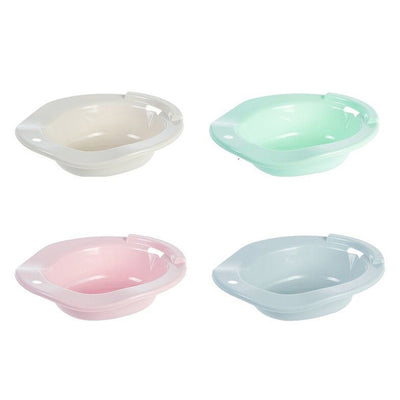
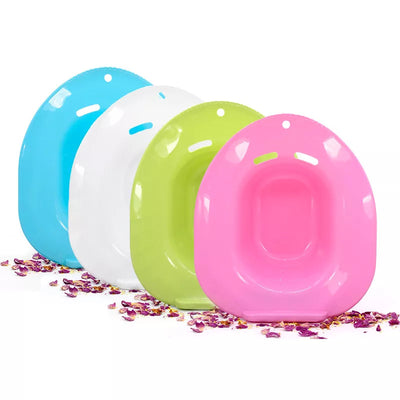
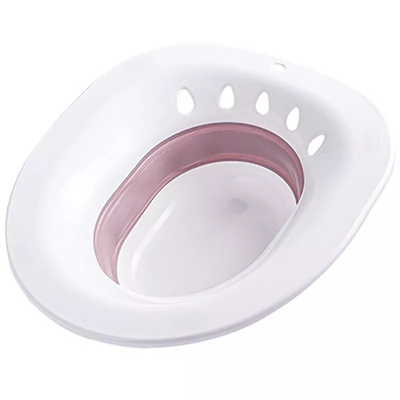
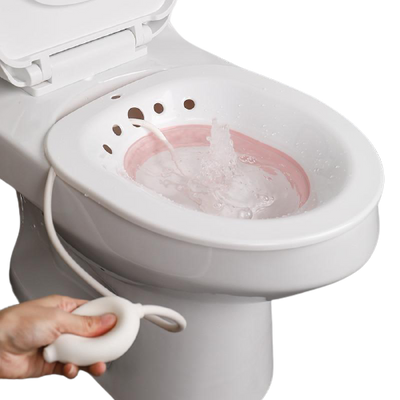
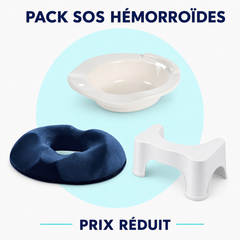
Use a specific basin that fits directly onto the toilet seat: immersion is more practical, and you avoid wasting water. Thoroughly clean and disinfect the container before each use.
After the bath, rinse gently with clean water, dry the area by patting with a soft towel, then clean your equipment.
Dosage and frequency
Respecting the dosage prevents drying out the skin or disrupting the natural pH, which would worsen the discomfort.

What quantity per liter of water?
The benchmark is one tablespoon, or about 14 g of baking soda, per liter of water. For a 3 to 4-liter basin, this represents 3 to 4 tablespoons. This quantity can be adjusted according to your skin tolerance.
- Standard dosage: 1 tablespoon per liter, suitable for moderate hemorrhoids.
- Reduced dosage: ½ to 1 teaspoon per liter, preferable if irritation occurs or if your skin is very sensitive.
- Complete dissolution: essential to avoid any friction on the anal region.
| Water volume | Standard dosage | Reduced dosage (sensitive skin) | Water depth |
| 1 liter | 1 tbsp (14 g) | ½ tsp (3 g) | 8-10 cm |
| 3-4 liters (basin) | 3-4 tbsp (42-56 g) | 1-2 tsp (6-10 g) | 8-10 cm |
Immediately decrease the quantity if you notice persistent redness, worsening itching, or a reaction to the baking soda.
What frequency?
In the acute phase, when pain and itching are intense, 2 to 4 baths per day can be taken, keeping an interval of at least two hours and ideally after using the toilet.
As soon as the symptoms subside, reduce to one session daily, then two or three per week. Never exceed four baths per day, as this may unbalance the skin's pH. For more advice on cold water, consult our article on the sitz bath for hemorrhoids.
Temperature, duration, and after-care
Controlling the temperature well avoids increasing discomfort and soothes pain in the anal region more quickly.

What temperature to choose?
The benchmark range is between 37 and 39 °C, lukewarm water that you can test on your wrist. This precaution prevents any risk of burns on a particularly sensitive area.
- Lukewarm water (37-39 °C): the classic solution when not in a flare-up, which relaxes and supports blood circulation.
- Hot water (> 40 °C): to be avoided during a flare-up, as vasodilation accentuates swelling.
- Cold water (15-20 °C): the flare-up reflex, which triggers rapid vasoconstriction and soothes external hemorrhoids.
- Alternating water: starting lukewarm then switching to cool, to combine relaxation and a vasoconstrictor effect.
During a flare-up, prioritize cold water. Outside of flare-ups, lukewarm water remains the most comfortable.
Duration and post-session care
Limit each session to 10-15 minutes. Beyond 20 minutes, the skin stays moist for too long, which promotes irritation around the anal region.
After the bath, dry gently by patting with a cotton towel, without rubbing. Then wear loose-fitting natural fiber underwear to reduce friction.
Baking soda and hemorrhoids during pregnancy
Hemorrhoids during pregnancy are common, often linked to uterine pressure and constipation. The baking soda sitz bath is one of the simplest ways to relieve discomfort, provided you follow a few guidelines.
- Lukewarm temperature (37 °C), never hot.
- Short duration: 5 to 10 minutes.
- Moderate frequency: 1 to 2 times per day, with sessions spaced at least four hours apart.
- Prior medical approval: essential.
Always ask your midwife or gynecologist for advice before using this method during pregnancy.
For a detailed guide, consult our article on how to take a sitz bath.
Frequently asked questions
Is baking soda good for hemorrhoids?
Baking soda is one of the most commonly used home remedies for hemorrhoidal discomfort. It acts as an alkalizer that neutralizes acidity around the anus and restores a balanced pH, which soothes itching and irritation.
Used in a lukewarm sitz bath, it cleanses gently. In case of bleeding, fever, or infection, consult a doctor.
How many sitz baths per day?
During a hemorrhoidal flare-up, two to four sitz baths per day, especially after using the toilet. Once symptoms subside, reduce to once a day, then to two or three times per week.
Do not exceed four sitz baths daily: beyond that, the skin becomes irritated and the local pH becomes unbalanced. If pain persists for more than seven days, consult a doctor.
How to quickly soothe a flare-up with baking soda?
Prepare a cold sitz bath (15 to 20 °C) and add two tablespoons of baking soda. You can enhance the effect by infusing it with witch hazel, valued for its astringent properties. Remain immersed for about ten minutes.
Also remember to drink enough (at least 1.5 liters per day) and adopt a fiber-rich diet, which helps prevent recurrence. Your pharmacist can advise you on a complementary local treatment if necessary.
The sitz bath is a comfort care measure. It does not replace medical advice or treatment.