

What is a Japanese toilet: Japanese toilets explained
What exactly is a Japanese toilet? It is a toilet equipped with an integrated water-washing system for intimate areas. Also called a Japanese toilet, or washlet, it projects a jet of water for cleaning after every use. This article explains everything about this concept that transforms ordinary toilets into a space of comfort.
What exactly is a Japanese toilet?
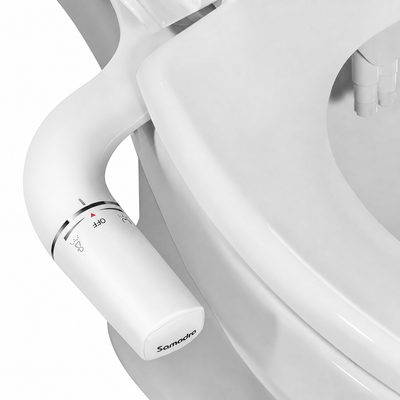
A Japanese toilet with an integrated bidet combines performance and ease of use. It replaces or supplements toilet paper by projecting a precise jet of water via a small retractable nozzle. You benefit from a thorough cleaning while remaining comfortably seated, without the slightest movement.

Definition and origin of washlet toilets
Japanese washlet toilets were born in Japan between the 1960s and 1980s, as a refinement of the European bidet, in response to particularly rigorous hygiene requirements. It was at the beginning of the 1980s that the first electric washlet was launched, permanently changing toilet habits. The system sprays water at adjustable pressure and temperature for a cleaning that is both thorough and gentle.
Over time, the washlet has been enriched with features — heated seat, warm air drying, deodorization, antibacterial surfaces — to the point of becoming true high-tech toilets. Today, about 80% of Japanese households are equipped with them.
To learn more, read our article Japanese toilet: a revolutionary concept for perfect hygiene.
Difference between a Japanese toilet and a classic bidet
Japanese toilets are clearly distinct from the traditional bidet. While the latter is a separate device that requires you to move, the Japanese toilet is an integrated solution: immediate cleaning without moving, space-saving, and preserved intimacy.
- Traditional bidet: a separate device that requires you to move, takes up space, and consumes several liters of water.
- Mechanical Japanese toilet kit: an integrated system that works without electricity and connects to the flush water supply.
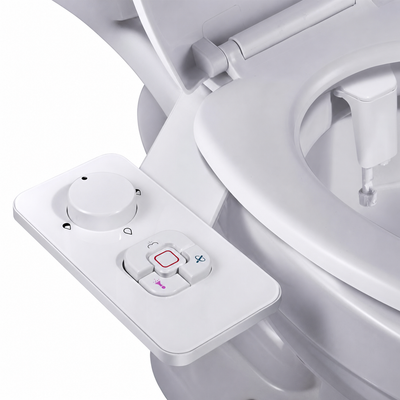
- Electric Japanese toilet seat: it adds advanced features — heated seat, drying, intuitive controls.
- Complete monoblock: an all-in-one, expensive solution that requires professional installation.
Technology adapts to all budgets. Mechanical kits, without electricity, make this hygiene accessible starting at €60. Electronic toilet seats offer the best balance between installation simplicity and advanced functions for under €500.
How do Japanese toilets work?
The operation is based on a simple but incredibly effective hydraulic circuit. Water is routed from your home network to a system of jets, which you control via a mechanical or electronic interface.

Hydraulic circuit and jet system
Water is distributed via a T-adapter connected directly to the cold water supply. Standard network pressure is sufficient to produce an effective jet: no pump is required. A dial or button adjusts the intensity and direction of the cleaning.
- Brass T-adapter: a watertight, leak-proof connection that lasts.
- Retractable nozzle: deploys automatically or manually, made of antibacterial material, with an integrated self-cleaning system.
- High-pressure hose: made of braided stainless steel, it is resistant to limescale.
- Ultra-thin bracket: only 6 mm thick — it is almost invisible and fits 99% of standard bowls.
Non-electric models run solely on water pressure, without batteries or sensors. This simplicity is the guarantee of maximum reliability. For an immediate comfort boost, a Japanese toilet kit simply attaches under the seat.
Temperature and pressure control
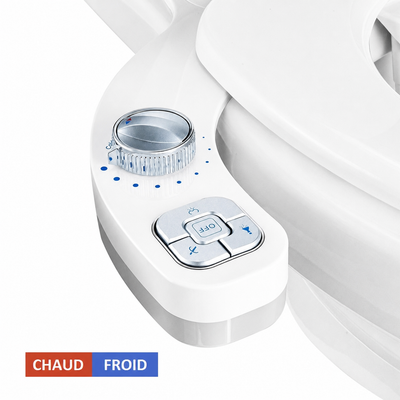
Everything is customizable. On electric versions, a heater warms the water instantly, for a temperature adjustable between 30 and 45 °C. A control panel or remote allows these parameters to be adjusted with precision.
You can also modulate the power of the jet, from a gentle trickle to a more dynamic flow. This range suits everyone, from the most sensitive skin to those who prefer a more tonic sensation. Some models even store your settings.
Air drying and additional functions
After washing, warm air drying takes over. This air, tempered between 40 and 60 °C, helps reduce — or even eliminate — the use of toilet paper. The cycle duration is adjustable.

- Active deodorization: an activated carbon filter neutralizes odors without any chemicals.
- Nozzle self-cleaning: automatic rinsing before and after each use.
- Nocturnal LED lighting: a soft night light that guides without dazzling.
- Massage function: a pulsating jet, appreciated for its toning effect on the area.
High-tech Japanese toilets detect your presence via sensor, which triggers the preheating of the seat and the opening of the Japanese toilet seat without any contact.
The different types of Japanese toilets
The market is divided into three main categories, catering to different needs, budgets, and configurations.

Complete monoblock or adaptable seat?
The Japanese monoblock toilet integrates the bowl, tank, and hydraulic system into a unified whole. Comfort is optimal, but installation is complex and requires a professional. Its price ranges from €2,000 to €5,000: it is aimed at complete renovation projects.
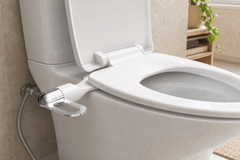
Conversely, the electric seat attaches to your existing bowl and transforms a classic toilet without any structural modification. Installation takes a quarter of an hour. It is an excellent alternative, with drying and heated seat, for a budget of €240 to €480.
| Criteria | Complete Monoblock | Electric Seat | Japanese Toilet Kit |
| Average price | €2,000-5,000 | €240-480 | €60-110 |
| Installation | Professional required | Approx. 15 minutes | 5 minutes |
| Electricity | Essential | Essential | None |
| Heated seat | Yes | Yes | No |
| Warm air drying | Yes | Yes | No |
| Adjustable jet | Yes | Yes | Yes |
| Compatibility | New installation | 99% of standard bowls | 99% of standard bowls |
Choosing a seat gives you complete freedom to upgrade your setup later: you can switch to a higher model without any construction work.
Mechanical kit, for express installation
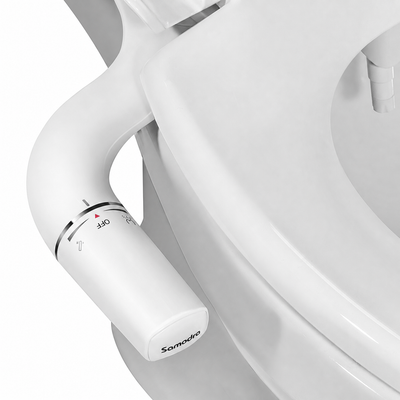
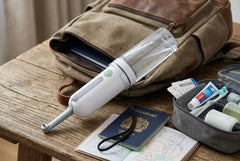
The Japanese toilet without electricity democratizes this technology — perfect for renters and small budgets. It includes a nozzle, a brass adapter, and a manual valve. Installation is almost immediate, without tools or a plumber.
The Discovery Japanese Toilet Kit perfectly illustrates this category: dual adjustable jet, pressure dial, ultra-thin design that slides under the seat. Discover the Discovery Japanese toilet kit to modernize your bathroom at a lower cost.
Its entirely mechanical operation eliminates any electrical risk in damp environments. Without batteries or electronics, it is safe from the slightest breakdown: a durable investment, offering the best value for money to get started with water cleaning.
Advanced functions and customization
The most advanced models save user profiles: each person memorizes their temperature, pressure, and massage intensity, activated with a single gesture.
- Feminine mode: a differently oriented jet, with gentle pressure, for intimate hygiene during periods or pregnancy.
- Dual jet: simultaneous front and rear cleaning.
- Nozzle self-cleaning: cleanliness of the system ensured after each use.

Many accessories facilitate installation. Hose extensions allow for connection even when the water supply is far away, and sediment filters protect the mechanism and reduce maintenance.
Practical everyday benefits
The Japanese toilet transforms your intimate hygiene routine: superior cleaning, personalized comfort, reduced ecological footprint. Its effects can be felt on your comfort, your budget, and the planet.
Superior hygiene
The Japanese bidet replaces the friction of toilet paper with a gentle, thorough wash that actually removes residues while preserving sensitive mucous membranes. Warm water immediately soothes irritation.
It is, moreover, for this reason that people prone to hemorrhoids or fissures are the first to equip themselves: cleaning is done without any contact, which provides real daily relief — especially for those with inflammatory bowel diseases.
The feminine washing function, with its forward-oriented jet, is particularly appreciated during periods, after intimacy, or after childbirth. It avoids any friction on an already sensitive area.
Savings and ecological impact
The Japanese toilet allows for a 70% to 90% reduction in paper consumption. A family of four thus saves nearly €360 per year. A mechanical kit pays for itself in a few months, an electric seat in two to three years.
- Water saving: one roll of paper requires 140 liters of water to manufacture, compared to about 0.5 liters per use of the Japanese toilet.
- Forest preservation: reducing toilet paper consumption is acting directly against deforestation.
- Carbon footprint: less paper production and transport, even taking into account the low electrical consumption of drying.
- Less waste: no more plastic packaging and cardboard cores.
Electric models consume between 50 and 400 W depending on the functions used, with the heated seat accounting for the majority. Eco modes further reduce this consumption.
Comfort and accessibility for the whole family
Heated seat, adjustable jet, warm air drying, massage function: the comfort is real, and particularly appreciable in winter.
This solution also makes life easier for the elderly, people with reduced mobility, or those prone to back pain. Pregnant women find it extremely practical, and children naturally adopt complete hygiene, effortlessly.
Frequently Asked Questions
How exactly do Japanese toilets work?
The operation is based on a hydraulic circuit connected to your domestic water supply. A simple T-adapter is enough to connect it to the existing plumbing, without any renovation. On mechanical models, mains pressure activates the valve that controls the jet.
On electric versions, a heating element warms the water instantly, and solenoid valves direct the jet according to your settings. Optional ventilation then provides drying. The system is remarkably reliable and requires no heavy maintenance. To learn more, see our article on the operation of a Japanese toilet.
Which model offers the best value for money?
The mechanical kit, without an electric power supply, indisputably offers the best value for money for discovering Japanese toilets. For €60 to €110, you get adjustable jets and a five-minute installation. If you are looking for a compromise, the electric seat, from €240 to €480, is the ideal option.
It provides a heated seat, warm air drying, and an electronic control panel, all on your current toilet bowl. The complete monobloc, between €2,000 and €5,000, is aimed at high-end new projects. To compare, consult our Japanese toilet price comparison.
Do Japanese toilets really reduce paper consumption?
Absolutely. Regular use of a Japanese toilet reduces toilet paper consumption by 70 to 90%. Some even do without it entirely, thanks to warm air drying. For a household of four, this represents approximately €360 in savings per year.
Beyond the budget, the practice is much more hygienic and helps preserve forests — a French person consumes on average nearly 13 kilos of toilet paper per year. The ecological impact is major: it takes about 140 liters of water to manufacture a single roll, compared to 0.5 liters per wash.