

Men's intimate hygiene: the complete guide
This is a topic that is never discussed. Men are taught how to wash their hands, teeth, and hair — but for the rest, everyone just fumbles along with what they’ve figured out on their own. The result: habits handed down by no one, and a lot of unnecessary irritation.
This guide covers the subject directly: what needs to be washed, how, how often, and with what.
Areas not to be overlooked
Male intimate hygiene involves four distinct zones, which have neither the same needs nor the same sensitivity.
- The glans and foreskin. This is the most sensitive area and the one most often washed incorrectly. For uncircumcised men, the foreskin must be retracted during each wash to rinse the groove underneath.
- The scrotum and groin. These are folded, warm, and damp areas where sweat accumulates. This is where most fungal infections and irritations originate.
- The perineum. The space between the scrotum and the anus, which is almost always forgotten — even though it sweats just as much as the rest.
- The anal region. This is the area that suffers the most from toilet paper, by far.
The five most common mistakes
These recur systematically, and they are the cause of the vast majority of discomfort.
1. Using shower gel on mucous membranes
A standard shower gel is formulated for the skin, not for mucous membranes. Its pH and surfactants strip away the natural protective film of the glans, causing dryness, redness, and itching. A gentle soap with a neutral pH, or simply clear water, is more than enough.
2. Scrubbing
The instinct is understandable: you scrub because you want to be clean. Except that on thin skin, scrubbing creates micro-lesions, which itch, which you then scratch, making everything worse. Rinse, pat dry — never scrub.
3. Forgetting to retract the foreskin
This is the most common mistake among uncircumcised men. Without retraction, secretions accumulate under the foreskin. A simple rinse with lukewarm water once a day permanently resolves the issue.
4. Washing too often or too vigorously
Three showers a day with soap won't make you cleaner: they weaken the skin. A daily wash is enough — supplemented by a simple water rinse after exercise or using the restroom.
5. Relying solely on toilet paper
This is the number one blind spot. Paper wipes, it doesn’t clean: it moves residue around instead of removing it. And by repeatedly rubbing an already sensitive area, it eventually causes irritation. This is precisely why cleaning with water is the most commonly recommended action whenever there is any anal discomfort.
The daily routine, in practice
In the shower
Once a day is enough. In order:
- Gently retract the foreskin and rinse the glans with lukewarm water, without soap or with a gentle neutral pH soap.
- Wash the scrotum, groin, and perineum — this is where soap is most useful.
- Finish with the anal region, always last.
- Rinse thoroughly: soap residue is as irritating as the soap itself.
- Dry carefully by patting. Residual moisture in the folds is what most encourages fungal infections.
After using the restroom
This is where it all happens, and where paper shows its limits. A rinse with water takes ten seconds and completely changes the situation: no more residue, no more friction, no more odor.
In practice, there are three solutions that allow you to do this without transforming your bathroom:
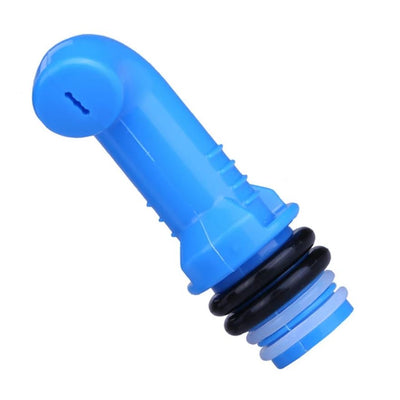
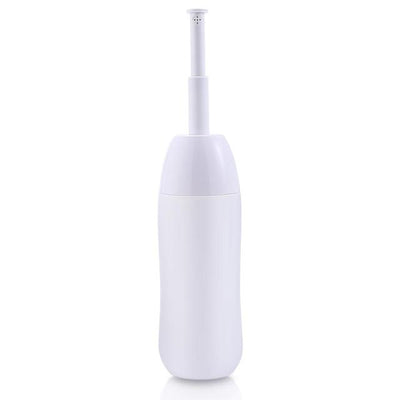
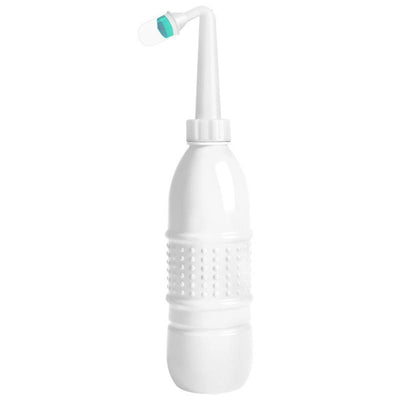
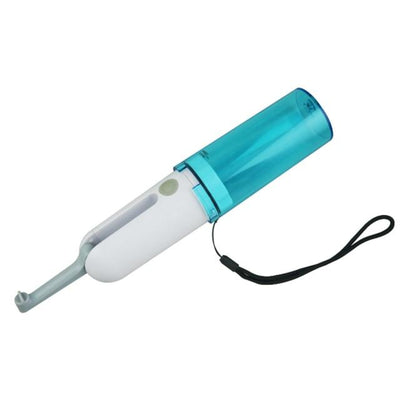
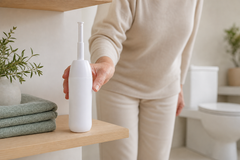
- a portable bidet, which you fill and squeeze — nothing to install;
- a bidet sprayer, fixed next to the toilet and connected to the water supply;
- a Japanese toilet seat kit, which slides under the seat and is activated by a dial, without having to bend over.
All that remains is to pat dry — with a sheet of paper, or better yet, a washable towel.
Smegma: let's talk about it
It is the subject no one brings up, yet one of the most searched for. Smegma is a whitish deposit that forms naturally under the foreskin from secretions and dead cells. There is nothing abnormal or dirty about it in itself: it is a normal result of skin function.
However, if it accumulates, it causes odors, itching, and irritation of the glans. Prevention can be summed up in one sentence: retract and rinse with lukewarm water once a day. No harsh soap, no antiseptic, no scrubbing — water is enough.
If, despite regular washing, you notice persistent redness, pain when retracting, or discharge, this is a reason to see a doctor, not to be more aggressive with cleaning.
After sports, after intercourse
Two times when a simple rinse with clear water makes all the difference.
After sports, maceration in tight clothing is the most frequent cause of groin irritation and fungal infections. If you cannot take a shower immediately, a quick rinse and fresh underwear are better than nothing — and much better than a scented wipe.
After intercourse, rinsing with lukewarm water is the basic hygiene step. Urinating after intercourse is also the most common advice given to limit the risk of urinary tract infection.
Special situations
Hemorrhoids and anal fissures
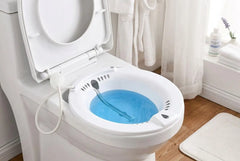
This is a scenario where toilet paper becomes frankly counterproductive: each use reawakens pain and maintains irritation. Cleaning with water, without any friction at all, is the most common traditional remedy — supplemented, during a flare-up, by a sitz bath with cool water (10 to 20 °C) for 10 to 15 minutes, 2 to 3 times a day.
A toilet stool is a useful addition to this process: by raising the knees, it reduces the pushing effort that aggravates hemorrhoids.
After surgery
Hemorrhoid surgery, prostate surgery, circumcision, implant placement: in all these cases, medical staff systematically advise cleaning with water rather than wiping, precisely because it involves no contact with the area.
Obviously, follow the protocol you were given: post-operative instructions always take precedence over general advice.
Prostatitis and perineal pain
A warm sitz bath (37-38 °C, 10 to 15 minutes) is traditionally advised to relax the perineum and relieve the sensation of heaviness. It is a comfort measure, to accompany medical treatment — never to replace it.
Persistent irritation and itching
Before increasing the number of products you use, start by removing some: stop using shower gel on the area, switch to clear water, dry carefully, and wear cotton. In the vast majority of cases, irritation comes from what you put on the area, not what you haven't.
If it persists beyond a few days, consult a professional: a fungal infection, eczema, or other infection needs to be treated, not washed away.
After 60: when bending over becomes difficult
This is a rarely addressed, yet central topic. With age, arthritis, a hip replacement, or simply a loss of flexibility, the act of wiping becomes difficult to perform correctly — or even painful.
Cleaning with water solves the problem instantly: there is no longer a need to contort oneself or reach for anything. A Japanese toilet kit is operated by a dial on the side of the bowl, without bending. A bidet sprayer wall-mounted can be held with one hand. And a portable bidet allows you to maintain the same independence while traveling.
It is, very concretely, a matter of dignity and independence — for the person concerned as well as for those assisting them.
Which equipment to choose?
| Solution | Budget | For whom |
| Manual portable bidet | under €40 | To try it out without installing anything, and for travel |
| Bidet sprayer | €40 to €100 | For daily use, with full control over the jet |
| Japanese toilet kit | €60 to €170 | To no longer have to bend over — the most comfortable daily option |
| Sitz bath basin | from €30 | In case of hemorrhoids, fissures, or post-operative care |
All our kits and seats fit 99% of standard toilets and can be installed in a few minutes, without any construction or a plumber.
What this also changes for the budget
Switching to cleaning with water reduces toilet paper consumption by 70 to 90%, which is about €90 per person per year. And to put the ecological scale in perspective: manufacturing a single roll of paper requires about 140 liters of water, whereas a wash uses half a liter.
In other words, a portable bidet pays for itself in a few months — and a Japanese toilet kit within the year.
Frequently Asked Questions
How often should a man perform intimate hygiene?
Once a day is enough, in the shower, with water and possibly a gentle neutral pH soap. Add a rinse with clear water after sports, after intercourse, and after each trip to the restroom.
Washing more often does nothing and eventually weakens the skin: it is an excess of soap, not a lack of it, that causes the most irritation.
Should I use a special soap for male intimate hygiene?
No, it is not essential. Clear water is enough for the glans; a gentle soap with a neutral pH is perfectly suitable for the scrotum, groin, and perineum.
What should be avoided, however: scented shower gels, antiseptic products, and wipes, which strip away the natural protective film.
How do I get rid of smegma?
By retracting and rinsing with lukewarm water once a day. Nothing else is necessary — especially no harsh soap or scrubbing, which would only irritate the mucous membrane.
If retraction is painful or impossible, or if redness persists despite regular washing, talk to your doctor.
Is toilet paper really enough?
No. Paper wipes, it doesn’t clean: it moves residue more than it removes it, and its repeated friction irritates an area that is naturally delicate.
This is the reason why rinsing with water is systematically recommended in cases of hemorrhoids, fissures, or post-operative recovery. And once you've switched, you generally don't go back.
Is a bidet for women only?
That is a purely French misconception. In most of the world — Japan, Southeast Asia, the Middle East, Italy, Latin America — washing with water after using the restroom is the norm for everyone.
The only truly specific use for men is rinsing the glans and foreskin. For the rest, anatomy changes nothing about the matter.
In summary
Male intimate hygiene requires very little: water, no scrubbing, careful drying. The rest — scented soaps, wipes, antiseptics — does more harm than good.
The only real change to make is switching from toilet paper to rinsing with water. It is also the one you notice the most quickly. Discover our range of portable bidets to start without installing anything.
The advice in this article is for routine hygiene and does not replace medical advice. In case of pain, persistent redness, discharge, or urinary discomfort, consult a healthcare professional.