

Relieving hemorrhoids naturally: natural treatment and granny remedies
To relieve hemorrhoids naturally, several approaches complement each other: sitz baths, diet, plants, and good toilet posture. Here is what really works, and the order in which to approach it.
Understanding hemorrhoids to better relieve them
Hemorrhoids correspond to the venous network located in the anus. During a flare-up, several signs appear: pain, burning, itching, and a feeling of heaviness.

Internal or external hemorrhoids: the difference
Internal hemorrhoids form under the lining of the anal canal. They often go unnoticed at first—the pain is less pronounced—but can cause bright red bleeding during bowel movements. External hemorrhoids, located on the surface of the anus, more readily cause pain, swelling, and immediate discomfort when sitting.
In both cases, you find the same underlying symptoms: burning, tightness, a feeling of heat, and itching.
A flare-up generally lasts 2 to 4 days in simple cases, and often subsides on its own provided you act early. If symptoms persist beyond a week, medical advice is necessary to rule out another cause.
What promotes a flare-up
Constipation remains the most frequent trigger. Other factors include pregnancy, being overweight, prolonged sedentary lifestyle, and a diet rich in alcohol or very spicy dishes. The more these factors accumulate, the higher the risk.
Sitting for several hours at a time also maintains venous congestion. Conversely, even moderate physical activity reduces abdominal pressure and softens transit.
The link between the liver and hemorrhoids
This is a pathway explored by naturopathic approaches: liver congestion is thought to contribute to venous reflux in the anal area, maintaining a sensitive environment. This reading explains why some practitioners recommend liver support for people prone to recurrences despite well-conducted local care.
Sitz baths and cold: the fastest relief
Water remains the simplest and most effective tool to calm a flare-up. However, you must choose the right temperature.
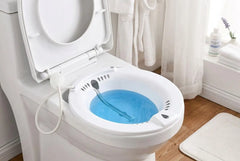
How to take a sitz bath at home
In the middle of a flare-up, cold is what relieves: water between 10 and 20 °C (50-68 °F), for 10 to 15 minutes, 2 to 3 times a day. It constricts dilated vessels and reduces the burning within minutes. Outside of a flare-up, switch to lukewarm water (37-38 °C / 98-100 °F), for the same duration, to relax the tissues and support local circulation.
The sitz bath basin sits directly on the toilet bowl, fits 99% of standard toilets, and has overflow vents to prevent spills. A few liters are enough—no need to fill a bathtub.
Find the entire range of basins, and the complete protocol in our article on the sitz bath technique.
Cold to reduce swelling quickly
When swelling dominates, a cold compress is the right reflex: 5 to 10 minutes, several times a day. Never place ice directly on the skin—a clean cloth is enough to protect the area.
A cold gel pack, in its fabric sleeve, can be used after bowel movements or prolonged sitting. Here again, it is a matter of moderation: properly dosed cold soothes, too long a contact irritates.
It is also possible to add a decoction of bistort or lesser celandine to the bath water, two plants rich in tannins traditionally used for their astringent effect.
Grandmother's remedies for local application
Some remedies are applied directly to the area to calm pain, soothe itching, and reduce irritation. This is the simplest approach to get through a mild flare-up.

Witch hazel, aloe vera, and coconut oil
These are the three most used and best tolerated.
- Witch hazel, as a hydrosol on a compress, 2 to 3 times a day. It is the astringent plant most associated with venous comfort: its tannins are known to constrict vessels.
- Aloe vera gel, a small amount of pure gel without aloin, after washing. It hydrates and soothes burning sensations.
- Virgin coconut oil, in small amounts on the external area. Its emollient effect reduces friction and calms persistent irritation.
In practice, witch hazel in the morning and aloe vera in the evening form a simple routine. Coconut oil complements the set if the area feels tight after washing.
Essential oils and green clay
Essential oils of cypress, peppermint, and lentisk pistache are traditionally used for venous comfort. Peppermint in particular provides an immediate cooling effect.
An absolute rule: essential oils are never used pure on this area, and they do not dilute in water. They must be mixed with a vegetable oil—jojoba, calendula—before any application. Ask your pharmacist or aromatherapist for the formula and dosage: on a mucous membrane, "guesstimating" comes at a high price. And at the slightest stinging sensation, stop.
Apple cider vinegar
It is used locally, always highly diluted, or in the sitz bath water—a few tablespoons are enough. As soon as stinging appears, increase the dilution or stop: the goal is to calm, not to increase inflammation.
If hemorrhoids bleed often, become very painful, or come back regularly, medical advice remains preferable despite the interest of these remedies.
Veinotonic plants for oral use
Acting from the inside is a useful complement to local care. The goal: support venous tone and limit blood stasis that promotes recurrence.

Red vine, butcher's broom, and horse chestnut
These are the three plants most traditionally associated with venous comfort.
- Red vine, appreciated for its flavonoids, is used as an infusion of leaves or as an extract.
- Butcher's broom (fragon), as an herbal tea, has been used for a long time for circulatory support.
- Horse chestnut, rich in saponosides, is the plant most cited during flare-ups.
Regarding dosages, ask your pharmacist. Forms—herbal tea, capsule, extract, tincture—do not have the same concentration at all, and these plants can interact with certain treatments, notably anticoagulants. This is not a detail: it is precisely the kind of situation where professional advice is worth more than a dosage read online.
In practice, these plants are used more for short cures during flare-ups, or over a longer time for people prone to recurrences.
Milk thistle and liver support
Milk thistle and black radish are traditionally used to support the liver, according to the logic mentioned above. Infusions of rosemary, chrysantellum, or dandelion fit into the same underlying approach.
Diet also counts: limiting alcohol and stimulants, and integrating vegetable oils rich in omega-3 provides lasting support where occasional care is not enough.
Preventing recurrences: posture, hygiene, and diet
This is where it all happens in the long run. Three levers, all simple.
Toilet posture
The principle is concrete: raise your knees above your hips to regain a posture close to squatting. This inclination opens the angle of the rectum, facilitates evacuation, and eliminates most of the straining effort—the main cause of flare-ups.
The physiological stool allows you to obtain this angle without installing anything. Conversely, standard sitting at 90° slows expulsion and increases pressure: over time, this habit maintains flare-ups.
Diet and gentle hygiene
Two basics: enough water and more fiber. Whole grains, legumes, and fresh fruits soften stools and reduce local pressure. Aim for 1.5 to 2 liters of water per day. Blond psyllium can support this rebalancing, to be introduced gradually.
Certain foods increase local sensitivity: hot spices, very fatty dishes, excess coffee or alcohol. To be observed on a case-by-case basis, without unnecessary rigidity.
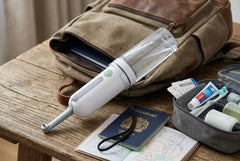
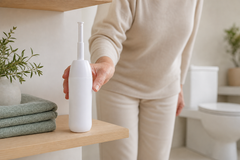
As for hygiene, rinsing with water changes everything. After each bowel movement, water removes residues without the slightest friction—where paper, even moistened, continues to rub a raw area. A portable bidet or a toilet sprayer is enough. Then pat dry, never rub.
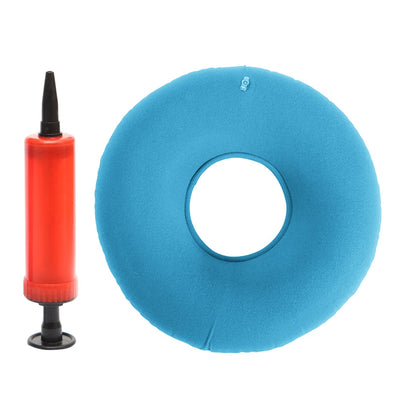
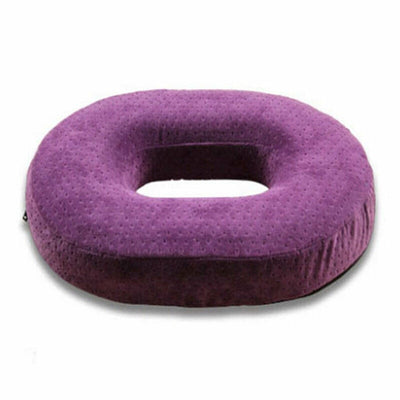
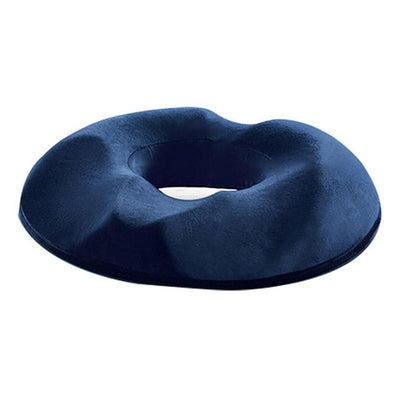
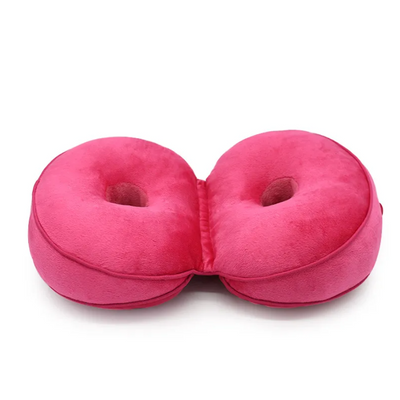
The anti-hemorrhoid cushion finally helps when sitting maintains pain—at the office, in the car, or at home. Complement with loose-fitting cotton underwear to limit moisture buildup.
When to consult
A first appearance of anal bleeding always justifies an examination: you must confirm that it is indeed hemorrhoids and not something else. Also consult in case of fever over 38 °C (100.4 °F), pain that makes sitting impossible, or swelling that does not decrease after two weeks.
If the flare-up persists despite well-conducted care, a professional can offer targeted treatment: sclerosis, ligation, or surgery depending on the situation. These procedures mainly concern resistant forms.
Frequently Asked Questions
How to deflate a hemorrhoid quickly at home?
The most effective combination: a cold compress for 5 to 10 minutes several times a day, and a cold water sitz bath (10 to 20 °C / 50-68 °F) for 10 to 15 minutes, 2 to 3 times a day.
Then, cleaning with water after each bowel movement, without soap, prevents maintaining the irritation. Once the acute phase has passed, veinotonic plants can take over for a few days—on the advice of your pharmacist.
What is a grandmother's remedy for hemorrhoids?
Witch hazel for local application is the most classic: it is the astringent plant most associated with venous comfort. Pure aloe vera gel, applied after washing, soothes burning sensations.
Virgin coconut oil forms a protective film on the external area and limits friction. This gentle approach is especially suitable outside of very painful flare-ups, or as support between two episodes.
What is the link between the liver and recurring hemorrhoids?
Some natural approaches consider that an overloaded liver can disrupt venous return and promote recurrence: liver congestion is thought to maintain a sensitive environment, which would explain repeated flare-ups despite well-conducted local care.
In this logic, support with milk thistle, black radish, rosemary, or dandelion is sometimes used over the long term. This does not replace the sitz bath or cold compress during a flare-up—it is foundational work.
These remedies are for comfort and well-being. They do not replace a diagnosis or a prescribed treatment: at the slightest bleeding, intense pain, or persistent symptom, consult a doctor. For any oral intake, ask your pharmacist for advice.