

How to maintain a Japanese toilet
Good Japanese toilet maintenance relies on two simple ideas: keeping contact areas pristine and protecting the water system against limescale. Japanese toilets use a wand (with one or more nozzles) that delivers a water jet for intimate washing: this is what makes all the difference... and what requires a clear routine.
In this guide, you will find concrete actions adapted to each type of product: Japanese toilet kit, non-electric seat, electric seat, and complete one-piece toilet.
Maintaining Japanese bidet toilets: the basics
What limescale affects first on a Japanese bidet
On a Japanese toilet, the first areas to monitor are the nozzles and their micro-orifices: these are the parts that quickly build up deposits if the water is hard. Eventually, the jet pressure drops, the washing becomes irregular, and hygiene declines. This is the area to clean first to ensure the device functions correctly.

The 3 golden rules
- Shut off the water supply before any handling, and unplug your model if it is electric.
- Avoid abrasive sponges and anything that might scratch the surfaces.
- Never flood the controls: water and electronics do not mix.
Routine common to all Japanese toilets
Regular actions (1 to 2 times per week)
- Clean the outside of the toilet bowl and the seat with a soft, slightly dampened cloth.
- Quickly disinfect the areas touched by hands (side control panel or remote control): the goal is to limit the spread of bacteria.
- For the inside of the bowl, apply a non-corrosive toilet cleaner, let it sit, scrub with a dedicated brush, then rinse.
This routine maintains good hygiene and true cleanliness, without damaging the materials.
Cleaning a non-electric Japanese toilet kit
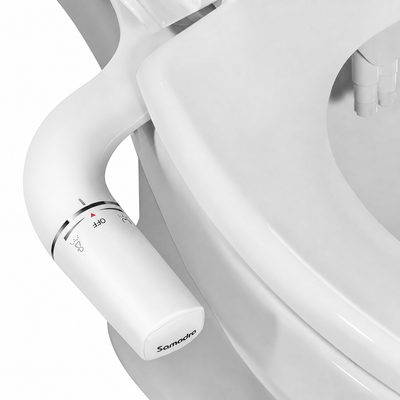
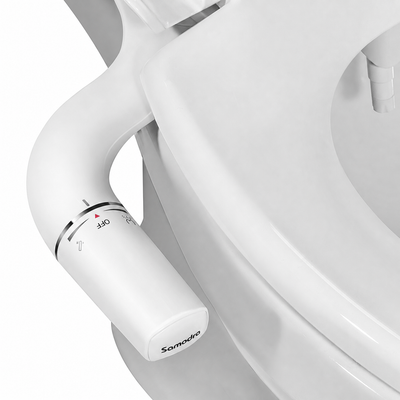
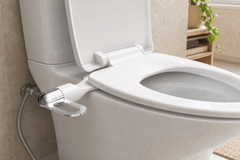
A non-electric Japanese toilet kit (kit to be installed on classic toilets) is mechanically simple: it depends solely on water pressure. Maintenance is mainly aimed at keeping the system clean and preventing deposits on the jet outlet.

Weekly actions
- Clean the exterior of the unit (kit body and visible fittings) with a damp cloth.
- Visually check for splashes around the fixings: a clean kit remains more reliable.
Monthly actions (anti-limescale)
- Activate the cleaning position (if your kit has one) and inspect the jet outlet.
- If a whitish film appears: perform a localized mini descaling (method below).
Every 6 to 12 months: filter and prevention
- Check the filter if you have one upstream on the water supply. A clogged filter reduces pressure and encourages scaling.
- In very hard water areas, add an anti-limescale solution to your installation (water softener, external filter) to preserve the lifespan of the mechanism.
Non-electric Japanese toilet seat
The non-electric Japanese toilet seat brings the "Japanese toilet" feeling without electronics. Maintenance is similar to that of a kit, with one extra point: the hinges and the underside of the seat.

Weekly actions
- Unclip the seat if your model allows it, then clean it with a mild disinfectant (white vinegar, toilet spray).
- Wipe carefully before putting it back: stagnant water and damp surfaces attract dirt.
Monthly actions: nozzle and micro-perforations
- Extend the nozzle (maintenance mode if available).
- Gently scrub the tip with a dedicated toothbrush: the goal is to maintain a clear and uniform jet.
Points of vigilance
- Clean under the seat: it is an area where microbes concentrate.
- Never scrape with a metal tool: you would damage the coatings.
Electric Japanese toilet seat
An electric seat adds features managed by a control panel (heated seat, air dryer, programs). Cleaning is similar, but you must protect the electronics.

Before any operation
- Unplug the unit.
- Never spray water directly on the controls.
Weekly actions
- Wipe the Japanese seat and the lid with a barely damp microfiber cloth.
- Clean the controls with a slightly damp cloth: never use running water.
Monthly actions: wand, nozzles, filter
- Launch the self-cleaning cycle if the model has one, then visually inspect the outlet area.
- Clean the nozzle with a toothbrush and a little white vinegar.
- Check the inlet filter (or the small internal strainer depending on the model): a clean filter protects the entire assembly.
Every 6 months: gentle descaling
On models designed for it, use the manufacturer's program or the dedicated descaling procedure. If you need to use a product, choose a gentle solution compatible with plastic parts, and always rinse with clear water.
One-piece electric Japanese toilet
A one-piece toilet is an integrated Japanese washing toilet: more features, so more points of attention. Whether it is wall-mounted or floor-standing, the maintenance logic remains the same—only access might be less simple.

Weekly actions
- Complete cleaning of contact areas (seat, controls, exterior of the bowl), without excess water.
- Visual check of connections to ensure there are no leaks.
Periodic actions (1 to 2 times per year depending on water hardness)
- Integrated descaling program, if available.
- Check or replace the filter and anti-impurity cartridges.
It is often on these models that consumables are neglected—yet this is precisely what maintains performance over the long term. Check the water hardness in your municipality.
Installing a sediment filter to protect your kit
A sediment filter is one of the best "small additions" to secure a Japanese toilet installation: it retains micro-particles (sand, rust, sludge) before they enter the water system. Result: less clogging of pipes, a nozzle and wand that stay clean, more stable jet pressure, and a reduced risk of premature blockage. A simple, inexpensive protection that extends the life of the kit or seat.

Descaling: the simple and controlled method
Limescale can partially clog the nozzles. To descale effectively and safely, favor white vinegar, using a short, localized, and well-rinsed method. A small, regular descaling is always better than a big, aggressive one: your Japanese bidet will last much longer.
The method (nozzle/wand area)
- Shut off the bidet water supply.
- Soak a cloth in white vinegar.
- Apply to the scaled area for 10 to 20 minutes.
- Rinse thoroughly with clear water.
If the scaling is stubborn, add a pinch of baking soda (slight effervescence), then rinse. The vinegar acts both as a disinfectant and dissolves mineral traces.
Focus: nozzles and settings
Washing nozzles rinse automatically on many models, but this is not enough if your water is very hard. A monthly visual check avoids unpleasant surprises (weak jet, irregular direction).
- If the outlet appears clogged, gently clean the tip.
- If pressure drops despite cleaning, suspect the filter: it is the #1 cause.
Often forgotten areas
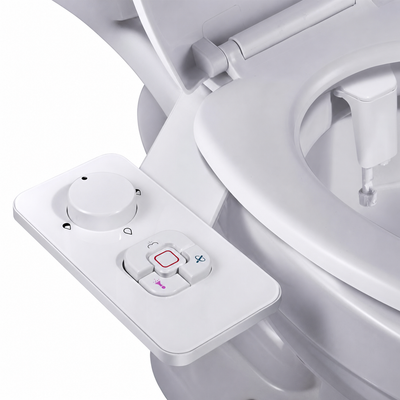
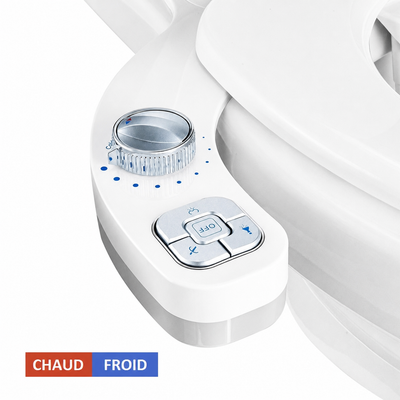
Remote control and control panel
This is an essential part of your Japanese washing toilet seat. Even without visible dirt, these are high-contact areas: a quick wipe and regular disinfection support overall hygiene.

Exterior and underside
The Japanese toilet bowl and its exterior are sometimes neglected. Yet, it is an area sensitive to splashes. Clean without aggressive scrubbing, then dry, exactly like a classic toilet. If you let it go, marks set in and become difficult to remove.
Flush
The flush remains the main evacuation element of your toilet: regular disinfection of the button is highly recommended.
Recommended frequencies
- 1 to 2 times per week: contact areas, controls, and exterior of the bowl.
- 1 time per week: inside the bowl, rinsing, and complete drying.
- 1 time per month: check the wand, nozzles, and jet pressure.
- Every 6 to 12 months: check or replace the filter, depending on water quality and the number of users.
Regularly performed maintenance takes little time and prevents major cleaning tasks.
Conclusion
Maintaining a Japanese toilet is not complicated. Whether it is a non-electric kit, an electric or mechanical washing seat, or a one-piece Japanese toilet, the key is the same: protect the water system, monitor limescale on the nozzles, and keep the bowl and controls clean.
By applying these practices, you maintain high hygiene, a stable jet, and a comfortable washing experience for years to come.