

Postpartum Pain: Using the Derivative Bath
Childbirth is painful, there is no denying that. Your entire body changes during pregnancy and must then regain its balance. Because yes, you have brought an entire human being into the world.
Even women who have had the most serene pregnancy experience pain and discomfort after childbirth. Not only is your body recovering from the birth itself, but it must also recover from all the changes that pregnancy has brought.
In this article, we detail the main postpartum pains as well as the most suitable natural solutions, such as the derivative bath and the sitz bath.

Pain after childbirth
The most common postpartum symptoms after a vaginal birth are as follows.
Contractions
Sometimes called afterpains, these contractions are a way for your body to return the uterus to its original size. They also help prevent excessive bleeding by compressing blood vessels. You may feel them more intensely while breastfeeding, as your body releases oxytocin at that time.
Painful bowel movements
Having a bowel movement can be one of the most delicate moments of postpartum life. It is common to fear aggravating an area that is already sensitive, especially when stitches are present.
Hemorrhoids
You may also suffer from hemorrhoids, which are swollen veins in the anus or lower rectum. Hemorrhoid flare-ups can increase pain during bowel movements.
Incontinence
Pelvic floor muscles can stretch or weaken during pregnancy, labor, and vaginal birth. This can lead to urinary leakage when you cough, laugh, or sneeze. This problem generally improves within a few weeks.
Vaginal discharge
After childbirth, your body expels the membrane that lined your uterus during pregnancy. It does this through vaginal discharge, called lochia, which is red and heavy in the first few days. It then becomes lighter and turns from pinkish-brown to yellowish-white. Light bleeding and discharge can last for up to six weeks after childbirth.
Vaginal and perineal pain
It is extremely common to feel pain in the vagina and perineum, the area between the vagina and anus. This area can tear, or a small incision called an episiotomy may be performed to help the baby out. Even without this, the area can be painful and swollen after childbirth.
Cesarean sections have a large number of the same postpartum symptoms. The main difference is that you will likely not have vaginal pain, but abdominal pain, especially near the incision.

The solutions
Postpartum pain relief relies on simple measures to implement. Here are the most suitable natural solutions.
In addition to each of these methods, the derivative bath is a very popular aid after childbirth. It involves placing a cold pack in the crotch area, at the level of the perineum (the part between the genitals and the anus). A special gel pack that you place in the freezer is used, then inserted into your panties. Cold on the perineum is commonly recommended by midwives after birth: here, you do it standing up, while taking care of your baby, instead of lying on an ice pack.
For contractions
Contractions can be mild, feel like menstrual cramps, or even feel like labor contractions. You can soothe the area using a hot gel pack designed for this purpose, which you will place on the lower abdomen.
Warning: only the hot/cold pack is designed to be heated. Never microwave a standard gel pack from the derivative bath kit.

For hemorrhoids
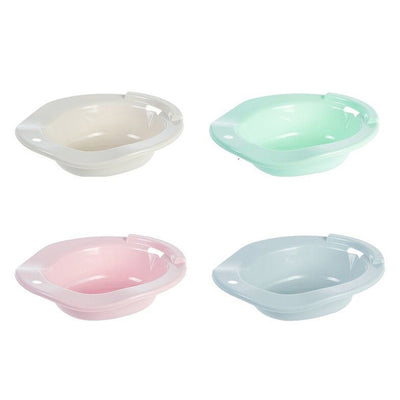
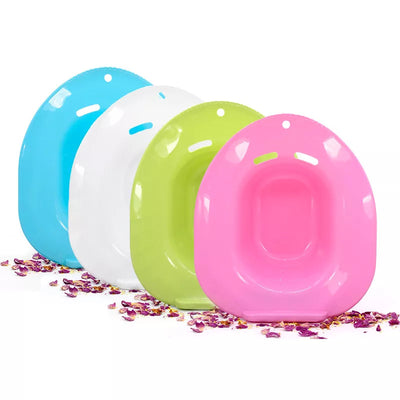
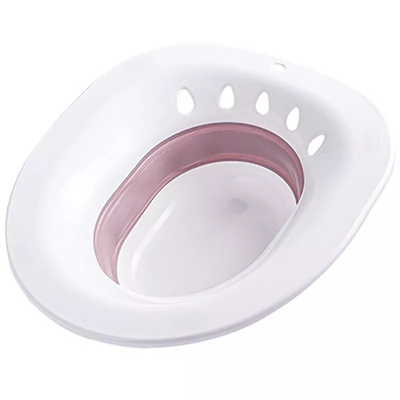
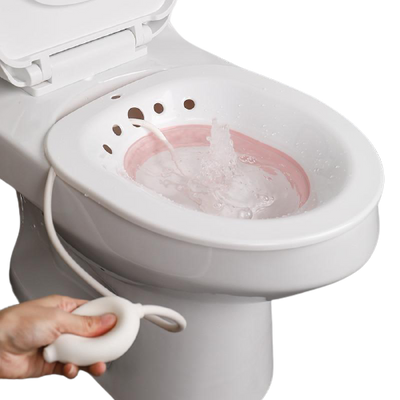
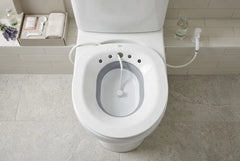
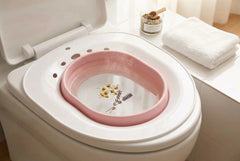
- Take a cold water sitz bath. The sitz bath is the traditional reflex for hemorrhoid discomfort, as it is for vaginal and perineal pain. It simply involves soaking your buttocks in water. Use a sitz bath basin (or your bathtub, but that is more cumbersome). Fill it with very cold water and sit in it for 10 to 15 minutes, 2 to 3 times a day.
- Use a special hemorrhoid cushion to limit the pressure on the anal area.
- Like the sitz bath, the derivative bath with a cold gel pack is appreciated during these moments of discomfort, while leaving you free to move about.


For painful bowel movements
- Physiological toilet stool: bowel movements are easier to pass if you adopt the right posture on the toilet. The stool raises the knees and facilitates the passage of stools.
- The cold derivative bath is traditionally associated with digestive comfort and more regular transit.
- As for diet, drink plenty of water and eat fiber-rich foods to avoid constipation.

For incontinence and vaginal discharge
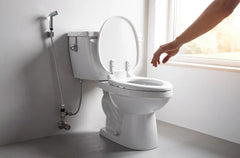
- Use a portable bidet to easily clean your intimate areas, several times a day, without irritating them. The water easily removes urine and discharge without the need for toilet paper, which is often a source of irritation on fragile skin. This is also appreciated in cases of hemorrhoid discomfort.
- The derivative bath supports general recovery and is easily integrated into a day with a newborn.

For vaginal and perineal pain
- Cold sitz bath (as for hemorrhoids).
- The derivative bath with gel pack is one of the most popular solutions for soothing vaginal and perineal pain after childbirth. Applying cold to this area is a long-standing practice, commonly recommended by midwives.
How to use a derivative bath pack after childbirth?
The gel pack is placed in your underwear (panties, briefs). It is held and protected by its suitable towel, a washable sanitary pad type. You can also wrap the pack in fabric to avoid direct contact with the skin.
Thanks to this method, there is no need to sit on a basin: you enjoy the coolness while remaining mobile.

Why the derivative bath is appreciated in the postpartum period
✔️ Inflammatory state: local thermal regulation is traditionally associated with a feeling of soothing.
✔️ Intestinal transit: practitioners report more comfortable digestion and easier elimination.
✔️ Recovery: many young mothers report more restful sleep.
✔️ Blood and lymphatic circulation: local cold is long associated with better fluid mobility.
✔️ Detox: this is one of the most cited reasons for practice, in the broad sense of a healthy lifestyle that supports elimination.
✔️ Weight loss after pregnancy: this is the primary motivation for our customers. Regular cold is associated with the activation of brown fat, those "good fats" that the body burns to produce heat, unlike white fat that it stores.
Precautions
Be sure to stay well covered during the session, so you don't feel cold all over your body: only the perineal area should be cooled. Stop if you feel excessive cold or discomfort.
The cold pack must never be in direct contact with the skin or mucous membranes: always use the protective towel.
How long does a session last?
Start with 20 to 30 minutes, preferably in the evening, then lengthen at your own pace. A pack lasts up to 2 hours*. With the 3 packs in the kit in rotation, many young mothers wear it for several hours a day.
At what time of day?
In the morning, the derivative bath tends to be energizing. In the evening, before sleeping, it helps with falling asleep. Avoid doing it right after a meal so as not to disrupt digestion.

Can I take a derivative bath if I am pregnant?
No. Do not use a derivative bath gel pack or a cold sitz bath during pregnancy. If in doubt, ask your doctor or midwife for advice.
Discover the Derivative Bath Kit
There you go, we have presented the natural solutions to relieve your postpartum pain. See you soon in a new Hygiene and Health article.
*The duration of coolness varies according to ambient temperature, body temperature, and activity. The derivative bath is a wellness practice: it does not replace medical advice or treatment. After childbirth, ask your midwife or doctor for advice.