

Bidet shower: what is a hygienic shower used for?
You may have already asked yourself, "what exactly is a toilet sprayer?" while looking for a cleaner alternative to toilet paper. This article explains in detail how it works, its benefits, and how to install it very easily. Discover why this solution is improving hygiene in thousands of households in France.
What is a toilet sprayer and how does it work?
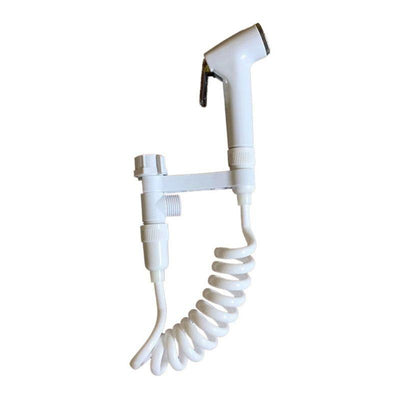
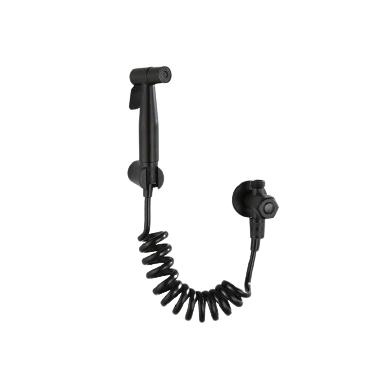
A toilet sprayer is a small shower head connected to a hose, attached to the side of the bowl or the wall. It sprays a precise jet that allows you to clean yourself right after using the toilet, similar to a bidet. Unlike using toilet paper alone, it combines comfort with true cleanliness—simply by using the pressure from the water mains.

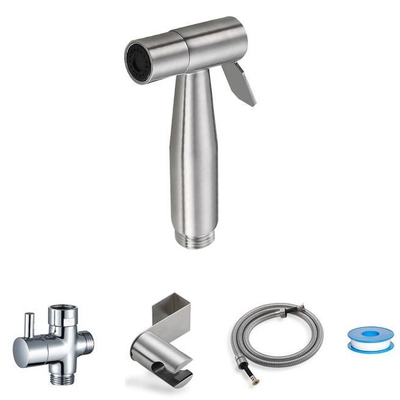
See the stainless steel toilet sprayer
Definition and principle of the hygienic sprayer
The toilet sprayer connects directly to the existing water supply. A hose connects the sprayer head to a T-adapter, installed between the tank and the supply valve. A simple press of the trigger releases the spray.
The water used is always clean—it comes from the same mains as your sink—and the flow stops instantly as soon as you release the trigger.
- Integrated nozzle: This is the principle of a Japanese toilet. It is housed under the seat for a perfectly discreet solution.

See the classic Japanese toilet kit
- Handheld sprayer: Connected by a hose, it offers great freedom of movement and very precise control of the spray.

- Thermostatic system: These advanced versions integrate hot water and maintain a stable temperature, regardless of mains pressure.

Its operation is extremely simple: once seated, press the control for a few seconds to trigger the spray. The flow adjusts to your preference. No electricity is required—mains pressure is sufficient.
The different types of sprayers
There is a wide variety of models, which differ in their mounting method, spray type, or materials.
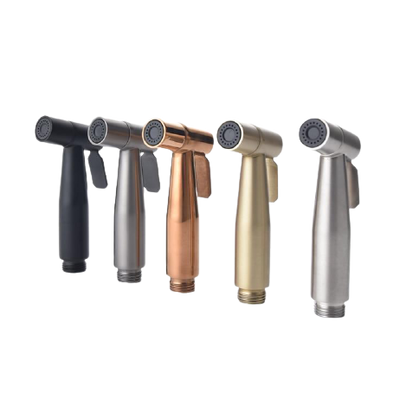
There are three main categories: ABS plastic (lightweight and economical), stainless steel (very durable), and thermostatic versions (to control temperature). Your choice will depend on your budget, the water hardness in your home, and your personal standards.
- Rain spray: A broad and very gentle flow, well-suited for sensitive or irritated skin.
- Concentrated spray: More intense and direct, perfect for cleaning quickly—including the bowl.
- Pulsating spray: It provides a massaging effect, traditionally appreciated for its toning effect on local circulation.
The installation possibilities are just as varied: wall mounting, mount that clips onto the tank (no drilling), or adhesive mounting. You will therefore be able to install your toilet sprayer regardless of your bathroom layout. To learn more, check out our toilet sprayer comparison guide.
Daily use
It very quickly becomes a natural habit. After using the toilet, remain seated and press the trigger. Direct the spray toward the area to be cleaned: a few seconds are enough.
Once finished rinsing, dry yourself with a small personal towel or a little paper—which then serves only to absorb moisture. This is what so drastically reduces paper consumption.
Why adopt a toilet sprayer
The benefits go far beyond mere comfort: this accessory transforms your daily hygiene while significantly reducing irritation. It is also an ecological choice.
What it changes for intimate hygiene
The water jet removes residue much more effectively than toilet paper, with immediate freshness. Eliminating friction also avoids the micro-lesions and irritation caused by repeated wiping.
- Comfort for hemorrhoids: cleaning with water soothes the area without any friction—this is actually the primary purchase motivation for our customers.
- Fewer residues: complete removal limits what bacteria feed on, and thus reduces odors.
- Post-operative comfort: it is the most commonly recommended habit after anal or gynecological surgery, precisely because it avoids any contact.
Cleaning with water is widely presented as the most respectful practice for the intimate area, especially for sensitive skin. It is the ideal solution for women's intimate hygiene after childbirth, or for people dealing with incontinence. It preserves the skin barrier without any products.
Ecological benefits and savings
Adopting a toilet sprayer reduces your toilet paper consumption by 70 to 90%. A family of four thus saves several kilos of paper each year: less deforestation, less waste.
Financially, each person saves about €90 per year—that's nearly €360 for a family of four. Since tap water costs infinitely less, the investment pays for itself in a few weeks. And less paper in the pipes also means less risk of clogs.
How to choose and install your toilet sprayer
Installation takes less than a quarter of an hour, without needing to be a plumber. A few common tools are enough.

Quick installation and mounting types
Expect it to take 10 minutes. Start by turning off the water supply behind the bowl. Unscrew the existing connection to insert a T-adapter, using Teflon tape for a watertight seal. Screw the hose onto the T-adapter, then attach the sprayer head and its mount.
Several mounting options are available. Wall mounting allows you to adjust the height—very practical for people with reduced mobility. The tank clip can be installed without drilling: the ideal solution for renters.
| Mounting type | Advantages | Disadvantages |
| Wall mount | Adjustable height, suitable for reduced mobility | Requires drilling |
| Tank clip | No drilling, immediate installation | Fixed position |
| Adhesive or suction cup | Removable, ideal for rentals | Less long-term stability |
The kit generally includes the hose, T-adapter, and washers. A simple leak test is enough to verify that the assembly is successful.
The hose length varies between 50 and 120 cm, offering good freedom of movement. Ensure it is not too taut. After installation, briefly trigger the spray to check for leaks. Find our complete installation guide for a toilet sprayer.
Care and maintenance
Regular maintenance ensures the longevity of your device. Rinse the sprayer head with clear water after use to prevent lime scale buildup.
- Monthly cleaning: white vinegar for ABS, appropriate product for stainless steel.
- Annual check: check the condition of the hose washers and replace them if worn.
- Descaling the head: soak the unscrewed head in vinegar for about ten minutes, then rinse thoroughly.
On a thermostatic model, inspect the mechanism once a year. Always prioritize mild products to preserve the nozzles and the quality of the spray.
Frequently asked questions
Why install a sprayer in the toilet?
A toilet sprayer improves your intimate hygiene thanks to cleaning with water. This method, much more effective than paper, limits irritation and provides a real feeling of cleanliness. It is also the habit most often recommended to people prone to hemorrhoids.
In addition to comfort, it reduces toilet paper consumption by 70 to 90%: a real economic gain—about €90 per person per year—in addition to being ecological.
How do I wash with a toilet sprayer?
It's very simple: after using the toilet, remain seated and press the control to release the spray. Direct it toward the area to be cleaned, adjusting your position slightly if necessary. For women, always from front to back.
Let the water run for a few moments, then release. Dry yourself gently afterward with a personal towel or a little paper. The action quickly becomes a habit.
What are the disadvantages of a toilet sprayer?
It takes a short adjustment period to master the movement. On this point, a Japanese toilet kit is even simpler—but there is really nothing insurmountable.
The freshness of the water can also be surprising the first few days, although thermostatic models completely solve this issue. Given the benefits in terms of hygiene and savings, these two reservations carry little weight.