

Everything You Need to Know About Yoni Steaming
What is a yoni steam bath?
An intimate steam bath is a traditional practice that involves exposing the vulva and perineum to herb-infused steam as a way to provide comfort and care for the intimate sphere.
Widely practiced in Central America, Africa, the Arab world, and Asia, it goes by many names: "Chai-Yok" in Korea and "Dlo Cho" in Haiti. In the West, it has become popularized as "yoni steam."
Yoni is the Sanskrit word for the female genitals, the uterus, and the vagina. It is the "sacred place" referred to in Chinese medicine and in Eastern and Taoist traditions.

The yoni bath is also known in English-speaking countries as "V-steaming" or "yoni steaming." Promoted by several wellness personalities, this ancient practice has returned to the forefront in recent years.
Between menstruation, sexual intercourse, and childbirth, the intimate sphere takes a lot of strain. If you add hormonal fluctuations and pelvic floor tension, the area is sometimes anything but comfortable. That is precisely why the intimate steam bath is coming back into fashion.
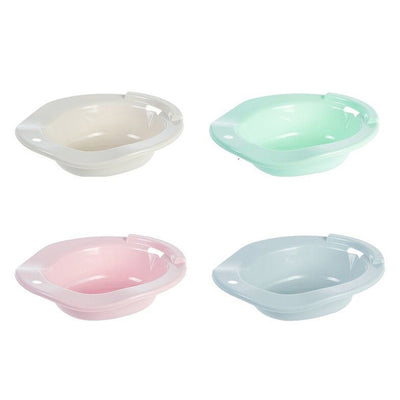
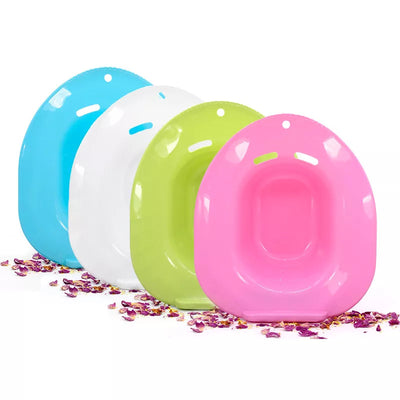
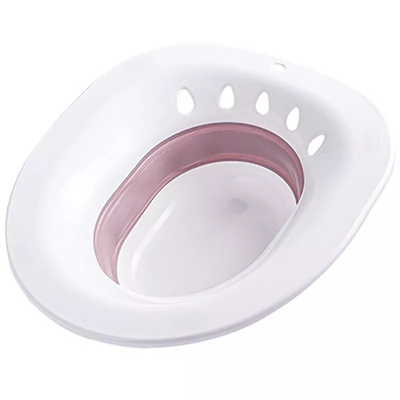
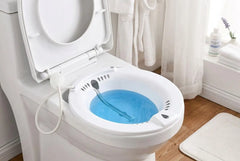
Some high-end spas offer it at a high price. But you can absolutely do it at home with a sitz bath basin. The principle is simple: sit over a container and let the steam work.

How to do an intimate steam bath?
Boil water and add the herbs of your choice, letting them steep for 5 to 10 minutes. Keep the lid on to retain the heat and the plants' volatile compounds.
Meanwhile, put on a long garment that will cover you and keep in the heat: once seated, it forms a kind of sweat lodge for your lower body. Tall socks add to the comfort.
Have a towel ready: you may break into a heavy sweat.
Set yourself up in a safe, quiet, and pleasant place: your toilet, bathroom, or bedroom will work perfectly.
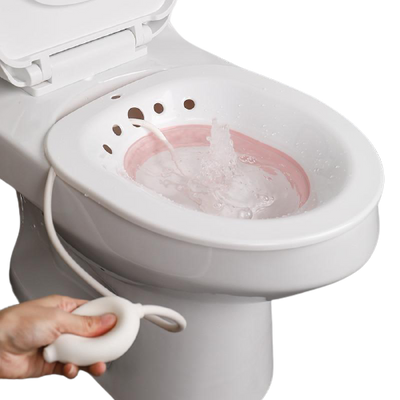
Pour the water into the basin, then sit over it. The most comfortable way is to place the basin directly on the toilet seat, which allows you to remain seated. A perforated yoga chair also works: place the basin underneath. Ensure you are never in direct contact with the hot water—keep at least 15 cm (6 inches) between your skin and the surface to avoid burning the vulvar area.

How long does the steam bath last?
The average duration of an intimate steam bath is 20 to 30 minutes. Adjust this time by listening to your body. Relax, meditate, read, or put on some music to fully enjoy this moment.
What is the best time for a session?
An intimate steam bath can be done at any time of the day. However, for a first time, it is better to do it in the evening, so you can lie down immediately afterward.
What to do after a steam bath?
Right after the session, you may feel very relaxed—or, conversely, emotional and tired. That is why it is best to plan for a resting period after your steam bath.
In the days that follow, practitioners often report changes in their cycle: lighter periods, more complete evacuation, and a greater bodily awareness. These effects can be immediate or more subtle.
The benefits of an intimate steam bath
The intimate steam bath is traditionally used as a ritual for feminine care. Here are the uses practitioners find for it:
- soothing menstrual symptoms: bloating, cramps, exhaustion, heavy periods;
- promoting local circulation;
- soothing feelings of irritation;
- reducing undesirable odors;
- supporting a conception plan;
- promoting postpartum recovery;
- reducing stress;
- relieving discomfort linked to hemorrhoids;
- regaining energy;
- soothing tension and headaches;
- regaining comfort and libido.

How often should you do an intimate steam bath?
The frequency depends on the individual. Here are some guidelines for reference.
Regular cycles: for women whose periods are painless, a seasonal maintenance session is sufficient—once every three or four months, at the change of seasons, just before your period.
Cramps: herb-infused steam relaxes the muscles in the pelvic area. This is one of the reasons why yoni steams are so popular among women suffering from endometriosis. Those who suffer from pain, bloating, or exhaustion during menstruation can do it once a week, before their period. Many then notice a change in the flow. A session after the end of the cycle is also common.
Fertility: if you are actively trying to conceive, yoni steam is traditionally practiced during the pre-ovulatory phase, up until ovulation. The heat is believed to promote the hydration of mucous membranes. Women experiencing difficulties conceiving sometimes use it once a week. Do not do it during ovulation, after a possible conception, or if you think you might be pregnant.
Postpartum: after childbirth, the steam bath provides nourishing warmth and supports the return of menstruation. Mayan midwives traditionally advised new mothers to have a steam bath within nine days after birth to promote perineal recovery. In case of a C-section, do not practice steam baths without medical advice.
Perimenopause and menopause: steam is traditionally used to soothe dryness and provide support during this transition period. Expect a few sessions per year during the first two years.

How many times per week at most?
There is no single rule, but there is one principle: never more than once a week, and not for prolonged periods.
When should you not do an intimate steam bath?
Despite its qualities, yoni steam is not indicated in all circumstances. Do not do a steam bath if:
- you are currently having your period;
- you are in your ovulatory phase and trying to conceive;
- you are pregnant, or think you might be;
- you use an intrauterine device (IUD or contraceptive ring);
- you suffer from an active infection (cervix, uterus, or ovaries), especially if accompanied by a fever;
- you have open sores or herpes blisters;
- you are experiencing hot flashes.

Herbs for a yoni steam
The use of medicinal plants varies according to women and their needs. Always seek the advice of a healthcare professional. For information purposes, here are the plants most often used, alone or in combination:
- Lavender, with its sweet scent, is traditionally considered antiseptic and soothing.
- Rosemary, also considered antiseptic, is used to promote local circulation.
- Lemon balm is traditionally used to soothe itching—and smells delicious.
- Dandelion is used in herbal medicine to support elimination functions.
- Calendula, with its golden flowers, is one of the most renowned plants for soothing irritated tissues.
- Peppermint provides a toning, cooling sensation.
- Chamomile, the grandmother's herb, is traditionally recommended for menstrual cramps and tension.
- Yarrow is renowned for bruised tissue and postpartum recovery.
- Uva ursi (bearberry) is traditionally associated with urinary comfort.

Herbs traditionally associated with urinary and genital comfort: raspberry leaf, motherwort, peony, damiana, oregano, and basil.
Toning and astringent herbs: witch hazel, yarrow, rose, and juniper.
Softening herbs: comfrey, marshmallow, plantain, and seaweeds like kombu and kelp, for their mucilaginous quality and mineral richness.
Herbs reputed to be antifungal: horsetail, yarrow, marigold, and nasturtium.
Is the intimate steam bath safe?
A steam bath is a gentle practice, provided you follow some precautions.
The skin of the vulva is delicate, sensitive, and easily compromised. Prolonged contact with steam that is too hot, or worse, boiling water, can cause burns. It is therefore essential not to get too close and never to use water that is too hot. If the steam becomes uncomfortable, let it cool for a few minutes. In any case, listen to your body and stop the session at the slightest discomfort.
Exposure that is too frequent can also disrupt the balance of your flora: that is why it is strongly advised against doing it every day.

Steam baths and pregnancy do not mix well. Some plants can be abortive, and exposure to heat around the pelvis is not recommended throughout pregnancy—just as saunas, hot tubs, and heating pads are not. Therefore, do not use steam or herbs if you are pregnant.
Plants are natural products with powerful active ingredients. When applied locally, they can cause allergic reactions—and the intimate area is the last place you want that to happen. Make sure you are not allergic to the plants you are using by testing the infusion on your forearm.
Everyone is different: if you wish to try it, talk to your doctor or a qualified practitioner.
Finally, it is essential to clean your equipment carefully before each use. Avoid lending your basin, and keep it for this exclusive use.
Women prone to frequent infections should consult their doctor before trying an intimate steam bath.

In summary
The intimate steam bath is a feminine wellness ritual of great simplicity: you let the heat of herbal steam gently envelop the perineum. A true moment of relaxation for women.
Let us remember: yoni steam is practiced externally, on the vulva and perineum. The vagina, for its part, regulates itself and never needs to be cleaned—its flora maintains a balanced pH on its own. That is precisely why the practice must remain occasional: at a maximum of once a week, it remains a comfort ritual; in excess, it can disrupt this balance.

Practiced under the right conditions—correct distance, correct temperature, clean equipment—the intimate steam bath is a pleasant and simple moment. Discover our sitz bath basins, perfectly suited for this purpose.
The intimate steam bath does not replace medical treatment but can accompany it. The information in this article is provided for information purposes: always ask for your doctor's advice.