

Sitz bath for genital inflammation: benefits and advice
Persistent genital discomfort, accompanied by burning, itching, or a sensation of swelling, naturally prompts a search for simple measures to perform at home. A sitz bath can help soothe the perineum and relieve certain discomforts, while remaining a comfort-oriented practice. Here is how to use it judiciously and when to consult a healthcare professional.
Understanding the intimate sitz bath
A sitz bath is a shallow bath in which you sit to soothe the perineum, the area between the rectum and the vulva or scrotum. Warm or cold water comes into direct contact with the affected region, without the need to fill an entire bathtub.
This format is easy to incorporate into daily life. It may also be suitable for individuals with reduced mobility or young mothers who are still delicate after childbirth, provided they follow the recommendations of their healthcare professional.

Relieving without replacing care
Using a sitz bath to alleviate genital inflammation is a comfort measure, not a treatment. Warm water can soothe mild burning, itching, or minor pain related to hemorrhoids, anal area irritation, postpartum care, or certain discomforts during bowel movements.
This practice is commonly recommended by midwives for perineal comfort after a vaginal delivery. It remains complementary and never replaces medical advice or recommended care.
The sensation of cold or warmth provided by the water is part of a quest for comfort: cold can help reduce perceived swelling, while heat provides local relaxation. The temperature chosen depends on individual sensitivity and the context.
In practice, a sitz bath is not intended to treat an infection, yeast infection, or genital lesion. It can accompany care already proposed by a doctor, without replacing it.
When genital discomfort appears
The situations associated with an intimate sitz bath are varied. Individuals affected by hemorrhoids use it to seek greater comfort during bowel movements and to soothe a sensation of swelling. After childbirth, some women use it to relieve the perineum, swelling, or postpartum hemorrhoids, often on the advice of their midwife.
Diaper rash, cysts, anal fistulas, or postoperative pain can also be accompanied by discomfort for which this measure is sought. In every situation, use should remain gentle and adapted to the recommendations received.
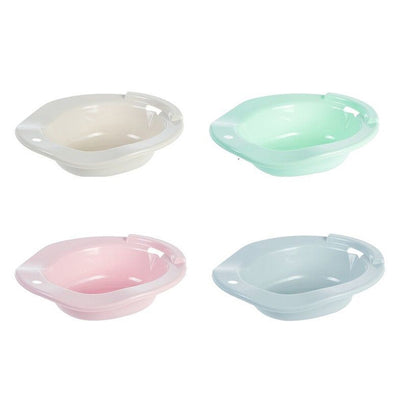
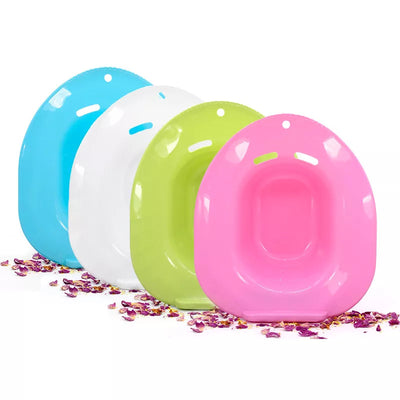
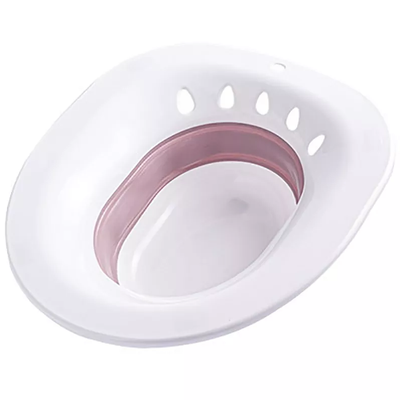
Cleaning with water is often gentler for irritated skin than repeated wiping with toilet paper, which can exacerbate the discomfort of a fragile mucous membrane. Sitz bath basins allow for effective and practical intimate hygiene: some models are placed on the toilet, are foldable, or can be used standing.
Genital symptoms, however, can have very different causes. Unusual discharge, fever, intense pain, visible sores, or worsening symptoms require medical advice without delay. A sitz bath can relieve occasional discomfort, but it cannot establish a diagnosis and should not delay appropriate care.
The benefits of a warm bath
Warm water is often chosen to relax a sensitive area and quickly improve local comfort, with a sensation of relief sometimes noticeable from the first few minutes. This is why a warm bath appears so frequently in advice given for perineal area discomforts.
Heat, comfort, and local circulation
Among the benefits of a warm sitz bath, the comfort of sensitive tissues is most often highlighted, particularly to facilitate bowel movements in case of hemorrhoids or mild fissures. After childbirth, heat can also soothe the sensation of swelling and perineal tension.
A warm sitz bath can also be incorporated into a menstrual comfort routine: many practitioners report a decrease in uterine cramps and bloating. A temperature of 37 to 38°C (98.6 to 100.4°F) is generally cited to combine comfort and skin tolerance. Conversely, water that is too hot risks weakening an already irritated mucous membrane: always test the temperature before sitting down.
Adapted duration and temperature
- Water temperature: warm, never scalding, ideally between 37 and 38°C to preserve the comfort of sensitive skin.
- Session duration: 10 to 15 minutes for routine use, without ever exceeding 20 minutes, including during postpartum or postoperative recovery.
- Drying after the bath: pat gently with a clean cotton towel, without rubbing, to limit skin or mucous membrane irritation.
Bubble baths, bath salts, scented oils, and soaps applied to the vulva should be avoided during the session. These additives can alter the local pH and accentuate existing itching or burning. Between baths, keep the area as dry as possible: changing into breathable cotton underwear during the day can contribute to this comfort.
Derivative baths and perineal cold
Derivative baths refer to an ancient practice that consists of applying cold to the perineal region, as opposed to a warm, stationary bath. Codified in the 19th century by Louis Kuhne, this approach interests people seeking a natural wellness practice. Perineal cryotherapy is a more modern term to describe the same approach.
What practitioners are looking for
A cold sitz bath is appreciated by women who wish to cool the perineal area after childbirth or when sensations of swelling appear. This sensation of local freshness also drives many people to practice derivative baths to mitigate certain discomforts.
- Immediate freshness: the sensation appears from the first minutes of contact and can provide rapid comfort when the area feels swollen or uncomfortable.
- Sensation of lightness: cold is associated by some practitioners with a lighter feeling in the lower abdomen.
- Digestive comfort: many people troubled by bloating, slow digestion, or abdominal cramps practice derivative baths to alleviate these discomforts.
- Nighttime rest: some practitioners use this method in the evening and report a feeling of relaxation over the course of regular practice.
The benefits of a derivative bath are more about long-term results than a single session. Regularity counts: many people practicing derivative baths describe their initial feelings after a few weeks of diligent practice. Keep the rest of your body warm during the session, regardless of the method chosen, to maintain general comfort.
This practice is a wellness measure and does not replace the advice of a healthcare professional. In the presence of a proven genital infection, intense pain, or persistent symptoms, seek advice from a healthcare professional before incorporating it into your daily routine.
Gel packs or cool water
The traditional method consists of sitting over a basin of cool water, between 10 and 20°C (50 to 68°F), with the crotch submerged for 10 to 15 minutes and the rest of the body covered. This solution remains accessible, but it requires a fixed position as well as an adapted space. The derivative bath kit with gel packs offers a mobile alternative: the derivative bath kit with gel packs allows for cooling the perineal area while sitting at a desk, while traveling, or during sleep.
The gel pack slips into underwear and must always be wrapped in its protective towel. Never apply it directly against the skin: intense cold can cause burns. Each pack provides up to two hours of freshness, depending on the ambient temperature and body temperature. With several packs placed in rotation in the freezer, the session can continue without interruption, unlike using a basin.
| Criterion | Cool water basin | Cold gel packs |
| Mobility during the session | None, fixed seated position | Total, worn inside underwear |
| Duration of freshness | Limited to the cooling of the water | Up to 2 hours per pack, rotation possible |
| Nighttime use | Impractical | Possible with 2 packs in a panty liner |
| Kit contents | Basin only | 3 packs, 2 towels, 5 microfiber bands, cover |
| Visibility | Requires a dedicated space | Invisible under clothing |
Preparing a sitz bath at home
Preparing a sitz bath at home requires neither complex installation nor expensive equipment. All that is needed is a clean container, basin, or adapted bowl, and water at the desired temperature. This simple approach is sufficient for hygiene with water that is gentler than toilet paper alone when the area is sensitive.

Steps for a gentle session
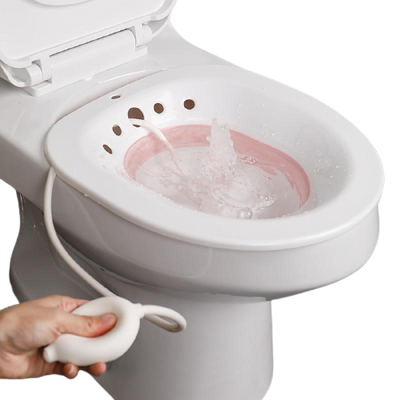
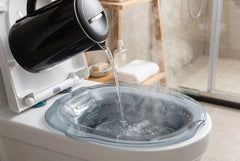
A sitz bath basin is placed directly on the toilet, without the need to fill the bathtub. This format simplifies the practice for everyday life and can be suitable for the elderly or those with reduced mobility. Here are the steps for a routine session:
- Prepare the container: wash the basin thoroughly before each session, then pour in 5 to 10 cm of warm water, enough to cover the area to be soothed without causing overflow.
- Sit and stay: after a gentle intimate wash with water only, sit in the water for 10 to 15 minutes, one to three times per day or according to the advice of a healthcare professional.
- Dry with care: pat the area gently with a clean cotton towel, without rubbing. Then check that the skin is completely dry before getting dressed.
After each use, rinse and then wash the container, especially when the accessory is shared within the household. This basin is suitable for cold, warm, or steam sitz baths, as well as daily intimate hygiene: the sitz bath basin adapted for toilets has overflow nozzles and fits 99% of standard toilet bowls.
Choosing a basin adapted to the toilet
Models that mount on the toilet bowl, made of non-porous PP plastic, are placed directly on the toilet and are easy to maintain. Their dimensions of 39 × 36 × 12 cm match the shape of the seat. The drainage nozzles direct excess water into the toilet bowl, which prevents any overflow, whether you are preparing a cold, warm, or steam bath.
Foldable models offer a practical alternative for people who travel or lack space at home. They are easily stored in luggage and free up space when not in use.
Precautions before derivative baths
Cold applied to the perineal area can provide a sensation of well-being, but this measure is not suitable for all profiles. Before practicing derivative baths regularly, it is preferable to identify situations that require professional advice. A short and monitored session remains safer than prolonged exposure, especially during first experiences with cold.
Situations where you should seek advice
The practice of the African derivative bath, like other forms of cold sitz baths derived from naturopathic traditions, attracts people in search of natural comfort. The main contraindications are as follows:
- Pregnancy: derivative baths are not recommended throughout pregnancy. When in doubt, consult a midwife or doctor before any session.
- Heart and circulatory disorders: Raynaud's syndrome, cryoglobulinemia, a cold allergy, or having a pacemaker require prior medical advice.
- Recent surgery: wait for your doctor's approval before considering derivative baths.
- Loss of local sensitivity: insensitivity of the perineal area can prevent the perception of an excessive reaction to cold. Any application in this context should be avoided without professional support.
- Heavy periods and urinary tract infection: it is better to postpone cold sessions until the situation resolves.
In other situations, start with short sessions of 20 to 30 minutes in the evening: this is the recommended starting point. Cover yourself during the session and stop as soon as any discomfort, marked numbness, or shivering appears.
Signs that require a consultation
A sitz bath can provide comfort for mild, localized discomfort. However, some symptoms go beyond the scope of a simple wellness measure and justify a rapid medical evaluation.
- Fever or intense pelvic pain: these symptoms may correspond to an infection or complication requiring urgent medical care, rather than a sitz bath.
- Unusual discharge or abnormal bleeding: discharge with a strong odor, an unusual color, or bleeding that is not related to menstruation justifies a consultation without delay.
- Persistent or worsening symptoms: itching, burning, or pain that persists despite several days of local care must be evaluated by a professional in order to seek the cause.
Bicarbonate, essential oils, vinegar, and plants added to bath water can irritate sensitive skin. Essential oils should never be poured pure into water: they require a dispersant and professional advice. Their role is limited to comfort, and they do not replace medical care in case of infection. A cold compress wrapped in a cloth can be placed for a few minutes on the area of discomfort, but ice and frozen packs must never touch the skin directly.
In case of doubt about the origin of genital symptoms, the advice of a doctor or midwife remains the most appropriate course of action. A sitz bath is a complementary comfort measure, simple to adopt for someone concerned with chronic perineal discomfort.
Frequently Asked Questions
How long does a sitz bath last and how often should it be done?
A sitz bath lasts 10 to 15 minutes for routine use, never exceeding 20 minutes. The usual frequency is one to three times a day. If you have symptoms, however, have this validated by a healthcare professional. The water should never be scalding: after the session, dry the perineal area gently by patting.
Are derivative baths suitable for everyone?
No. Pregnant women, people with heart or circulatory disorders, Raynaud's syndrome, a cold allergy, or a loss of local sensitivity must seek medical advice before practicing derivative baths.
After surgery, wait for your doctor's approval. For other people, short sessions allow you to observe the body's reactions and ensure comfortable use.
Can a cold gel pack be used instead of a classic sitz bath?
Yes, cold packs offer a portable alternative for cooling the perineal area without sitting over a basin. The gel pack is placed in underwear, wrapped in its protective towel: it must never be placed directly on the skin.
It provides up to two hours of coolness. The kit includes three packs, which facilitates their rotation in the freezer and allows for continuous application. This solution is suitable for both women and men, regardless of their body type.