

Sitz bath with essential oils: natural pelvic relief
Choosing an essential oil for a sitz bath and diluting it correctly in a basin requires some guidance. The skin and mucous membranes of the perineal area are sensitive: the choice of oil, dispersant, and temperature therefore deserves special attention. Here is how to prepare a comfortable essential oil bath, with the appropriate precautions for your situation.
Understanding the sitz bath
A sitz bath consists of immersing the perineal and genital area in a limited amount of water while in a seated position, keeping the legs out of the water. It is performed in a basin placed on the toilet or in a bathtub.
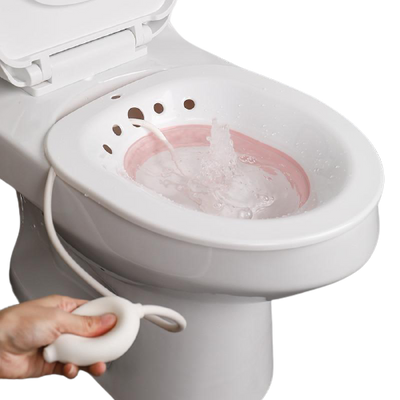
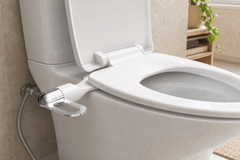
The sitz bath basin is placed directly on the toilet bowl. It allows you to perform this natural treatment without using the bathtub. To prepare the bath, find natural ingredients suitable for a sitz bath and follow the quantities indicated for a comfortable dilution.

What is this natural treatment for?
The sitz bath is suitable for both women and men and can be done at home without sophisticated equipment. For women, it is often used after childbirth to soothe the perineum and gently clean the area without friction. The postpartum sitz bath is notably practiced in the first few days following birth, when this region can remain sensitive.
This practice is also appreciated by people dealing with hemorrhoids, chronic irritation, cysts, or post-operative pain. The water gently cleans the intimate area, limits repeated friction from toilet paper, and provides a sensation of freshness. Many practitioners also seek improved local circulation.
In practice, fill the basin with lukewarm water at about 37 to 38 °C (98–100 °F), without additives. The usual duration is 10 to 15 minutes, not exceeding 20 minutes, depending on the comfort felt and any advice from a healthcare professional. This well-being and supplementary hygiene practice does not replace a medical diagnosis or prescribed treatment; if discomfort persists or is accompanied by a fever, medical advice is necessary.
Lukewarm or cold water for the seat
Prefer lukewarm water, close to 38 °C, to gently dilute the essential oils. It avoids a sudden thermal shock to the mucous membranes and allows for a relaxing session.
A cold basin is used without added essential oil. It provides a sensation of freshness and can help soothe a feeling of swelling. Conversely, water that is too hot is not recommended when hemorrhoids or mucous membranes are sensitive.
- Lukewarm water (37–38 °C): suitable for most situations of discomfort, it is often preferred after childbirth and for daily relaxing use.
- Cold water (10 to 20 °C): it provides a sensation of freshness during a flare-up, without added essential oil.
- Hot water (above 39 °C): not recommended in case of hemorrhoids or inflamed mucous membranes, as it can accentuate the sensation of congestion.
Once the temperature is chosen, sit stably: having your feet on the floor and your knees slightly raised makes it easier to immerse the perineal region. To choose suitable equipment, see the sitz bath basins designed for various uses.
What precautions should be taken with essential oils?
Essential oils do not mix directly with water. They must be incorporated into a suitable dispersant to prevent concentrated droplets from remaining in contact with the skin or mucous membranes. A preliminary test on a small area of skin can also help identify any discomfort.
Caution is particularly important during pregnancy, after childbirth, in children, or in the case of medical treatment. For a postpartum sitz bath, seek the advice of a midwife or a healthcare professional before adding an essential oil. In case of burning, itching, or an unusual reaction, stop the session and seek professional advice.
Using an essential oil safely
Aromatherapy applied to the perineal area requires special caution, as the skin and mucous membranes there are sensitive. Poor dilution or a poorly chosen oil can cause irritation where you were seeking to soothe. Before using essential oils in a basin, one must therefore know the precautions adapted to the intimate area.
Why essential oil does not mix
An essential oil is insoluble in water. When poured directly into the basin, the drops remain on the surface and concentrate on the skin instead of dispersing properly. This localized contact can expose the perineal area to a much higher concentration than with proper dilution.
In practice, a suitable dispersant must be provided before the session: milk, honey, coarse salt, vegetable oil, or a bath base. For any questions regarding the compatibility of a product with ongoing treatment, a healthcare professional, such as a pharmacist, can provide personalized advice, especially before a sitz bath.
Only a few drops of essential oil diluted in this dispersant are enough for a sitz bath basin. Pure essential oil must never be poured into the water nor approach the intimate area: concentrated application can lead to a skin reaction or a lasting burning sensation. A preliminary test on a small area of skin, with the oil already diluted, allows you to check individual tolerance before the first session.
Essential precautions in intimate aromatherapy
Essential oils are not recommended for pregnant or breastfeeding women as well as young children, unless advised by a qualified professional. Certain oils can also interact with medical treatments: a doctor or pharmacist can verify the contraindications specific to each situation before their use.
In case of tingling, redness, or worsening discomfort within the first few minutes of immersion, rinse the area immediately and stop using the oil. Medical advice is necessary if the discomfort persists or intensifies.
Which essential oil to choose based on the discomfort
Not all essential oils are suitable for the perineal area. The choice depends on the discomfort felt, individual tolerance, and product quality: an oil ideally certified HEBBD or Ecocert has a controlled composition and limits the risk of irritation. Check for the Latin name and extraction method on the bottle: this is the simplest way to distinguish a quality oil.

Tea tree, lavender, and chamomile
For use on the intimate area, three oils are often cited for their gentle profile and traditional use: chamomile, lavender essential oil, and tea tree essential oil. Each corresponds to a desired sensation. A clove sitz bath is also sometimes mentioned, but the eugenol it contains can be irritating to mucous membranes: professional advice is essential before any intimate use.
- Tea tree: traditionally associated with antifungal and antibacterial use, it is sometimes used as a supplement during a yeast infection or irritation. A few diluted drops are enough.
- True lavender: known for being soothing and calming, true lavender helps with itching and sensations of mild irritation. It is among the oils generally well-tolerated by sensitive skin.
- Chamomile: appreciated for its softening character, it is chosen by some people in cases of persistent intimate discomfort with redness or a local sensation of heat.
- Lemongrass: often included as a supplemental ingredient, it requires strict dilution in a dispersant before any contact with the skin.
Lavender essential oil is often the most accessible for a first aromatherapy experience on the perineal area. Its profile is considered soothing, relaxing, and generally well-tolerated by the skin. Bergamot requires more precautions because it is photosensitizing: after its use, exposure to the sun must be avoided. Peppermint provides immediate freshness, but a few excess drops can cause a burning sensation on delicate mucous membranes.
| Essential oil | Traditional use | Note of caution |
| Tea tree | Antifungal, antibacterial | A few drops, mandatory dilution |
| Lavender | Soothing, calming, relaxing | Well-tolerated, must be diluted |
| Chamomile | Softening, soothing | Dilute in vegetable oil or honey |
| Peppermint | Immediate freshness | Very low dosage on mucous membranes |
| Lemongrass | Antibacterial, antifungal | Strict dilution is essential |
| Bergamot | Antibacterial | Photosensitizing, avoid sun after use |
Eucalyptus, rosemary, and irritating oils
Eucalyptus and rosemary are primarily associated with muscle-relaxing baths and respiratory inhalations. Their profile is less suitable for the perineal area, particularly when mucous membranes are sensitive. They are therefore not a first choice for a basin intended for intimate care and may be better reserved for body or foot baths, where the skin is thicker.
As a general rule, a camphoraceous, spicy, or strongly citrusy oil requires increased vigilance before a sitz bath. It must be diluted in a dispersant before being added to the basin, then tested on a small area of skin. Observe the reaction for twenty-four hours: this preliminary step avoids unpleasant surprises.
An essential oil does not replace medical advice and should not be presented as a treatment for an infection or disease. The choice depends on the desired comfort and individual tolerance. In the presence of a medical situation, infection, open lesion, or ongoing treatment, seek advice from a healthcare professional before adding these ingredients to your routine, including lavender essential oil.
Preparing a basin for a sitz bath
A well-prepared basin contributes to the comfort of the entire session. Before sitting down, check the cleanliness of the container, the water temperature, and the prior dilution of the aromatic mixture. Many practitioners describe the benefits of the sitz bath as a soothing of the perineal area, a feeling of lightness, or even better local circulation, always associated with careful preparation.

Choosing the right toilet basin
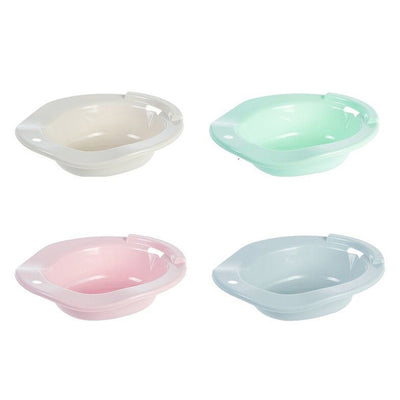
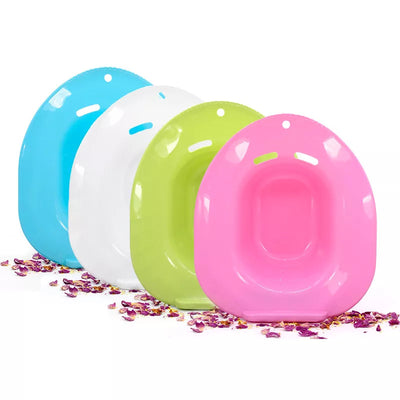
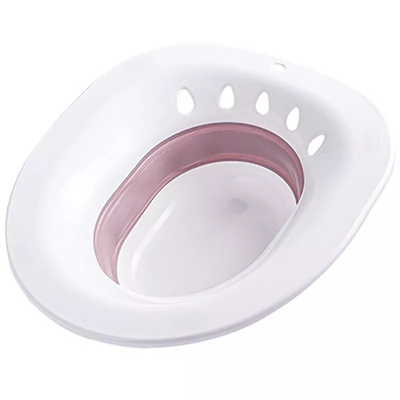
Standard models measure approximately 39 cm wide, 36 cm deep, and 12 cm high and fit 99% of standard toilets, without permanent installation. A non-porous plastic basin is easy to clean and supports standard disinfectants: a practical point as soon as aromatic ingredients are added to the water. On some models, transparency helps to check the water level and the dispersion of the mixture before immersion.
- Model with anti-overflow spout: it drains excess water into the toilet bowl and limits the risk of overflowing during filling.
- Collapsible model: it slips easily into a suitcase and stores thanks to its wall-hanging hole.
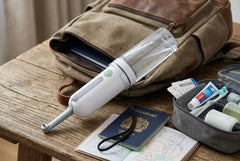
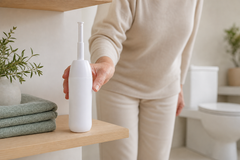
- Model with integrated pump: it facilitates targeted rinsing of the area and may be suitable for people with reduced mobility.
The ergonomic design of these basins is intended to comfortably accommodate people who are overweight or in a wheelchair. This type of container can replace the bathtub for various sitz bath treatments, including an essential oil bath or a session with plants and Epsom salt. Wash the basin thoroughly before and after each use, especially when aromatic oils have been added to the water.
The steps for a homemade sitz bath
Prepare the oil and dispersant mixture separately, then pour it into the basin just before you sit down.
- Step 1, clean the basin: rinse the basin thoroughly before use to eliminate any trace of cleaner likely to react with the chosen oil.
- Step 2, prepare the dispersant: mix a few drops of essential oil, without exceeding the recommendations of the professional or the product sheet, with a spoonful of honey, milk, or vegetable oil, before adding the mixture to the water.
- Step 3, fill and check the temperature: pour lukewarm water at approximately 37–38 °C into the basin, about 5 to 10 cm deep to cover the targeted area, then incorporate the dispersant-oil mixture.
- Step 4, sit down and dry: sit with your feet on the floor and your knees slightly raised for 10 to 15 minutes. Then, dry the area by dabbing with a clean, dry towel.
Once this preparation is adopted, the session becomes a simple daily habit. The usual frequency varies from two to three times a day depending on the discomfort; a higher frequency must be individualized with a healthcare professional. Clean the basin before and after each use to maintain good hygiene.
Natural alternatives to the aromatic basin
Essential oils are not the only way to enrich a sitz bath. Salts, plants, and vegetable oils offer other options, often simpler for a first use or for people who prefer to avoid concentrated aromatic oils. The principle remains the same: add a single well-tolerated ingredient to more easily identify a potential reaction.
Salts, plants, and vegetable oils
Salts have a traditional place in this type of care. Sea salt and coarse salt are integrated into the basin to assist with intimate hygiene, while Epsom salt is sought after for its relaxing effect on the perineal area. The African sitz bath is part of this tradition of plant and steam-based preparations, used for intimate comfort in different cultures.
- Sea salt or coarse salt: a classic option, easy to measure and generally well-tolerated by the skin.
- Baking soda: it can help soothe itching, but should still be used in moderation on sensitive mucous membranes.
- Vegetable oils: coconut, sweet almond, hazelnut, or sesame oil can be added directly to the basin water, using about one tablespoon, without any additional dispersant.
Plants are another family of ingredients. Chamomile, lavender, thyme, peppermint, red vine, witch hazel, or oak bark can be used as an infusion or decoction, which must be strained before being poured into the basin. For those concerned about hemorrhoids, red vine, witch hazel, and oak bark are traditionally associated with a soothing sensation or an astringent effect on tissues. Once the preparation is strained and cooled to the right temperature, the treatment follows the same procedure as an aromatic basin.
When to seek advice for this treatment
A natural sitz bath remains a supplementary comfort and hygiene measure. It does not replace medical follow-up. In case of fever, unusual bleeding, visible lesions, or persistent symptoms despite several sessions, a doctor should be consulted to obtain professional advice.
Pregnant women, young children, and people undergoing treatment should seek advice from a healthcare professional before adding any product to the basin water. In other situations, a sitz bath with lukewarm water, with or without natural additives, can fit into a daily hygiene routine: a gentle gesture for both the body and the planet.
Frequently Asked Questions
Which essential oil should be used in a sitz bath?
Lavender, chamomile, and tea tree are often cited for the perineal area. However, each oil has its own characteristics and may not be suitable for sensitive mucous membranes. Mix a few drops of essential oil with a dispersant, such as honey, milk, a vegetable oil, or coarse salt, then test skin tolerance on a small area for twenty-four hours. In case of medical treatment or pregnancy, seek advice from a doctor or pharmacist.
How do I dilute an essential oil in the basin?
Essential oils should never be mixed directly into water. Dilute them first in a dispersant: a tablespoon of vegetable oil, a spoonful of honey, milk, or a suitable bath base. Then pour the mixture into the basin filled with lukewarm water, at approximately 37 to 38°C (98 to 100°F), just before sitting down. A few drops are enough: an excessive quantity can make contact more irritating for the sensitive perineal area.
How long does an essential oil sitz bath last?
The usual duration is 10 to 15 minutes after adding the mixture to the basin, without exceeding 20 minutes. At the end, gently dry the area by patting with a clean, dry towel, without rubbing. Rinse and carefully clean the basin after each use. If discomfort, a burning sensation, or stinging occurs within the first few minutes, rinse immediately, stop using the oil in question, and seek advice from a doctor or pharmacist.