

Salt foot bath: benefits, recipes, and essential oils
Giving yourself a foot bath with salt at home requires a few guidelines: which types of salt to choose, what temperature to aim for, and how to create a treatment that is both relaxing, simple, and useful for relieving tired feet.
Why put salt in a foot bath
Adding salt to the basin changes both the comfort and composition of the water: table salt, coarse salt, or Epsom salt provide minerals such as magnesium, calcium, and potassium, which are sought after for their effects on the skin and foot relaxation.

The benefits of salt for the skin and circulation
A warm bath already helps to release tension. With salt, the treatment takes on another dimension: it softens thickened skin, limits odors linked to perspiration, and can relieve certain sensations of heat after a day spent on your feet.
This duo is traditionally associated with better blood circulation in the lower legs through gentle vasodilation. A few minutes of salt foot soak is often enough to reduce the feeling of heaviness and leave the skin more supple.
- Soothing: Epsom salt, rich in magnesium sulfate, is often used to help relieve muscle discomfort and foot tension.
- Skin care: salt softens calluses and facilitates the removal of dead skin.
- Freshness: in warm or cool water, it helps to limit odors and excess perspiration.
Which salt to choose for your foot bath
The choice depends primarily on the desired effect. A coarse salt foot bath remains the simplest option at home: economical, easy to find, and suitable for regular use. Conversely, a scented bath salt focuses more on sensory comfort than on a specific supply of active ingredients.
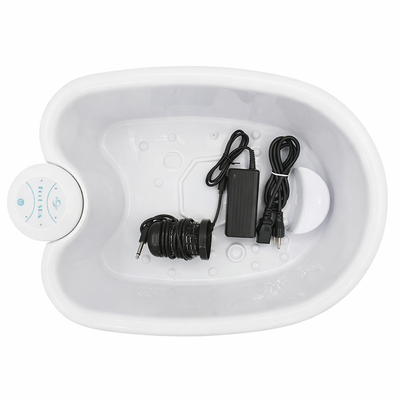
Among the types of salts, table salt or coarse sea salt work very well for beginners. Epsom salt is favored when the goal is muscle relaxation, while salts richer in trace elements are of interest for fragile skin. Our collection of foot bath basins allows you to choose a model adapted to this ritual.
Some people also mention the spiritual coarse salt foot bath, associated with the idea of purification in various traditions. This symbolic use exists independently of the effects of the warm saline bath.
| Type of salt | Main minerals | Most common use |
| Coarse sea salt | Magnesium, calcium, potassium | Muscle relaxation, daily use |
| Epsom salt | Magnesium sulfate | Relaxation, muscle discomfort |
| Himalayan salt | Trace elements, iron | Purifying ritual |
| Dead Sea salt | Concentrated minerals | Dry or fragile skin |
Purifying and relaxing virtues of coarse salt
A coarse salt foot bath combines heat and minerals to relax foot tissue. Done in the evening, between 37 and 39 °C (98.6–102 °F), it offers a relaxing moment that eases the feet after walking, sports, or standing for a long time. Regularity counts: a few sessions are often enough to feel the initial benefits.
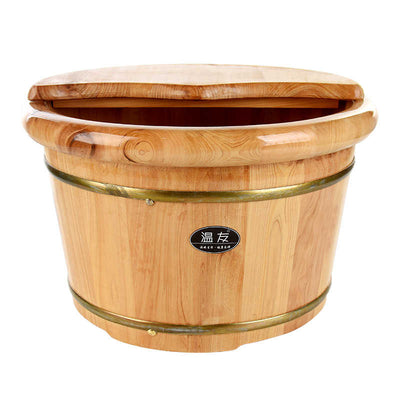
To start, coarse kitchen salt remains more than sufficient. A wooden basin provides extra comfort thanks to a more stable base and, depending on the model, a gentle foot massage.
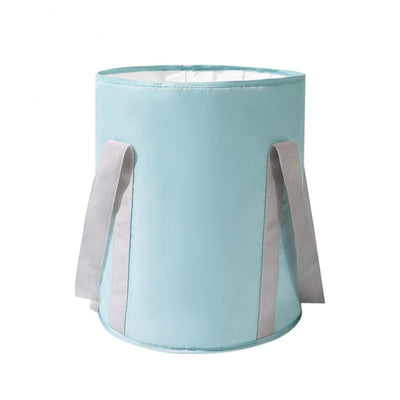
If the treatment needs to follow your travels, a foldable format makes things easier. The portable foot bath model retains heat longer and allows you to recreate this ritual almost anywhere.
Salt foot bath: hot or cold? Which temperature to choose?
Temperature significantly changes the desired effect. Depending on the time, a salt foot bath can soothe pain, ease tired feet, or support blood circulation.

Hot saltwater for relaxation
Hot water first provides a relaxing effect. Between 37 and 39 °C, it is well-suited for muscle pain, foot fatigue, and preparing for sleep: the heat supports circulation and promotes comfort after exertion.
A hot foot bath is generally done for 10 to 15 minutes. This duration is enough to enjoy the effects of saltwater without softening the skin too much, especially between the toes. Beyond 20 minutes, maceration becomes more likely.
Cold saltwater foot bath for heavy legs
Conversely, a cold saltwater foot bath, around at least 15 °C (59 °F), seeks a tonic effect. The cold first causes vasoconstriction, then a reflex response that supports microcirculation: this can help soothe tired feet after a day of standing or heat.
Additionally, alternating hot and cold reinforces this effect: three minutes in hot saltwater, then one minute in cold water, to be repeated three times. This contrast is particularly useful when a feeling of heaviness dominates at the end of the day.
Precautions based on your health condition
- Diabetes: check the temperature with a thermometer before immersion. Neuropathy can decrease the perception of heat and increase the risk of burns.
- Venous problems: do not exceed 27 to 30 °C (80–86 °F) to avoid excessive dilation of the veins. Cold baths are not recommended in case of arteriopathy.
- Rheumatism and osteoarthritis: stay at 28 °C (82 °F) maximum so as not to accentuate joint discomfort.
- Heart failure or recent surgery: seek medical advice before any session.
For salt foot soaks, two sessions per week are generally sufficient. This frequency limits the risk of maceration and better respects the skin's balance.
Salt foot bath recipes to make at home
In practice, lukewarm water between 37 and 39 °C and a tablespoon of salt already make for a useful daily treatment.
Salt and baking soda to exfoliate
A salt and baking soda foot bath combines two complementary actions: the salt exfoliates, while the baking soda softens the skin and helps limit odors.
The preparation is simple: two tablespoons of coarse sea salt and one tablespoon of baking soda in a basin of lukewarm water at 37–39 °C. Let soak for 15 minutes, then scrub gently with a pumice stone to remove softened dead skin.
After the treatment, dry thoroughly between the toes, then apply a moisturizer. Cotton socks then prolong hydration.
This recipe is also suitable before a pedicure, as softened skin is easier to work with. Epsom salt can replace coarse salt for a more soothing effect.
Apple cider vinegar and salt
The apple cider vinegar foot bath is based on a different logic. Combined with coarse salt, it is traditionally used to act on excessive perspiration and odors.
Count one liter of apple cider vinegar and two tablespoons of table salt in a basin of water at 33–34 °C (91–93 °F). Feet can soak in it for 15 minutes, once or twice a week.
Drying is crucial: after the bath, the feet must be perfectly dry to avoid any maceration. In case of established fungal infection, ask your pharmacist or doctor for advice.
Essential oil recipes
A bath with essential oils provides an appreciable relaxing effect, provided that you follow a simple rule: essential oils must be mixed with salt first, as they do not disperse on their own in water. Three to five drops are enough for a basin.
Lavender soothes and promotes relaxation. Conversely, peppermint essential oil relieves tired feet and provides a crisp freshness, while eucalyptus provides a more tonic effect.
For very dry feet, add a tablespoon of sweet almond vegetable oil to the salt before pouring everything into the water.
Peppermint is particularly well-suited for a tonic version with Epsom salt in hot water at 38 °C (100 °F), for a feeling of lightness on tired feet.
Frequently asked questions
Why put salt in a foot bath?
Salt provides minerals like magnesium, calcium, and potassium. It helps soothe discomfort, exfoliates calluses, limits unpleasant odors, and supports circulation. Epsom salt is often chosen for muscle tension, while Dead Sea salt is better suited for dry or fragile skin.
What is the ideal recipe for a homemade salt foot bath?
Prepare a basin of lukewarm water between 37 and 39 °C, then add 2 to 3 tablespoons of coarse salt or Epsom salt. Let soak for 10 to 15 minutes. For a fresher or more relaxing effect, first mix 3 to 5 drops of essential oils into the salt: peppermint, eucalyptus, or lavender.
Once the bath is finished, dry your feet well, especially between the toes, then apply a moisturizer.
How often should I take a salt foot bath?
The right frequency is between once and twice a week. Too frequent use can weaken the skin barrier and promote maceration, especially between the toes. As for duration, 10 to 15 minutes are sufficient: beyond 20 minutes, the benefit diminishes.
After each bath, wearing cotton or wool socks helps maintain heat and prolong relaxation.
The foot bath is a comfort treatment. It does not replace medical advice or treatment.