

Japanese toilets: a revolutionary concept for perfect hygiene
What is the principle of Japanese toilets?
The principle of Japanese toilets is based on an integrated system of adjustable water jets, combining a classic flush with a washing technique that replaces toilet paper. By pressing a button or touching a control panel, one activates one or more jets of warm or hot water, the pressure and direction (front or rear) of which can be adjusted according to the user's preferences.
Some models offer a complete system: adjustable spray wand, heated seat, air dryer, deodorizer to neutralize odors, and sometimes an anti-bacterial coating.
These features aim to improve hygiene, reduce paper consumption, and offer a significantly more pleasant daily experience.
Japanese toilets, also known as "washlets" in English-speaking countries, are becoming increasingly popular around the world for their high level of hygiene and comfort. Some high-tech washing toilets come with very advanced features. If you are considering purchasing a Japanese toilet, here is the key information you need to know about this concept.

What is a Japanese washing toilet?
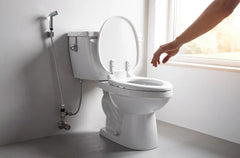
Japanese toilets are primarily designed to be easy to use and represent an undeniable improvement over classic toilets. You simply sit on the bowl: the user is naturally positioned facing water jets delivered by an integrated spray wand, which cleans the intimate area. The system operates using household water pressure or, on high-end models, by mixing hot and cold water for added comfort.
This method is far more hygienic and comfortable than using toilet paper alone. Water does not irritate the skin and protects delicate areas from the harshness of paper. Furthermore, hands never come into contact with soiled areas. Cleaning with water, made precise by the spray wand, provides superior cleanliness — particularly appreciated by women during menstruation or pregnancy.
To learn more, check out our article What is a Japanese toilet.
Types and models of Japanese toilets
There are several types of Japanese toilets, designed for different needs and budgets.
The complete wall-hung Japanese toilet
High-tech washlets are complete monoblock toilets featuring numerous advanced functions: seat and water heating at a comfortable temperature (usually between 37 and 38°C), precise jet pressure adjustment, and often an air-dry function. Premium models add odor ventilation, self-cleaning nozzles, and a wireless remote control. The price for this type of device is quite high, however: expect to pay between €2,000 and €5,000.

The Japanese wash seat
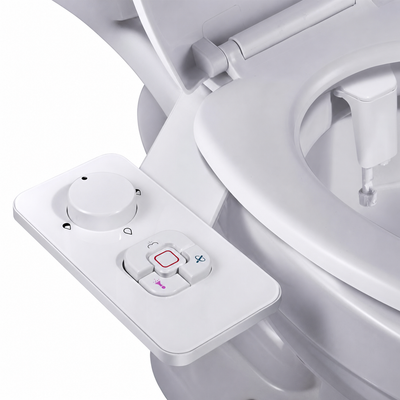
The Japanese wash seat is an intermediate solution. This system fits onto any existing toilet bowl. It works with or without electricity, offers adjustable front and rear jets, and allows for connection to hot water. Electric models offer the same comfort as complete Japanese toilets (heated seat, air dryer, lighting). Recommended price: between €240 and €480.

The Japanese toilet kit
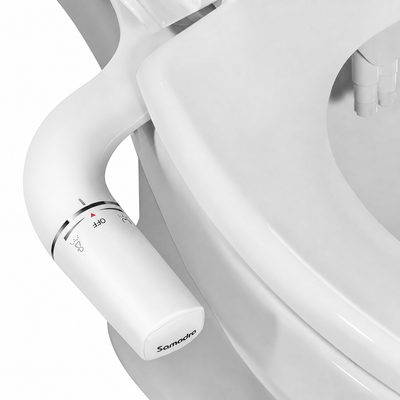
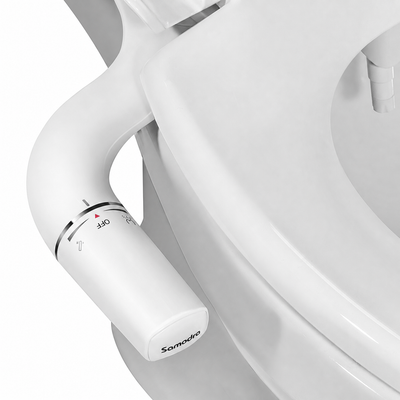
This is the best value for money in the category. Without electricity, these kits operate solely on household water pressure: no battery or electrical connection required. They typically include two stainless steel or brass telescopic nozzles — a rear nozzle for back cleaning, and a finer front nozzle for feminine hygiene — as well as a self-cleaning function. A dial allows for adjusting jet pressure, and temperature on models connected to hot water. Depending on the options, our models range from €60 to €170.

Installation and compatibility of the Japanese toilet kit
A major advantage of Japanese toilet kits is their direct installation on your existing toilet. Most models can be installed in under five minutes, without a plumber. Complete kits include a T-adapter, hoses, and mounting plates. A standard kit simply fixes under your toilet seat. The version with an integrated seat attaches using the same screws as the original seat, without any cutting or drilling.

Compatibility is remarkable: 99% of standard bowls are compatible with these systems. Japanese toilet kits adapt to different seat shapes (D, O, V) and are even suitable for wall-hung toilets thanks to 3-meter hoses. The ultra-slim design, typically 6 to 9 mm thick, preserves the aesthetic of your toilet.
The self-cleaning system for the nozzles, present on most models, rinses and retracts them after each use, which limits limescale buildup and maintenance. This function is a major asset for durability and system hygiene.
Cleaning modes of washing toilets
Japanese toilets offer several modes to meet all needs.
- Rear mode, or back cleaning: the most commonly used for daily needs.
- Front mode, with a softer jet: ideal for women, during menstruation or pregnancy.
- Double jet: some models combine both zones in one activation.
- Self-cleaning of nozzles, before and after each use.
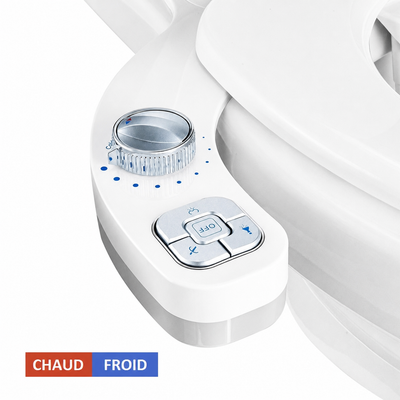
- Hot water: being able to choose between cold and hot water is the key feature of high-end kits. Connection to the hot water supply allows for a warm wash, which is significantly more comfortable.
- Adjustable jet pressure, usually across 4 or 5 levels: everyone can find their preferred setting, whether they have sensitive skin, hemorrhoids, or are simply looking for a more thorough clean.

This level of comfort and personalization makes washing toilets a choice particularly appreciated by families, seniors, and people with reduced mobility.
Ecological and economic benefits of washing toilets
One of the greatest strengths of Japanese toilets is their ecological impact. With a Japanese toilet, toilet paper consumption drops drastically: by 70 to 90%. Yet, the manufacturing of a single roll of toilet paper requires approximately 140 liters of water, whereas a wash consumes only 0.5 to 0.6 liters. Even taking into account the water consumption of the jet, the overall ecological balance is therefore heavily in favor of washing toilets.
From an economic standpoint, the savings made on toilet paper — approximately €90 per person per year, or nearly €360 for a family of four — quickly compensate for the purchase and installation cost. Non-electric models are the most economical in the long run, as they incur no energy costs.
The durability of the materials used — stainless steel, brass, resistant ABS — ensures high longevity, which limits replacements and waste. To learn more, check out our article on the operation and maintenance of a Japanese toilet.
Hygiene and health: concrete benefits
Cleaning with water offers superior cleanliness compared to paper alone and is traditionally recommended to limit skin irritation. For women, intimate hygiene is particularly improved thanks to the dedicated mode. People prone to hemorrhoids or constipation are also among the first to equip themselves: the gentle and precise wash avoids any friction on already sensitive areas.
People with reduced mobility, seniors, and pregnant women benefit greatly from the autonomy that these toilets offer: a dial or a button is enough to trigger the wash, without effort or contortion. The soft-close mechanism of the seat prevents bumps and pinching risks. These are all features that make Japanese toilets suitable for the whole family.
The different ranges, from basic to luxury
The most affordable
For those looking for a simple and economical solution, non-electric Japanese toilet kits offer excellent value for money, without compromising on essential features.
Discover the ultra-slim non-electric Japanese toilet kit

The versatile one
The Classic Japanese Toilet Kit contains everything you need: three rinsing modes, including a self-cleaning function. An elegant design, and several colors to choose from.
Discover our classic Japanese toilet kit

The luxury one
Discover our high-end Japanese toilet kit, which transforms a classic toilet into a true comfort experience: slim design (9 mm thick) and elegant, three cleaning modes (classic, feminine, and self-cleaning), choice of water temperature (hot or cold), and jet pressure adjustment.
Discover the Luxury Bidet Japanese toilet kit

The non-electric seat
For an intermediate budget, wash seats combine interesting features (hot and cold water, front and rear jets) with simple installation. It transforms any bowl into a washing device, installs in a few minutes, works solely on water pressure, and offers a silent soft-close lid.
Discover the comfort of a complete Japanese seat

The electric seat
Enjoy high-end comfort daily with the smart electric seat: ergonomic seating, silent closing, dual front/rear jet for precise and personalized washing. But that's not all: self-cleaning nozzles, adjustable hot water, integrated hot air dryer, and automatic deodorization, not to mention night lighting. A modern, practical experience that is incomparable to toilet paper.

Discover the Premium electric Japanese seat
Japanese toilets through history
Inspired by our old bidets, the concept of so-called "Japanese" toilets was actually invented in Europe, more precisely in Switzerland. But after World War II, Europe massively adopted toilet paper. Conversely, Japan continued to innovate and improve its flush toilets, leading to today's high-tech seats.
Explore the history of Japanese toilets
Today, about 80% of Japanese households are equipped with a washlet, which combines comfort, hygiene, and technology. This innovation is gradually exporting to Europe, North America, and Southeast Asia, where it is rapidly gaining ground.
The expansion of Japanese toilets in France
The adoption of Japanese toilets in France remains minor compared to Japan, but the trend is clearly on the rise. Sanitary manufacturers are noting a continuous increase in equipment with integrated washing, driven both by an aging population and the search for more hygienic solutions.
French consumers are gradually becoming aware of the ecological and hygienic benefits of these washing toilets, which creates a growing demand for sustainable solutions.
Conclusion: why choose a Japanese toilet
In summary, Japanese toilets significantly improve hygiene and comfort in the restroom. Thanks to their ease of use, reduced ecological footprint, and excellent value for money, washing toilets are gaining ground all over the world. Whether you are looking for a simple solution without electricity, a practical seat, or a complete high-tech washlet, there is a model suited to your needs and your budget.
To learn more, check out our Japanese toilet price comparison.
If you are looking for an ecological, hygienic, and comfortable alternative to conventional toilets, a Japanese toilet is an investment that pays for itself quickly. Choose your Japanese toilet kit now and transform your bathroom experience.