

What is the electricity consumption of a Japanese toilet?
Washlet toilets are becoming increasingly popular for their comfort and hygiene. But one question is always asked before purchasing: what is the power consumption of a Japanese toilet? Should one fear an increase in the electricity bill?
In this article, we analyze in detail the energy consumption of a Japanese toilet, its real cost of use, and the factors that influence it.
Japanese toilet: how does this type of toilet work?
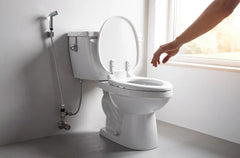
A Japanese toilet is a washing system integrated into the toilet, which uses a water jet to clean after using the bathroom. It replaces or significantly reduces the use of toilet paper.
In most cases, it is a bidet seat installed on a standard bowl. Some versions operate without electricity, using only water pressure. Others use a power supply to operate:
- water heating;
- the heated seat;
- the drying system;
- automatic controls and sensors.
The features vary depending on the model, but the principle remains the same: an adjustable water jet ensures intimate cleansing. This technology, very common in Japan, turns ordinary toilets into high-tech toilets.

Why does a Japanese toilet consume electricity?
An electric bidet toilet requires a socket to power several components. Unlike a non-electric Japanese kit, which is purely mechanical, electric versions heat the water and the seat.
These functions significantly improve comfort but inevitably involve consumption. However, it remains low compared to most household appliances.
Average power consumption
It depends on the model and the options activated. On average, a Japanese toilet consumes:
- 0.5 to 1 kWh per day;
- which is about 180 to 365 kWh per year.
This corresponds to an annual cost of €30 to €70, depending on the price of electricity.
The actual consumption depends on several factors:
- the frequency of use;
- the water and seat temperature settings;
- the duration and power of the drying;
- the temperature of the incoming water and the ambient temperature of the room.
A well-adjusted device therefore remains very economical.
Analysis of Japanese bidet seat power
To understand the actual consumption, one must look at the technical specifications. On a modern electric Japanese bidet seat:
- water heating power: 1,300 W;
- heated seat power: 45 W;
- hot air drying power: 250 W.
Warning: these power levels correspond to intermittent operation. The device never runs continuously.
- the washing only lasts a few seconds;
- the drying lasts from 30 seconds to 1 minute at most;
- the heated seat consumes little power and can be adjusted or turned off.
The actual energy consumption therefore remains very moderate.
The influence of water temperature
This is the determining factor: the more the water is heated, the higher the consumption. Most seats offer several levels:
- off;
- 33°C;
- 36°C;
- 40°C.
The ambient temperature also plays a role: if the incoming water is very cold, the system heats more. The integrated hot water tanks, of about 0.55 L, however, help limit this consumption.

What about water consumption?
Contrary to popular belief, a Japanese toilet uses very little water: the flow rate is 0.8 L/min maximum.
As washing lasts 20 to 40 seconds, this represents about half a liter per use. Compared to the 140 liters of water needed to manufacture a single roll of toilet paper: the results are conclusive.
Are Japanese toilets economical?
In terms of energy, yes, a Japanese toilet is very economical. There are several reasons for this:
- a very short usage time;
- temperature regulation systems;
- sensors that turn off unnecessary functions.
The reduction in toilet paper also represents a substantial saving over time. Ultimately, the impact on the electricity bill is moderate and largely offset by what you no longer spend on rolls.
Electric Japanese toilet or non-electric kit?
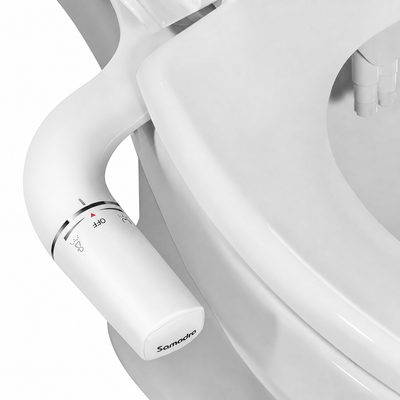
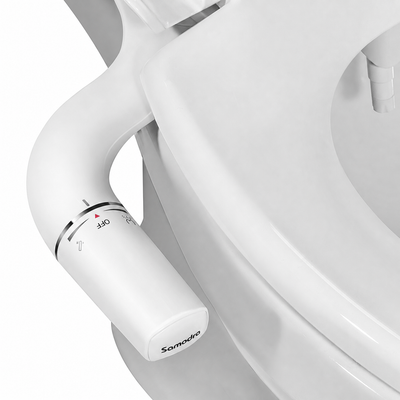
There are also purely mechanical Japanese toilet kits: their power consumption is zero. In return, some features are missing.
A non-electric system operates solely on water pressure. Therefore, it does not have:
- a heated seat;
- hot air drying;
- night lighting.
Some non-electric models can, however, be connected to hot water — which resolves most of the comfort issue.

See the Deluxe Japanese toilet kit
Examples of electric Japanese toilet seats
To enjoy the comfort of Japanese toilets, here are two easy-to-install models:
The bidet seat with remote control

The Premium seat, with advanced settings

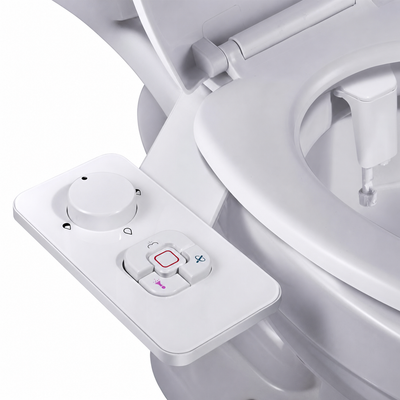
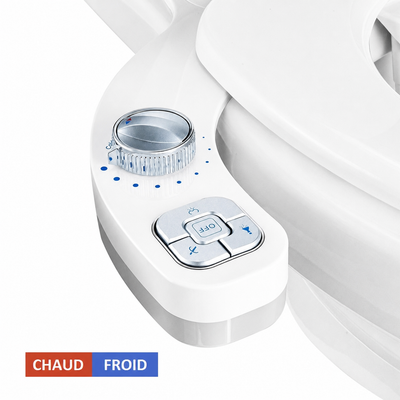
These models work with a simple socket, a water inlet, and a T-connector. Among their features:
- washing pressure adjustment;
- temperature adjustment;
- hot air drying;
- soft-close seat;
- safety sensors.
They transform classic toilets into a modern and comfortable bidet toilet.
Installation and power supply
The installation of a bidet seat remains very simple:
- connect the water supply via a 3-way connector;
- install the seat on the bowl;
- connect the device to a power outlet.
The standard cable length is about 1.5 m. Once connected, the device is immediately operational. However, be careful: the outlet must be compliant and protected, like any electrical installation in a bathroom.
The ecological impact of Japanese toilets
Beyond energy consumption, it is the overall balance that counts:
- a 70 to 90% reduction in toilet paper;
- better hygiene;
- a much more effective water wash.
The manufacture of toilet paper consumes a huge amount of water and energy. Even taking into account the electricity consumed, washlet toilets remain a significantly more ecological solution.
Conclusion: does a Japanese toilet consume a lot of electricity?
No. The consumption remains overall very low:
- between 180 and 365 kWh per year;
- or €30 to €70 per year at most.
Compare this to the toilet paper savings: about €90 per year per person, or nearly €360 for a family of four. In other words, the device partially pays for itself.
For equipment offering a water wash, drying, a heated seat, and superior comfort, this remains quite reasonable.
And for those who want strictly zero consumption, mechanical Japanese toilet kits remain the simplest and most accessible option.