

Japanese toilets: reviews, testing, and complete comparison for 2026
Reviews of Japanese toilets converge on a few decisive criteria: hygiene, comfort, cost savings, installation, and product range comparisons. You can also find our Japanese toilet kits directly in the shop.
Japanese toilets and hygiene: what users say
Feedback converges on a simple point: washing with water changes the feeling of cleanliness. With Japanese toilets, cleaning relies on a precise rinse rather than rubbing with paper, which improves both hygiene and comfort. An academic study on the subject also discusses the benefits of rinsing with water compared to toilet paper.

What is the difference between a traditional toilet and a Japanese toilet?
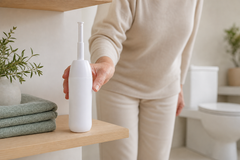
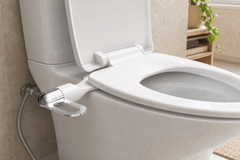
The difference lies primarily in the method of cleaning. A traditional toilet requires wiping, whereas a Japanese washlet toilet seat uses a nozzle to project an adjustable water jet, providing a targeted wash that is gentler on the skin.
- Telescopic nozzle: it rinses itself and then retracts after use, which makes cleaning the device easy.
- Adjustable jet: position and intensity can be adapted to individual needs, with a distinct feminine mode on many models.
- Comfort features: soft-close lid, heated seat, and sometimes drying.
Once adopted, the washlet seat changes habits for the long term: many users report that a return to standard toilets, even temporarily, accentuates the perceived difference.
Reviews on comfort and intimate hygiene
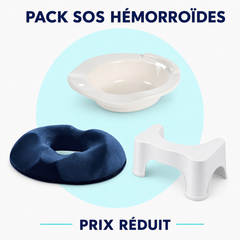
In terms of hygiene, reviews highlight a reduction in friction, leading to less discomfort for sensitive areas. Users prone to irritation or hemorrhoidal flare-ups are among the most enthusiastic: washing with water is significantly better tolerated than repeated wiping. Discover the deluxe Japanese toilet kit for a version with integrated hot water.
Some models go further: deodorization through suction-filtration, adjustable drying, or automatic flushing on high-end versions.
Japanese washlet toilet seat: for whom?
The Japanese toilet seat is suitable for a wide variety of profiles. For people with reduced mobility or joint pain, it simplifies intimate hygiene by limiting the need for wiping, which concretely improves autonomy. The electric seats are particularly highly regarded for home care support.
For a family, the same equipment suits multiple needs: jet adjustment, heated seat, more comfortable lid, and memory settings on certain models. Installation often remains simpler than expected.
Comfort and daily use
A clear comparison of the ranges helps guide the choice according to usage and budget. Between a non-electric seat and a Japanese toilet with a heated seat, drying, and integrated bidet, the operation, installation, and price vary significantly.

Heated seat, drying, and wash jet
Comfort is based primarily on a trio often cited in reviews: heated seat, precise wash jet, and warm air drying. In winter, the warmth of the seat immediately changes the experience. On equipped versions, the drying cycle takes less than two minutes and completes the rinse.
Customization offers precise settings: water adjustable between 30 and 40°C, adjustable flow, nozzle extension, and sometimes oscillating or massaging modes. Controls remain simple to master, whether via a wall remote, side arm, or app.
Comparison of ranges and prices
The price of a Japanese toilet is divided into three fairly clear levels.
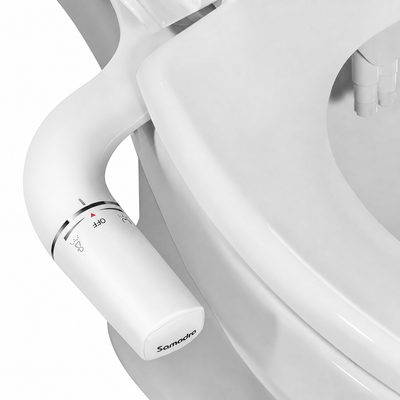
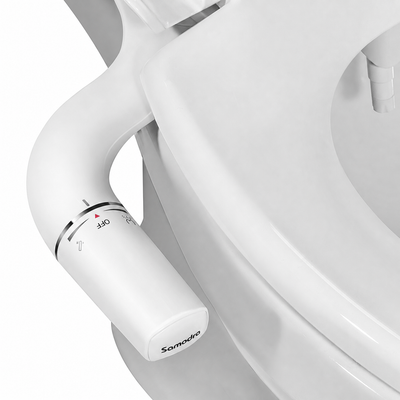
The entry-level starts at €60: these kits function without electricity, using water pressure, and focus on a simple and effective rinse. This is the best entry point to discover water washing without requiring renovations.
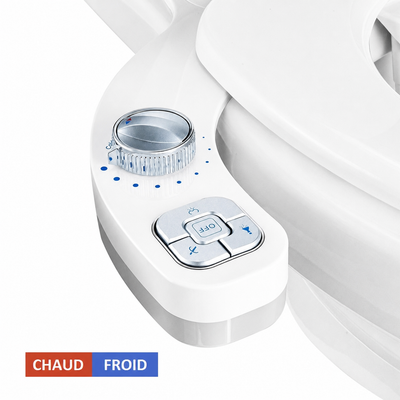
The mid-range adds hot water, a heated seat, and basic drying. This is the most common choice for daily family use.
As for complete ceramic Japanese toilets, which replace the bowl, they are positioned much higher and require professional installation.
| Range | Indicative price | Main features | Electricity required |
| Non-electric kit | From €60 | Cold water wash jet, adjustable pressure, installation in minutes | No |
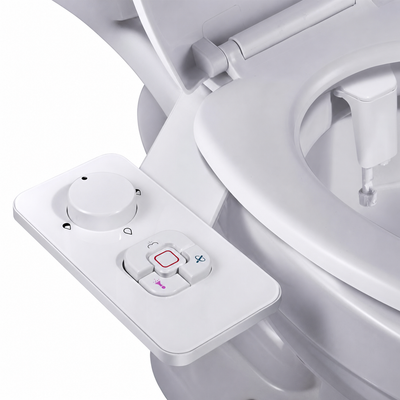
| Hot water kit | €120 – €170 | Adjustable hot and cold water, dual nozzle, installation without work | No |
| Electric seat | €240 – €480 | Heated seat, warm air drying, deodorization, remote control | Yes (230 V) |
Advantages and points of caution
The most frequently cited advantages relate to hygiene, comfort, and the feeling of cleanliness after rinsing. For many users, this type of cleaning permanently replaces the exclusive use of paper.
- Hygiene: rinsing with water is considered more effective than paper alone, with a longer-lasting feeling of cleanliness.
- Nozzle maintenance: in areas with hard water, deposits can appear faster, requiring descaling every 2 to 3 years depending on usage conditions.
- Electrical dependence: the most equipped versions require a 230V outlet. Non-electric kits do not have this constraint.
It is the regularity of use that allows Japanese toilets to fully reveal their benefits.
Japanese toilets, water, and ecology
Reducing toilet paper without increasing water consumption might seem contradictory. However, the principle relies on a targeted wash that uses very little water compared to the entire production chain of paper.
What this changes in practice
- Rinsing water volume: the wash jet consumes less than a liter per use, far less than the footprint of manufacturing paper.
- Toilet paper: a single sheet can be enough for final drying, instead of dozens during classic use.
- Annual savings: approximately €90 per person per year, or nearly €360 for a family of four.
- Electricity cost: between €20 and €26 per year for electric models, an amount generally lower than the savings achieved.
Some models go further with a hand wash basin placed above the tank: the water used for hands then supplies the next flush.
User reviews on savings
In user feedback, two points come up: the feeling of cleanliness and the sharp decrease in toilet paper use. For a kit available from €60, the estimated annual saving of €90 per person allows the purchase to pay for itself in less than a year.
Brass, stainless steel, and antibacterial ABS are often chosen to limit wear and delay equipment replacement.
Maintenance remains simple: the same products as for a classic bowl are sufficient, with occasional descaling every 2 to 3 years depending on the water hardness.
Frequently asked questions
Are Japanese toilets more hygienic than classic toilets?
They rely on washing with water rather than just rubbing with paper, which improves cleaning after using the toilet. The rinsing nozzle cleans itself automatically on many models.
For many users, this gentler cleaning method provides real daily comfort, particularly in cases of irritation, hemorrhoids, or intimate sensitivity.
Economical Japanese toilet kit or electric seat?
The choice depends on the budget, the presence of an electrical outlet nearby, and the level of comfort desired. A non-electric kit, starting at €60, is suitable if the main requirement is a simple water rinse, with installation in a few minutes.
An electric washlet seat is aimed at more comprehensive use: heated seat, warm air drying, remote control. Between the two, the hot and cold water kit offers the best compromise for family use.
Is it still necessary to use toilet paper with a Japanese toilet?
Very little, in most cases. After washing, a single sheet may be sufficient for drying on models without warm air. With a model equipped with this function, paper sometimes becomes unnecessary.
This drop in consumption represents approximately €90 in savings per person per year, while reducing the impact related to the manufacturing and transport of toilet paper.