

Why use a physiological stool in the toilet?
A physiological toilet stool concretely improves posture, bowel movements, and digestive comfort: anatomical mechanism, observed benefits, and practical usage tips.
Why a toilet stool changes your natural posture
Modern toilets usually require sitting at a 90° angle. However, this position, while seemingly comfortable, does not match the posture the body expects during defecation. Everything hinges on a precise point: how the pelvis, colon, and perineum align.

Is the 90° sitting position really physiological?
In a standard seated position, the torso and thighs form a right angle. In this posture, the puborectalis muscle remains more contracted, which maintains an angle at the recto-anal level and slows down the evacuation of stool. This requires more effort, with a potential impact on constipation, hemorrhoids, and the pressure exerted on the perineum.
How the physiological stool recreates the squatting posture
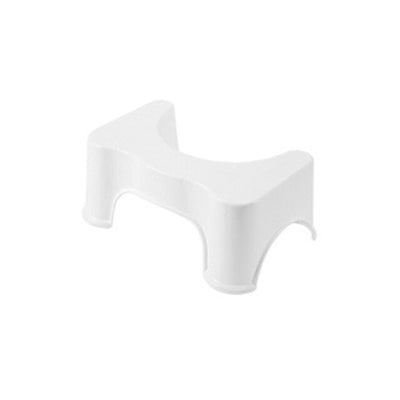
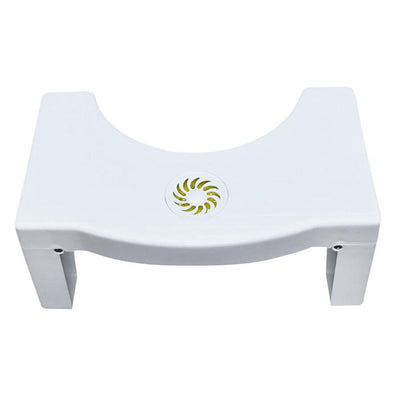
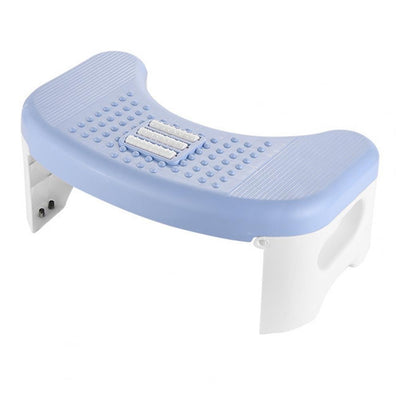
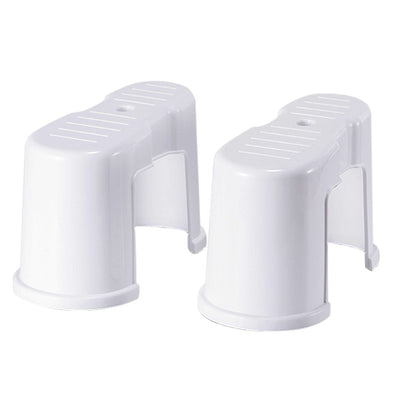
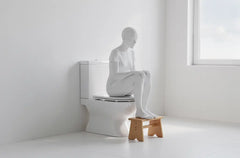
The physiological stool, or toilet stool, raises each foot by about 17 cm. This brings the knees above the hips, which brings the body closer to a squatting position and a better position for using the toilet.
This adjustment changes the angle between the torso and the thighs to around 35°: the recto-anal canal straightens more easily, and defecation becomes more fluid. In a squatting position, gravity better assists evacuation, the colon is better aligned, and stool passes with less effort.
Daily use is simple: with your feet on the stool, lean your torso slightly forward, resting your forearms on your thighs.
What published research says about toilet posture
A Japanese study published in 2010 observed that the more hip flexion increases in the squatting position, the more the recto-anal canal straightens, which reduces the effort required for defecation. More recent American research reaches the same conclusion regarding the ease of evacuation and the time spent on the toilet.
As soon as the feet are elevated, the posture becomes closer to the squatting position that the human body spontaneously used before modern toilets. This can promote more complete evacuation, limit excessive straining, and improve comfort, particularly in cases of constipation or sensitivity to hemorrhoids. Find our selection of physiological toilet stools to choose the model that suits you.
These accessories vary in height, from 12 to 20 cm, and in format, foldable or fixed: two criteria that guide your choice based on your body type and the height of the toilet bowl.
Since the 1960s, several medical studies have suggested that the best position for defecation is not the usual upright seat, but a posture closer to squatting.
Elevating your legs on the toilet to facilitate bowel movements
Your position on the toilet is not just a detail of comfort: it directly influences defecation, the quality of evacuation, and the effort required by the body. As soon as each foot rests on a suitable footrest, the pelvis tilts slightly and the passage of stool becomes more fluid.

Why elevating the legs facilitates evacuation
When your knees are above your hips, the position is closer to a squatting posture. The puborectalis muscle relaxes more, the rectum aligns better with the colon, and evacuation occurs with less resistance. The toilet footstool reproduces this squatting position on standard toilets.
Less blockage means less effort: the anal sphincter relaxes more easily, the perineum is under less strain, and defecation becomes more effective. This proper position also limits the feeling of incomplete evacuation, often associated with constipation.
Once you start using the stool, the body more easily associates this posture with the evacuation reflex: bathroom visits often become shorter, more regular, and less uncomfortable.
What data and users report
A 2003 study, frequently cited in gastroenterology, measured an average evacuation time reduced from 2 minutes and 10 seconds in a standard seated position to 51 seconds in a squatting position.
Concretely, the stool positions the body at about 35° of squatting on the bowl, which avoids the excessive straining that irritates the perineum and stresses hemorrhoidal veins.
As for users, the feedback collected points in the same direction: a large majority report less sensation of tension after a month of use and more regular bowel movements. Our physiological toilet stool is designed to fit the majority of standard bowls.
| Indicator | Standard seated position | Squatting position (stool) |
| Average evacuation time (2003 study) | 2 min 10 s | 51 s |
| More regular bowel movements (user feedback) | - | Reported by a large majority |
| Less sensation of tension (user feedback) | - | After about 1 month of use |
The recommended position to facilitate bowel movements
The physiological stool allows you to adopt a posture where the knees are raised, the torso leans slightly forward, and the stomach remains relaxed. This position reduces effort, supports more natural evacuation, and helps limit constipation, hemorrhoidal discomfort, and certain tensions in the perineum.
In practice, it is better to go to the toilet when the urge actually arises, without holding it back or sitting for too long. After 5 minutes, if nothing happens, it is better to stand up and come back later.
The posture yields better results with a diet rich in fiber, sufficient hydration, and regular physical activity. For simple and stable use, discover our ergonomic physiological stool.
Physiological stool, hemorrhoids, and the perineum
Beyond comfort, toilet posture affects the perineum and rectal veins. When defecation requires less effort, the pressure exerted on the anal area significantly decreases.
Why the stool relieves hemorrhoidal discomfort
On standard toilets, the 90° seated posture does not always favor fluid evacuation. This angle maintains greater compression at the level of the rectum, which can increase effort, maintain constipation, and aggravate hemorrhoidal discomfort.
The physiological stool acts on this precise point: by raising the feet, it allows you to adopt a position closer to the natural posture. The knees rise, the pelvis is better oriented, and defecation becomes easier. Less straining, less tension on the perineum, more comfort in daily life.
To limit anal fissures, pain, and issues related to repeated straining, the use of a stool or footrest is commonly recommended by healthcare professionals.
Perineal rehabilitation and special situations
A weakened perineum and hemorrhoids share a common mechanism: as soon as abdominal pressure during defecation decreases, both benefit. The squatting position, or a posture close to it, reduces this constraint and supports more fluid bowel movements.
With a physiological stool, this position is achieved without changing your toilet setup. The rectum aligns better, the anorectal angle opens more, and evacuation requires less effort. This improved position can also relieve the pelvic floor during rehabilitation.
This logic applies in several situations: after pregnancy, after certain pelvic or prostate surgeries, or when constipation weakens the area over the long term.
The posture is most effective when accompanied by a few simple habits: avoiding staying on the toilet for too long, not straining, and supporting bowel movements with fiber, water, and regular activity.
A practical accessory for the whole family
The physiological stool is not just for one type of user. For adults, it reduces effort and supports more complete evacuation. For children, it anchors the correct posture from the start of potty training. For seniors, it provides stable support that makes the act safer.
Its rounded shape, anti-slip pads, and recyclable plastic material make it easy to clean and integrate with most standard toilets. Physiological stool, footstool, or simple footrest: the difference lies in the height and the angle achieved.
Frequently Asked Questions
Why put a stool in front of the toilet?
With feet elevated, each foot finds stable support, and the angle of the pelvis becomes more favorable for evacuating stool. This posture better relaxes the anorectal area, further aligns the colon, and limits effort when going to the toilet.
The toilet stool is thus a simple alternative to the classic seated position, which is often less adapted to bowel movements. Available research, including a 2003 study often cited in gastroenterology, supports this. It is also a position commonly recommended by doctors and physical therapists when the goal is to preserve pelvic comfort.
What is the correct position with a physiological stool?
Place both feet flat on the support, with your knees slightly above your hips. Then lean your torso forward a little, without excessive tension, letting your forearms rest on your thighs.
This posture recreates the natural squatting that the standard bowl does not allow. The angle formed between the torso and the thighs, around 35°, facilitates the alignment of the recto-anal canal.
Does the physiological stool help with hemorrhoids and constipation?
It acts on the pressure exerted during expulsion: the squatting posture recreated by the stool reduces the strain on rectal veins and decreases effort.
The 2003 study and user feedback point in this direction, with a large majority of users reporting less tension after one month. Daily use of the stool promotes more regular bowel movements and more complete evacuation. However, it does not replace medical advice.
The physiological stool is a comfort accessory. It does not replace medical advice or treatment.