

Hygiene and Comfort: Why Adopt a Bidet Sprayer
Toilet sprayers are becoming increasingly popular, and it's not hard to see why. Offering improved hygiene and a much more comfortable bathroom experience, they have become a staple in many homes. But what exactly is a toilet sprayer, what is it used for, and how does it work?
Toilet sprayer: what is it for?
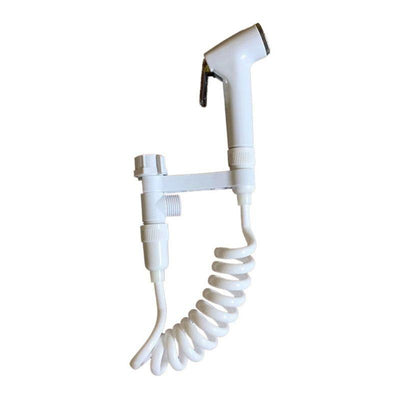
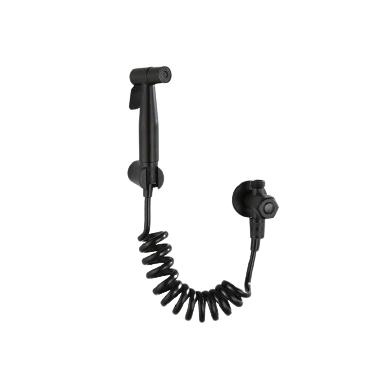
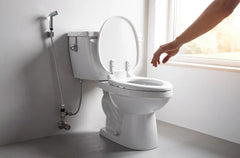
A toilet sprayer is an intimate hygiene accessory that attaches to the wall or the side of the toilet bowl. Like a shower head, it is equipped with a flexible water supply hose and a handle. You simply operate it to spray warm or cold water onto your intimate area to clean yourself after using the toilet.
Popular all over the world, particularly in Asia (Japan, Thailand, Philippines, India), the United States, Eastern Europe, and around the Mediterranean (Italy, Greece). It is known as a shattaf in the Middle East and is widely used in Muslim countries, particularly in Saudi Arabia, Turkey, and the Maghreb.
It is increasingly finding its place in France and Western Europe in modern bathrooms and toilets. The toilet sprayer is indeed an excellent alternative to a bidet or a shower toilet: it is much cheaper and just as effective as a state-of-the-art Japanese toilet.
There are two types of toilet sprayers: those that mount on the wall and those that mount on the side of the toilet bowl. Some complete kits offer both types of mounting.
Toilet sprayer and hygiene
The primary benefit is hygiene. The sprayer allows you to actually clean the intimate area after using the toilet. Since fecal matter is water-soluble, water removes it easily, leaving the skin clean. Paper, even if it removes most of it, always leaves a thin film of residue—often responsible for irritation. Cleaning with water is therefore the simplest way to feel truly clean and fresh.
The toilet sprayer also avoids any risk of hand contamination. Unlike using toilet paper alone, where hands are always more or less exposed—not to mention sheets tearing at the wrong moment—there is no direct contact: only the water jet cleans, and then falls back into the bowl.
It also allows you to save toilet paper, which makes it much more environmentally friendly.
Finally, it is the method most often recommended in case of irritation linked to diarrhea or hemorrhoids: cleaning the anal area with water is much gentler than rubbing with paper.
How to use a toilet sprayer
The operation is very simple. Once you have finished, pick up the sprayer and direct it toward the area to be cleaned: either by pointing the jet between your legs (easier for women) or from behind, directly underneath you.
Activate the jet by pressing the handle (or a button, depending on the model). After use, simply release it to shut off the water.

When using it for the first time, you might worry about splashing everywhere. Rest assured, this is not the case: the jet is easy to control and you will feel the water directed at a precise point. You will have no trouble hitting the target.
Once clean, dry yourself using a cotton or microfiber toilet towel kept next to the toilet. This avoids using paper—which tends to disintegrate upon contact with water, which is really not practical.
An affordable toilet sprayer: what to look for
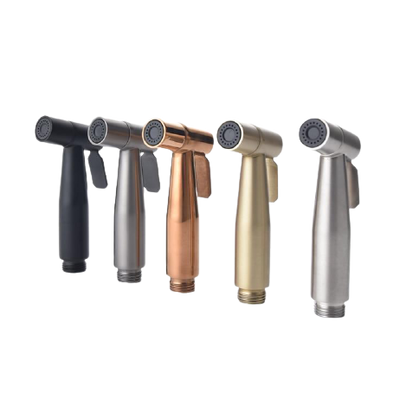
A few points should be checked before purchasing. First, the water pressure must be sufficient—don't worry, this is the case in 99% of installations in our houses and apartments. Second, ensure that the sprayer is easy to use and maintain: this is true for all models in our collection of toilet sprayers. Finally, consider the aesthetics and how it will integrate into your toilet.
Price of a toilet sprayer
The price varies between €15 for a sprayer alone, around €40 for a basic kit, and up to €100 for a complete kit with all accessories. A negligible budget for a clear improvement in hygiene and comfort.
For those on a budget, it is a much less expensive alternative to complete shower toilets, the price of which often exceeds €1,000.
A toilet sprayer will also often be cheaper than a Japanese toilet kit (between €60 and €110). The effectiveness is comparable; it is the comfort of use that differs, as some kits offer several spray modes or automatic nozzle cleaning.
Save on paper
Have you ever counted your toilet paper expenses? They are estimated at approximately €90 per year per person. That's nearly €360 for a family of four. By opting for a toilet sprayer, you reduce this consumption by 70 to 90%: your purchase pays for itself very quickly. And you will no longer have to fill your trash can with useless plastic packaging.

Hygienic and environmentally friendly
With a toilet sprayer, you no longer need toilet paper to clean yourself. It is good for the planet, because the production of rolls is very polluting and contributes to deforestation. Did you know that about 140 liters of water are needed to manufacture a single roll? By installing a sprayer in your toilet, you help preserve the environment.
Adjustable toilet sprayer
Intimate toilet sprayers offer different jet modes to suit your preferences and the type of use. You can choose a single, concentrated jet, which is practical for example to clean the bowl itself, or a multi-hole jet, which is softer and more enveloping for sensitive areas. The jet pressure is also adjustable depending on the model.

Toilet sprayer: hot water or cold water?
The water used can be hot or cold, depending on your preferences and the connections available in your toilet. Many toilets are only equipped with cold water. For hot water, you will need to have a supply nearby, or install one.
Cold water toilet sprayer
This is the most common version. It might cause some apprehension, but in practice, cleaning with cold water is very pleasant. For those who are sensitive to the cold: the cleaning only lasts a few seconds, far too little to catch a cold.
Applying cold water to the perineal area is also the very principle of hydrotherapy, traditionally known to stimulate circulation and tone the body. If you are sensitive to the cold, many practitioners of these short exposures report a clear improvement in the long run.
Hot water toilet sprayer
Hot water is arguably more comfortable, especially in winter. However, it is not more effective than cold water. You will need to install a mixer or faucet to adjust the temperature; some kits come equipped with one.
Take into account the distance between your toilet and your hot water tank. If your toilet is on the other side of the house, it may take some time for the hot water to arrive. If it takes 10 seconds, you will have long finished cleaning yourself with cold water—and you will save water and energy.
Also, be careful to properly adjust your faucet: water that is too hot could burn the skin and mucous membranes.
Wall-mounted toilet sprayer
Aesthetic and easy to use, some have a hose hidden in the wall (though this requires plumbing work). Others have an exposed hose: only the sprayer support is fixed to the wall using wall anchors. This allows you to choose the exact installation height for greater comfort. Very practical for people with disabilities, people with reduced mobility, the elderly, and pregnant women.


Toilet sprayer without drilling
Mounted on the side of the toilet bowl with a glued or clipped support, these are just as aesthetic and easy to use. They are often cheaper and easier to install, as they require no drilling or special fittings. However, the position of the support is fixed: on the tank, or near the water inlet, depending on the model.
Installing a toilet sprayer

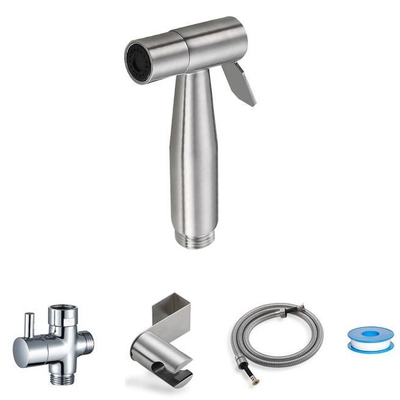
A basic kit consists of a sprayer, a hose (stainless steel or plastic depending on the model), a T-connector, and a support.
Installing a classic, cold-water version of a sprayer requires no hot water connection and involves no construction work. You simply attach it to your existing toilet without replacing the bowl or modifying anything.

- Shut off the water supply.
- Unscrew the connection between the toilet tank and the water inlet.
- Place the T-connector between the two, then screw back on.
- Attach the hose to the outlet of the T-connector.
- Attach the sprayer head to the hose.
- Install the sprayer on its support (wall-mounted or clipped to the tank).
You're done: turn the water supply back on, check that the pressure is sufficient, and that no connections are leaking. If the sprayer drips at the seals, repeat the step by adding Teflon tape before screwing it in.
Conclusion
Toilet sprayers are increasingly popular accessories that offer improved hygiene and a much more comfortable intimate cleaning experience. By adopting a toilet sprayer, you improve your personal hygiene, reduce your toilet paper consumption, and make real savings.
A true enhancement to our modern toilets, they come in many versions. Consider aesthetics and design during your purchase to beautify your toilet. Choose yours now from our collection of toilet sprayers.