

Bidet shower or Japanese toilet: which solution should you choose for your bathroom?
Understanding modern hygiene solutions
Replacing toilet paper with water-based cleaning is becoming the norm in more and more homes today. This evolution meets a simple goal: improving hygiene while increasing comfort.
Two devices dominate the market: the handheld bidet sprayer and the Japanese toilet. Both rely on the same principle — washing, rather than wiping.
Why abandon toilet paper alone
Toilet paper cleans superficially: it always leaves residue behind and eventually irritates the skin with frequent use.
A water jet, by contrast, truly removes impurities. Washing is more hygienic and significantly more pleasant for sensitive areas. This transition also reduces paper consumption by 70 to 90%.
The bidet sprayer: simplicity and efficiency
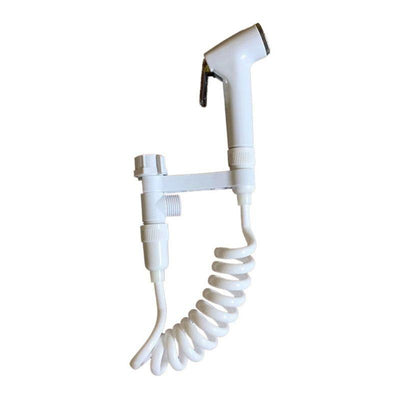
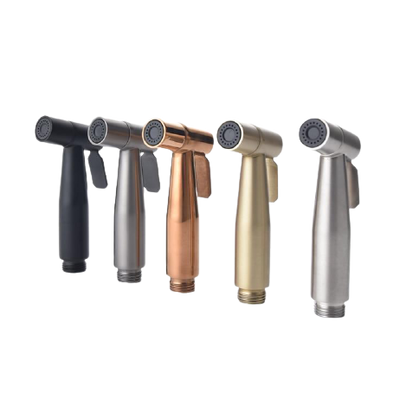
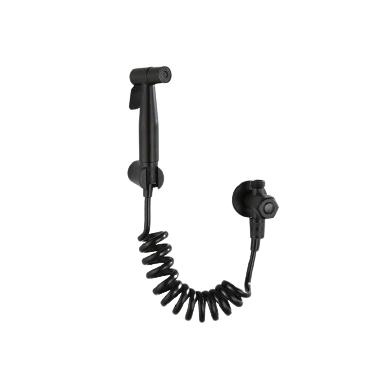
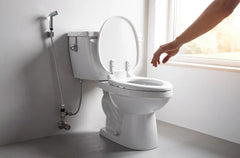
The bidet sprayer is a manual accessory connected to the toilet's water supply. It functions like a small shower head with a directed jet.
Its use is intuitive: you aim the jet at the area to be cleaned. The pressure is adjusted via the trigger or the supply valve. This system appeals for its simplicity and price — expect to pay €15 to €30 for a sprayer alone, and €40 to €100 for a complete kit.

The features of a modern bidet sprayer kit
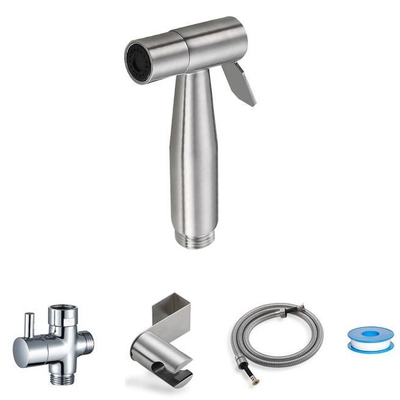
A recent model includes a control trigger, a reinforced hose, and a wall mount. Some versions add an anti-drip head and a mechanism that optimizes the jet.
A complete bidet sprayer kit includes all the necessary fittings for an installation without any construction work.

Practical advantages of the bidet sprayer
It requires no major modifications: you simply connect it to the existing water supply and then attach the mount — to the wall (drilling or adhesive mounting) or directly to the tank (no drilling required).

It is the ideal solution for rentals or standard toilets. Another advantage: its accessible price, which makes it the best entry point into water-based hygiene.
The Japanese toilet: technology and maximum comfort
The Japanese toilet is an integrated washing fixture. It exists in several versions.
- Complete Japanese toilet: a single-unit fixture including the bowl, tank, and washing system. Expect to pay from €2,000 to €5,000.

- Electric adaptable seat: the intermediate solution. It transforms an existing bowl into a complete washing toilet, for €240 to €480.

- Non-electric Japanese toilet kit: it attaches under the existing seat and operates solely on water pressure. From €60 to €170.

All use jets for precise and consistent washing. Electric models add warm air drying, a heated seat, and fine temperature management.
How a washing toilet works
A Japanese washing toilet functions according to two possible principles:
- an electronic system, controlled by a side panel or remote;
- a mechanical system, which uses network pressure — like a bidet sprayer.
In both cases, a nozzle extends from under the seat and projects an adjustable jet. Cleaning is done without any manual contact.
Electric models additionally feature presence detection and automatic nozzle cleaning after use.
The advantages of Japanese toilets
They are primarily valued for their versatility: washing, thermal comfort, and automation combined.
- Warm water: electric models heat the water themselves. Non-electric models also offer this option, provided they are connected to a hot water supply.
- Self-cleaning: automatic rinsing of nozzles, present on both electric and mechanical models.
- Jet precision: adjustment of the area, front (feminine) or rear.
- Simple integration: 10-minute installation with no construction, compatible with 99% of standard bowls.
With these features, the washlet — the common name for this type of equipment — is now the standard for intimate hygiene.

Bidet sprayer or Japanese toilet: key differences
| Criterion | Bidet sprayer | Mechanical Japanese kit | Electric seat | Complete Japanese toilet |
| Comfort | Basic but effective | Intermediate to high | High to premium | Premium |
| Budget | €15 to €100 | €60 to €170 | €240 to €480 | €2,000 to €5,000 |
| Control | Trigger on handle | Side panel | Panel + remote | Panel + remote |
| Functions | Simple, hand-directed jet | Adjustable front/rear jets | Adjustable jets + drying, heated seat… | Adjustable jets + drying, heated seat… |
| Installation | Very simple | Very simple (5 min) | Simple (15 min) | Complex, professional required |
| Electricity needed | No | No | Yes | Yes |
| Ideal user | Simple need, tight budget, rental | Daily family use | Seeking maximum comfort | Complete renovation |
The bidet sprayer is the simplest and most economical solution, ideal for quick, fully manual use. For more information, check out our bidet sprayer comparison.
The non-electric Japanese kit offers better comfort thanks to its adjustable jets, while remaining affordable and easy to install.
The electric Japanese seat moves upmarket, with automated functions and superior comfort.
Finally, the complete Japanese toilet is best suited for renovation projects: it is equipment comparable to electric seats, but at a price point and installation difficulty that reserves it for new builds.
Installation and technical constraints
Installing a bidet sprayer takes a few minutes, with no electrical connections. The same applies to a Japanese kit, which mounts onto the existing seat. Hot water versions simply require a hot water supply nearby. An electric seat, however, requires a nearby, compliant 230V outlet.
Which choice fits your usage?
For occasional or minimalist use, the bidet sprayer is more than enough. For daily use focused on comfort, the Japanese toilet offers a significantly superior experience. Everything depends on your priority: simplicity or technology.
Direct performance comparison
In terms of cleanliness, both solutions vastly outperform toilet paper. The sprayer offers manual control of the jet; the Japanese toilet automatically adjusts the zone and pressure. In both cases, washing is more effective and far gentler on the skin.
Consumption and environmental impact
These solutions use water, but very little: about 0.5 liters per wash. Compare this to the 140 liters required to manufacture a single roll of paper. Reducing paper therefore massively reduces your overall footprint — and saves about €90 per person per year.
Everyday comfort
This is often the deciding criterion. The bidet sprayer provides an immediate feeling of freshness. The electric Japanese toilet adds warm water, drying, and personalized settings.
Bidet sprayer or Japanese toilet: the verdict
Pitting the two against each other doesn't really make sense: they pursue the same goal. Both improve hygiene, reduce paper use, and make using the toilet much more comfortable. The real question is the level of technology you want in your home — and the budget you are dedicating to it.
The bidet sprayer is the simple, effective, and economical solution for adopting water-based cleaning. The Japanese toilet represents the pinnacle of comfort. In either case, moving from wiping to washing marks a clear improvement in daily life.