

How to choose your Japanese toilet: the complete guide
Are you looking to modernize your toilet with more hygienic and eco-friendly equipment? Our complete guide explains how to choose a Japanese toilet according to your actual needs, budget, and available space. We present the different solutions, their features, and the essential criteria for selecting the right model. To go further, consult our price comparison.
What types of Japanese toilets exist?
Japanese toilets come in four main categories, adapted to different budgets and configurations. Each solution has its advantages: from a kit starting at 60 euros up to a high-end monoblock installation, there is an option for every need.

Kit, washlet seat, or Japanese toilet block: what are the differences?
To fully understand which Japanese toilet to choose, it is best to know the four main models available on the French market. Each is distinguished by its price, ease of installation, and features. Also, discover our selection of electric Japanese bidet seats.
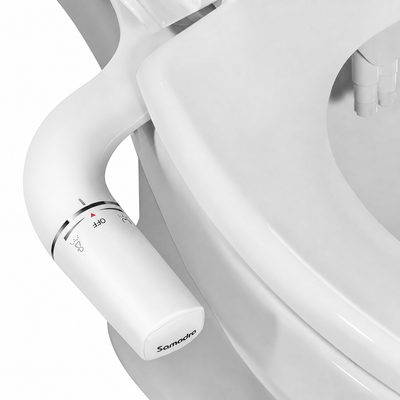
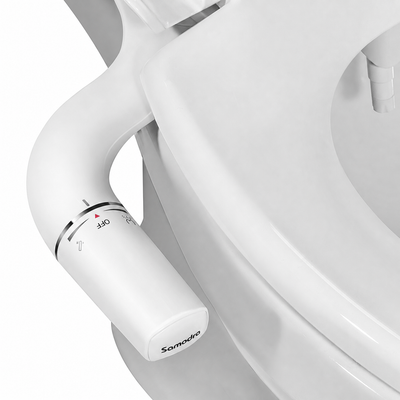
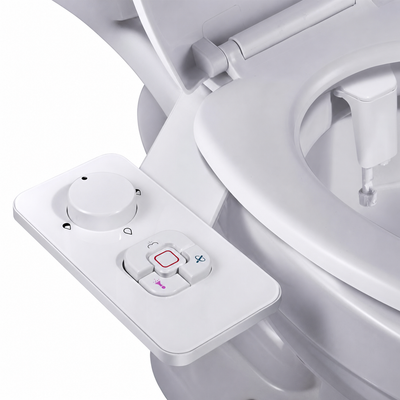
- Add-on kit (integrated sprayer): the budget option, starting at 60 euros. It installs between the existing seat and the bowl, without any modifications, and operates without electricity in mechanical versions. Ideal for testing before investing more. See our range of Japanese toilet kits, with or without hot water.
- Washlet seat: it replaces your current seat directly. Price from 240 to 480 euros, with personalized spray modes (rear, feminine, bidet) and electrical functions like a heated seat.
- One-piece Japanese toilet block: complete integration, including bowl, tank, and electronics. It costs several thousand euros and offers a sleek aesthetic — reserved for a complete renovation.
- Wall-hung Japanese toilet: the premium solution, between 2,000 and 5,000 euros. It requires a support frame and major work. It makes floor cleaning easier but complicates access to the plumbing.
The add-on kit remains the most accessible solution for immediately benefiting from water-based hygiene. Its installation takes five minutes, requires no plumber, and represents a minimal investment to test the technology.
Wall-hung or floor-mounted Japanese toilet: which to choose?
Wall-hung Japanese toilets offer a sleek design and make floor cleaning easier, but require heavy work. This configuration is mainly suitable for a complete renovation, with strict compatibility to be checked with the existing support frame.
Floor-mounted models remain the most common in France: less expensive and easier to equip with a kit or a washlet seat. It is the ideal configuration for gradually adding features without major work.
It all depends on your situation. Complete renovation and a significant budget? Choose the wall-hung. Gradual improvement and a controlled budget? A floor-mounted model with an adaptable kit perfectly meets the need.
What profile for which solution?
A couple with children looking for better hygiene on a small budget will find what they need in a cold-water kit or seat: a reasonable investment, simple installation, and an immediate result.
A person with reduced mobility will benefit more from an electric model with an ergonomic remote control, which restores real autonomy. Automatic opening, heated seats, and adjustable jets improve comfort without heavy adaptation work.
Technical criteria for choosing a Japanese washlet seat
A few checks are necessary before buying to ensure compatibility. They take two minutes and prevent many disappointments.
Bowl compatibility and electrical requirements
Start by measuring the spacing between the mounting holes, and check if your bowl is round or elongated. This information is generally found in the toilet manual or can simply be identified by the shape of the seat.
A 230 V electrical outlet compliant with the NF C 15-100 standard is mandatory for any model with heating, drying, or automatic opening. It must be protected by a 30 mA residual current circuit breaker, outside of safety zones 0, 1, and 2 — meaning not too close to the shower or sink. If absent, an electrician will have to install one: a cost to budget for.
Water pressure and connections
The dynamic pressure must be between 1.5 and 3 bars, with a minimum flow of 20 liters per minute for solenoid valve models. In older buildings or on high floors, this check becomes critical.
The connection is made via a T-adapter on the flush water inlet, using the hose provided in the kit. A 12 to 14 millimeter hose is required for high-pressure models; an anti-limescale filter is highly recommended to protect the nozzles, solenoid valves, and heating elements.
Installing a Japanese toilet kit, step by step
Installation takes about five minutes and requires no specific tools. The complete kit includes all connections, brackets, and an instruction manual.
- Step 1 — Remove the existing seat: unscrew the two mounting nuts at the back of the bowl, then gently remove the current seat.
- Step 2 — Place the kit bracket: place the provided bracket on the mounting holes, then align it precisely so the sprayer is centered.
- Step 3 — Connect the water supply: connect the provided hose via the T-adapter, then tighten the connections without forcing.
- Step 4 — Reattach the seat: place it back on the bracket, screw the nuts back on, then install the side control or remote control depending on the model.
No drilling or construction is required: the universal mounting adapts to 99% of standard bowls. This is what makes this type of equipment the fastest solution for modernizing a toilet.
Essential features of a Japanese toilet kit
A question often comes up: what really distinguishes a Japanese toilet kit from a simple classic seat? The washing, heating, and comfort options vary greatly from one model to another.

Cold water or hot water: which version should you favor?
The cold-water kit is the ultimate economic choice: between 60 and 110 euros, it works without electricity, using only network pressure. It already offers hygiene far superior to toilet paper, even if comfort remains limited in winter.
- Cold-water version: no electricity, purely mechanical operation, minimal maintenance, economical to purchase and use. Ideal for small budgets and toilets without an electrical outlet.
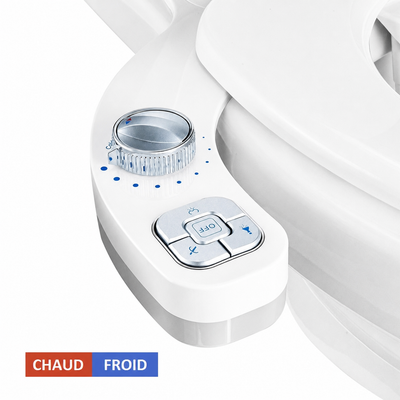
- Warm-water version: connection to the hot water supply, mixer tap to adjust the temperature between 20 and 40 °C, comfort significantly improved in winter. Intermediate price, between 120 and 170 euros.
- Electric hot-water version: integrated heating element, adjustable temperature around 38 °C, self-cleaning nozzle before and after each use, optional heated seat. Between 240 and 480 euros.
- Luxury connected version: hot air drying, automatic seat opening, multi-setting remote control, energy-saving mode. Above 400 euros, for maximum comfort.
Installing the warm-water version remains simple: you just need to connect the kit to the existing hot water supply via a T-adapter, without major work.
| Criteria | Cold water | Warm water | Electric hot water |
| Price | €60-110 | €120-170 | €240-480 |
| Electricity required | No | No | Yes |
| Installation | 5 minutes | 10 minutes | 15 minutes |
| Adjustable temperature | No | Partially | Yes (20-40 °C) |
| Winter comfort | Limited | Good | Excellent |
| Water consumption | Low | Low | Low |
Jets, drying, and comfort options
The Japanese toilet kit offers several washing modes: the rear jet cleans the anal area with a centered spray, the feminine jet is optimized in angle and gentleness, and the bidet mode replicates the function of a classic bidet. Each jet is adjustable in pressure and flow to adapt to everyone's sensitivity.
Comfort options transform the experience depending on the model: hot air drying between 40 and 60 °C, which eliminates the need for paper; heated seat between 30 and 40 °C, very appreciable in winter; silent soft-close lid, presence detector with automatic opening, deodorization.
Hygiene, ecology, and savings
Intimate water-based hygiene is significantly better than paper: gentle and adjustable cleaning prevents irritation, which counts especially for sensitive people, pregnant women, and those suffering from hemorrhoids.
Economically, the Japanese toilet kit generates savings estimated at 90 euros per year per person, or nearly €360 for a family of four. Each wash uses only about half a liter of water — compared to the 140 liters required to manufacture a single roll of paper.
Advantages, disadvantages, and maintenance
Is a Japanese toilet block really worth the investment compared to adaptable kits? Understanding its real assets and limits helps you decide.
Hygiene, comfort, and daily accessibility
The main benefit concerns intimate hygiene: washing with water surpasses paper by offering complete and gentle cleaning, without irritation — particularly appreciated by sensitive individuals.
Comfort increases significantly thanks to the heated seat, hot air drying, adjustable temperature, and remote control. For people with reduced mobility, automatic opening and hands-free operation offer real autonomy.
- Maximum hygiene: adjustable spray far superior to paper, stainless steel self-cleaning nozzles, significantly fewer irritations.
- Daily comfort: heated seat, hot air drying, adjustable temperature, silent soft-close lid.
- Accessibility: ergonomic remote control, presence detector, automatic opening and closing — without heavy work.
- Ecology: reduction of 70 to 90% in toilet paper consumption, for water consumption of about half a liter per wash.
User feedback mainly highlights superior comfort and a lasting feeling of cleanliness. The main barriers remain the initial price and the fear of construction work — two obstacles easily bypassed by choosing a kit or a seat rather than a complete block.
Limits to know before buying
The cost of a block reaches several thousand euros, which reserves it for a budgeted renovation. Compared to kits and seats available between 60 and 480 euros, the gap is considerable.
Electric models require a compliant 230 V outlet nearby. If it is missing, the work becomes expensive. Reliance on electricity also means that heating, drying, and automatic opening stop working during a power outage.
- High cost: above 2,000 euros for wall-hung blocks, several thousand for high-end monoblocks.
- Major work: wall-hung blocks require a compatible support frame and complex plumbing.
- Electricity consumption: heated seat, water heating, and drying increase the bill, despite energy-saving modes.
Finally, electronic complexity increases the risk of breakdown. A faulty heating element or solenoid valve can immobilize the device and requires a technician's intervention.
Maintenance, durability, and ecological impact
Maintenance remains generally simple: the stainless steel self-cleaning nozzles rinse automatically before and after each use. Installing an anti-limescale filter on the water supply is, however, essential to protect the heating elements and solenoid valves, especially in regions with hard water.
Ecologically, a complete wash consumes about half a liter of water — incomparable to the water required for the production of the paper replaced. Electric models, however, consume electricity for the seat, drying, and water heating: the energy-saving mode puts these functions on standby when not in use.
Frequently asked questions
How do I know if a Japanese toilet is of high quality?
Three criteria count: durable materials, reliable functions, and responsive after-sales service. Prioritize checking the material of the seat — an ABS that is resistant to impacts and high temperatures — as well as stainless steel nozzles rather than plastic ones.
Certifications of compliance, particularly NF and NF EN 1717 standards, guarantee electrical safety and protection of the drinking water network. Finally, favor sellers offering a minimum warranty of two years and customer support in French. An antibacterial coating on the seat facilitates maintenance: it is often this detail that distinguishes basic models from high-end versions.
Do I need an electrician to install an electric Japanese toilet seat?
The mechanical installation—removing the old seat, attaching the mounting bracket, connecting the hose—can be done in five minutes, without a professional. However, installing a 230 V outlet that complies with the NF C 15-100 standard, protected by a 30 mA residual current circuit breaker and placed outside of safety zones, must be entrusted to a qualified electrician.
A poorly positioned outlet or an improvised extension cord in a wet room is no small matter: the risk of electrocution is real. If there is no outlet nearby, expect to pay 150 to 300 euros for the work—the price of safety and compliance.
Does a Japanese toilet use less water and energy than a conventional toilet?
Regarding water, the answer is clearly yes: each wash uses about half a liter, compared to the 140 liters required to manufacture a single roll of toilet paper. Regarding electricity, it all depends on the model: mechanical kits have zero consumption, while electric models with a heated seat and dryer add 20 to 40 euros per year to your bill.
Energy-saving mode reduces this impact by turning off heating when not in use. Overall, even taking electricity into account, the balance remains very positive thanks to the drastic reduction in paper use. Installing a limescale filter also protects the heating elements and maintains performance over time.