

Baking soda sitz bath: how long should I do it?
To soothe a yeast infection, hemorrhoids, or intimate itching, the duration of a bicarbonate sitz bath must be precisely targeted. You will find here the recommended time, the right dosage, and useful precautions depending on your situation. Check out our selection of sitz bath basins to easily equip your routine.
The bicarbonate sitz bath: what is the ideal duration?
The question comes up often, and the answer is simple: in the majority of cases, 10 to 15 minutes are sufficient. This duration allows the baking soda to work without unnecessarily prolonging contact with the water. A shorter session, of 5 to 10 minutes, is suitable for a first attempt, in case of reactive skin, or if irritation has already set in.

Between 10 and 15 minutes for a soothing effect
This contact time is ideal for soothing hemorrhoids, feelings of heat, or a yeast infection, without promoting maceration. It is also suitable for intimate itching when the area remains sensitive. Beyond 20 minutes, the skin becomes fragile and discomfort increases rather than decreases.
Exposure to water for too long, even with baking soda, can maintain irritation and unbalance an already sensitive area.
The right temperature according to symptoms
The ideal temperature is between 37 and 38 °C (98.6–100.4 °F). This lukewarm water relaxes the tissues, supports local circulation, and makes the bath significantly more comfortable.
Water that is too hot, above 40 °C (104 °F), is not recommended: it increases swelling and heightens pain, especially in the case of hemorrhoids. Water that is truly cold, between 10 and 20 °C (50–68 °F), is reserved for acute crises, for a rapid soothing effect.
Special cases: pregnancy, cystitis, and acute crisis
During pregnancy, a bicarbonate sitz bath should be practiced with caution: duration reduced to 5-10 minutes, temperature below 38 °C, and never cold water. Speak to your midwife before incorporating it into your routine.
In case of pelvic burning related to cystitis, we sometimes find recommendations for longer sessions. We advise sticking to the general guideline — 20 minutes maximum — and consulting a doctor: cystitis needs to be treated, not just soothed.
In an acute hemorrhoid crisis, 10 minutes in cool water is often enough, possibly followed by a damp compress for 10 minutes.
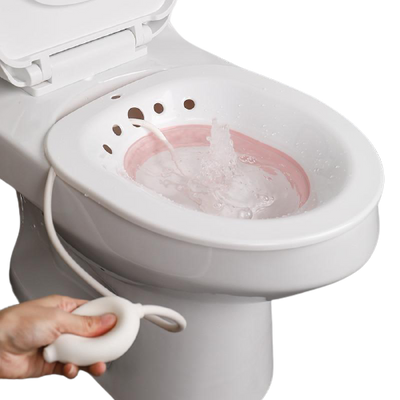
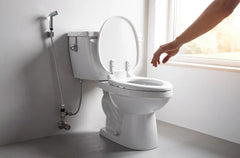
Improvement may appear after a few days of regular use. If no improvement is observed after five days, or if the pain worsens, medical advice is required: the bicarbonate sitz bath relieves symptoms but does not treat their cause. The sitz bath basin sits directly on the toilet bowl: it is much simpler than setting up in the bathtub.
Dosage and preparation of the bicarbonate sitz bath
The right dosage makes all the difference: a bath that is too concentrated increases irritation, while a well-dissolved solution remains gentle on the skin and mucous membranes. Prepare the mixture just before use, with lukewarm water: baking soda works better when freshly diluted, provided no residue is left behind.
What amount of baking soda to use?
For a bicarbonate sitz bath at 37-38 °C, the most common base is one tablespoon of food-grade baking soda per liter of lukewarm water, or about 14 g. With 3 liters, that makes 3 tablespoons. If your skin is reactive, lighten the dosage: ½ to 1 teaspoon per liter limits the risk of irritation.
For a first use, start low — ½ to 1 teaspoon per liter — then adjust according to your tolerance. The product also matters: use only food-grade baking soda or, failing that, pharmaceutical grade. Technical versions are not suitable for mucous membranes or vaginal irritation.
Stir until the water is clear, with no grains at the bottom of the basin: undissolved residue becomes abrasive on an already sensitive area.
| Skin profile | Dosage per liter | For 3 liters | Temperature |
| Normal | 1 tbsp (14 g) | 3 tbsp (42 g) | 37-38 °C |
| Sensitive | ½ to 1 tsp (3-6 g) | 1.5-3 tsp (9-18 g) | 37-38 °C |
| Acute crisis | 1 tbsp (14 g) | 3 tbsp (42 g) | 10-20 °C (cold water) |
| Pregnancy | ½ tsp (3 g) | 1.5 tsp (9 g) | 37-38 °C max |
Sea salt sitz bath: a complementary alternative
Sea salt is traditionally sought after for its sanitizing effect, especially in cases of small fissures or irritation. A moderate dilution is always more suitable for sensitive mucous membranes than a high dosage.
Combining it with food-grade baking soda is possible in the same basin, provided you keep the concentration light and dissolve each ingredient well. Avoid combining two full dosages: if the bicarbonate is already present at a standard dose, add sea salt in small quantities only.
Bicarbonate sitz bath: hemorrhoids and anal fissure
Baking soda works well alongside perineal care when it is irritated or painful. In a sitz bath, it soothes discomfort, limits irritation, and sanitizes the area — much more gently than cleaning methods that are sometimes too aggressive.

Relieving hemorrhoids
In case of a crisis, the bicarbonate sitz bath for hemorrhoids calms the pain, reduces the burning sensation, and helps decongest the area. Everything depends on consistency: in the acute phase, 2 to 4 sessions per day, with at least 2 hours in between. Lukewarm water is most often better tolerated, but cool water suits some people better — and remains the traditional reflex in the middle of a crisis.
After using the toilet, this care has another very practical benefit: it cleanses gently, without the slightest friction. Once the symptoms have subsided, reduce the frequency to one session per day, then 2 to 3 times per week as a preventative measure. This step is also recommended after certain anal surgeries and postpartum, when local care must remain simple and gentle.
In case of an anal fissure: the adapted protocol
The protocol remains similar, with a key point: prefer lukewarm water at 37-38 °C, which relaxes the sphincter and makes the care significantly more bearable. The usual duration is 10 to 15 minutes.
After each session, rinse delicately with clear water, then dry by dabbing, without rubbing. If improvement does not appear after five days, consult a doctor: the sitz bath provides relief, but it does not alone correct the cause of the lesion.
Bicarbonate sitz bath: yeast infection and intimate itching
The bicarbonate sitz bath provides targeted relief in cases of yeast infection, irritation, or intimate itching. Baking soda is traditionally recognized for its antifungal and antibacterial properties, particularly against Candida albicans, which is often the cause of yeast infections affecting the vulva. Its action on the pH of the intimate area makes the environment less favorable to fungi while soothing discomfort. Rinsing remains external: the inside of the vagina self-regulates and does not need to be washed.

Yeast infection: duration and frequency
In case of a yeast infection, a bicarbonate sitz bath lasts from 10 to 15 minutes, once or twice a day depending on the intensity of symptoms. It calms itching, burning, and local discomfort, especially when the vulva is sensitive. The concentration is decisive: to use baking soda without damaging the skin, you must remain moderate.
- Standard frequency: 1 to 2 baths per day during the active phase of the yeast infection.
- Duration per session: 10 to 15 minutes, never exceeding 20 minutes, to protect the flora.
- Follow-up: improvement may appear after 4 days of regular use.
- Alert threshold: without improvement after 5 days, consult a gynecologist.
This local support does not replace an antifungal treatment prescribed when the yeast infection is marked, recurring, or medically confirmed.
Intimate itching: bicarbonate as an adjunctive measure
The bicarbonate sitz bath is also useful when intimate itching has a non-infectious cause: eczema, dryness, or a reaction to toiletries that are too aggressive. Its alkalizing effect reduces excess acidity in the intimate area and soothes burning sensations — often in a single session.
Irritations are frequently exacerbated by tight clothing, excessive intimate hygiene, or hormonal variations. Preserving the flora determines the tolerance for all subsequent care: fragile skin does not tolerate perfumed products or repeated washing well. Additionally, local application of aloe vera or thermal water soothes the vulva.
Limits and precautions
The sitz bath remains a one-time measure. Frequent use unbalances the flora and increases irritation, especially if the skin or mucous membranes are already damaged. Food-grade or pharmaceutical baking soda is suitable; a technical product must be avoided for intimate cleansing.
- Maximum duration: do not exceed 20 minutes per session.
- Product quality: only food-grade or pharmaceutical baking soda.
- Caution: avoid in case of open lesions or severe irritation.
- Medical advice: consult if the yeast infection or itching persists for more than 5 days.
After each sitz bath, rinse with clear water then gently dry the intimate area. This limits maceration and respects the skin.
Equipment, natural alternatives, and practical advice
Equipment matters as much as dosage and duration. For a sitz bath to be easily integrated into an intimate hygiene routine, you need a setup that is simple, stable, and easy to clean.
Which basin to choose?
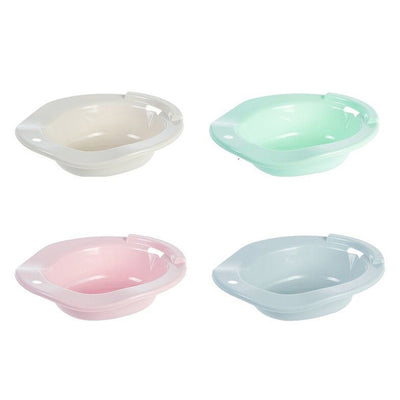
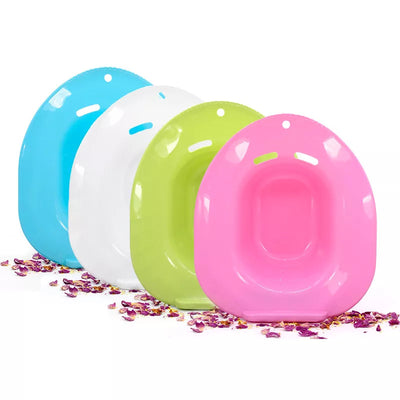
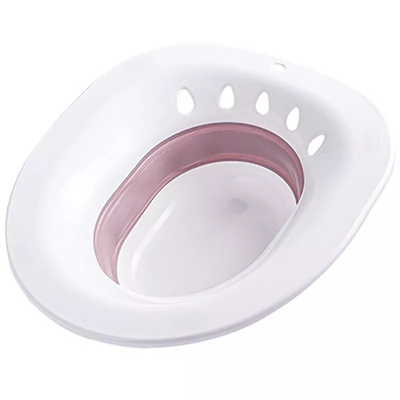
The most practical option remains a non-porous plastic model, placed directly on the toilet, without permanent installation. This type of basin adapts to 99% of standard toilets and withstands simple cleaning with common disinfectants. Its ergonomic format is suitable for daily use as well as for situations of reduced mobility or pregnancy.
The hard transparent plastic model facilitates visual control of the level and temperature. The foldable format, more compact, is suitable for travel; some models with a pump add targeted rinsing at the end of the session. Others integrate an anti-overflow system that drains the excess into the toilet bowl.
After the bath, dry the area with a clean, soft towel to limit maceration. The basin itself also deserves careful cleaning and then complete drying after each use: this simple habit reduces any risk of contamination.
Natural alternatives to bicarbonate
Bicarbonate is not the only option. Other botanical or mineral active ingredients can be considered depending on the symptom, provided you remain moderate.
Diluted apple cider vinegar is traditionally used for its antibacterial and antifungal properties: one tablespoon in lukewarm water is enough. Essential oils, however, require much more caution — and should be avoided during pregnancy and breastfeeding.
Tea tree essential oil is known for its antifungal properties, especially in cases of yeast infection: 2 to 3 drops maximum, always diluted beforehand in a dispersant (bath base, milk, or a spoonful of vegetable oil) — never poured directly into the water. True lavender offers a comparable soothing effect. Aloe vera can be applied directly to the vulva after the bath.
It is also possible to combine sea salt and baking soda in the same bath, or to alternate according to current needs. Keep dosages simple and regular: that is the key to good tolerance.
Integrating the sitz bath into a gentle routine
A gentle routine is organized without complication: a light intimate cleanse in the morning, then a sitz bath in the evening if the need arises. This alternation preserves the flora while providing local relief. Preparing the solution at the right temperature takes two minutes, especially with a dedicated basin.
For soothing and cautious use, lukewarm water and a measured soak time are sufficient most of the time. Once the routine is established, this care naturally finds its place in daily life.
Frequently Asked Questions
Which baking soda to use for a sitz bath?
Choose only food-grade baking soda, also called food-grade bicarbonate, or a pharmaceutical grade. Technical-grade bicarbonate should be avoided: it may contain impurities poorly tolerated by mucous membranes.
In practice, the base remains simple: 1 tablespoon of baking soda in 1 liter of lukewarm water. This guideline is suitable for an occasional sitz bath, whether it is for local discomfort, hemorrhoids, or temporary irritation.
Bicarbonate and yeast infection: how long should it be used?
In the case of a vulvar yeast infection, the bath should last 10 to 15 minutes per session, once or twice a day. Improvement may appear after four days if the irritation is mild.
If the discomfort persists beyond five days, seek medical advice. A bicarbonate sitz bath provides relief, but it does not treat the cause of a confirmed yeast infection and does not replace antifungal treatment.
Can you take a bicarbonate sitz bath every day?
Yes, but the frequency depends on the situation. In the acute phase—hemorrhoids, marked irritation, active yeast infection—2 to 4 baths per day are possible, with at least a 2-hour interval between them.
Once the symptoms have subsided, one daily session is sufficient, then 2 to 3 times per week. Over time, excessive use ends up disrupting the flora, especially if the sitz bath is repeated without real necessity.
The sitz bath is a hygiene and wellness practice. It does not replace medical advice or prescribed treatment.